
Salads
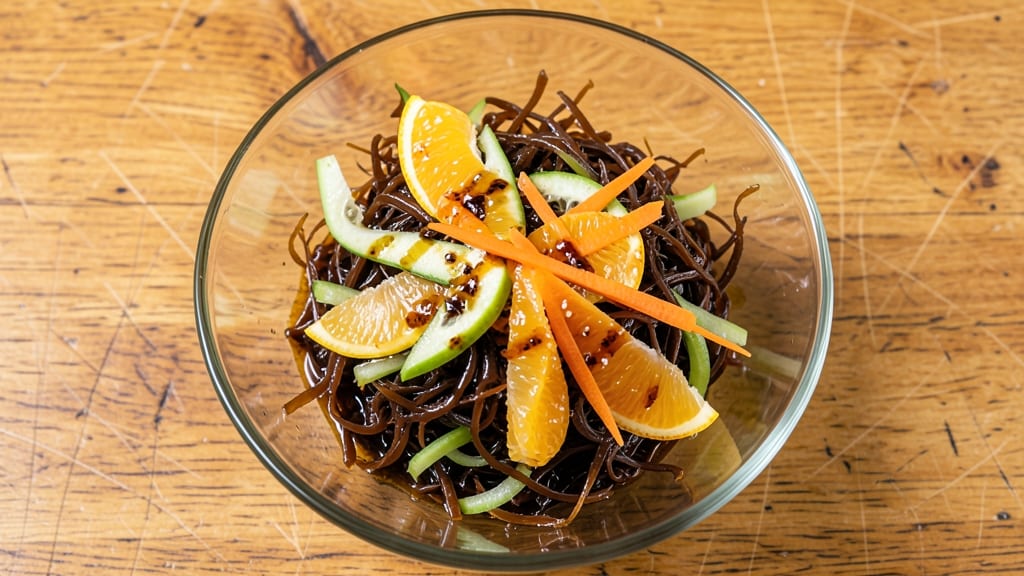
This arame salad recipe transforms simple seaweed into a vibrant, crunchy dish that balances earthy umami with bright citrus notes. The key lies in properly soaking the arame to achieve that satisfying snap while maintaining its natural oceanic flavor.
I developed this recipe after discovering how versatile arame could be beyond sushi rolls—it’s packed with protein, minerals, and a texture that holds up perfectly in salads.
What sets this salad apart is the citrus dressing, which cuts through the arame’s richness while enhancing its natural sweetness. A simple blend of orange juice, rice vinegar, and sesame oil creates a tangy, aromatic base that clings to every strand.
The salad also incorporates shredded carrots and cucumber for freshness, while toasted sesame seeds add a nutty crunch that ties everything together.
The result is a dish that’s as visually striking as it is delicious—deep green strands of arame glistening with citrus, bright vegetables, and a sprinkle of sesame seeds for contrast.
It’s light enough for a summer meal but hearty enough to satisfy as a main course, especially when paired with a miso soup or steamed rice. The best part? It comes together in just 15 minutes with minimal prep.
For extra depth, consider adding toasted nuts like cashews or almonds, or swap in other greens like baby spinach for added texture. This salad is equally at home as a side dish or a standalone meal—perfect for vegans, seafood lovers, or anyone craving a fresh, nutrient-packed bite. Let’s get started!
Ingredients for arame salad
Seaweed, citrus, and crunch come together in this vibrant vegan salad—packed with umami and freshness.
| Ingredient | Amount | Notes |
|---|---|---|
| Dried Arame Seaweed 🍃 | ½ oz | Rinsed and soaked for 10 minutes |
| Organic Carrots 🥕 | 1 whole | Julienned into thin strips |
| Persian Cucumber 🥒 | 1 whole | Peeled, seeded, and sliced |
| Fresh Orange Juice 🍊 | ¼ cup | Freshly squeezed, no pulp |
| Rice Vinegar 🍶 | 2 tbsp | Unseasoned, mild flavor |
| Sesame Oil 🫒 | 1 tbsp | Toasted, for aroma |
| Toasted Sesame Seeds 🌰 | 1 tbsp | Lightly browned |
| Raw Cashews 🥜 | ¼ cup | Toasted for crunch |
| Fresh Ginger 🧄 | 1 tsp | Grated, for zing |
| Agave Nectar 🍯 | 1 tsp | For subtle sweetness |
| Diamond Crystal Kosher Salt 🧂 | ¼ tsp | For seasoning |
| Fresh Lime Juice 🍋 | 1 tbsp | Brightens the dressing |
The arame is the star here—look for organic dried arame in the seaweed section of health food stores or Asian markets. Marukyu or Hokkaido brands are reliable choices, and you’ll only need a small amount. Soaking transforms it from brittle to perfectly chewy. If you can’t find arame, wakame works in a pinch, but soak it twice as long. The carrots and cucumber should be crisp—organic produce at Whole Foods or your local farmers market ensures the best texture. For the citrus, fresh is non-negotiable; bottled juice lacks the brightness.
No sesame oil? Toasted walnut oil gives a similar nutty depth, though it won’t have the same aroma. Swap cashews for toasted almonds or pecans if needed, but toast them first for that essential crunch. The dressing is flexible—substitute apple cider vinegar for rice vinegar if you prefer a sharper tang. For extra protein, add edamame or chickpeas to the salad base. If you’re short on time, pre-shredded carrots work, but julienne strips create that restaurant-quality presentation. The ginger is key for cutting through the seaweed’s richness—freshly grated makes all the difference.
Store the dressing separately in an airtight container for up to 5 days in the fridge—it keeps its vibrancy. The arame and vegetables stay fresh for 3 days if stored in sealed containers with paper towels to absorb moisture. For extra convenience, pre-soak the arame and store it in the fridge until ready to toss. This salad reheats beautifully—just warm the dressing slightly and toss with cold veggies. Freezing isn’t recommended, as the texture changes dramatically. Portion into glass containers for easy grab-and-go meals.
Why You'll Love This Recipe
- No-Soaking Required: I’ll admit, I was skeptical about dried seaweed—until I realized this recipe skips the soaking step entirely. Just toss those crispy arame strands into warm water for 5 minutes, and they’re ready to transform into something vibrant and chewy. No waiting, no fuss, just instant texture.
- Bright & Tangy: That squeeze of fresh orange juice? It’s the star. The citrus cuts through the earthy arame and the sweetness of the carrots, while the rice vinegar adds a sharp, clean finish. Honestly, the first time I tasted it, I thought, “Why haven’t I been eating this all along?”
- Lunchbox Hero: Between us, this salad holds up perfectly in a container for days. The cucumbers stay crisp, the dressing clings to everything, and it’s light enough to pack for work but satisfying enough to eat straight from the jar. (Yes, even on a Tuesday night.)
- Budget Brightener: A bag of dried arame lasts forever, and a few carrots and cucumbers stretch this salad into multiple servings. I’ll be real: it’s my go-to when I’m trying to eat well without breaking the bank. Plus, the ingredients are all shelf-stable or last ages in the fridge.
Step-by-step instructions for arame salad recipe
This method delivers a perfectly balanced seaweed salad with vibrant textures and bright citrus notes.
Prepare the Arame Seaweed
Place the 0.5 oz dried arame seaweed in a small bowl and cover it with warm water. Let it soak for 10 minutes until it softens and expands to about 3 times its original size. Drain thoroughly using a fine-mesh strainer, pressing gently to remove excess water. The seaweed should be pliable but not soggy—this ensures it holds its texture in the salad.
While the seaweed soaks, use a sharp mandoline or vegetable peeler to create thin julienne strips from the 1 whole organic carrot. Cut the carrot lengthwise into matchsticks about 1/8-inch wide. Set aside in a bowl of ice water to maintain crispness. This step prevents the carrots from softening during the salad assembly.
Create the Citrus Dressing
In a small mixing bowl, combine the 0.25 cup fresh orange juice, 2 tbsp rice vinegar, 1 tbsp sesame oil, 1 tsp agave nectar, 1 tsp freshly grated ginger, and 1 tbsp fresh lime juice. Whisk vigorously for 30 seconds until fully emulsified. The dressing should have a smooth, slightly thick consistency—this ensures even coating of all salad ingredients.
Taste the dressing and adjust seasoning with 0.25 tsp diamond crystal kosher salt if needed. The balance should be bright, tangy, and subtly sweet. If the dressing appears too thick, whisk in 1 teaspoon of water to achieve a pourable consistency. This dressing is the heart of the salad, so precise seasoning is essential.
Assemble and Toast the Crunchy Elements
In a dry skillet over medium heat, toast the 0.25 cup raw cashews for 3-4 minutes, stirring constantly, until they develop a golden aroma and light brown color. Remove from heat immediately and transfer to a cutting board. Roughly chop the cashews into uneven pieces for added texture contrast.
In the same skillet, warm the 1 tbsp toasted sesame seeds for 30 seconds until fragrant. Set aside to cool slightly. Meanwhile, peel the 1 whole persian cucumber, remove seeds, and slice into 1/4-inch thick half-moons. Drain and pat the julienned carrots dry with paper towels before adding them to the salad bowl.
Combine All Ingredients
In a large serving bowl, gently combine the drained arame seaweed, cucumber slices, and carrot julienne. Drizzle the citrus dressing over the vegetables and toss lightly with tongs to coat evenly. The seaweed should be glistening but not saturated—this preserves its delicate texture. Add the toasted cashews and sesame seeds, reserving a few for garnish.
Taste the salad and adjust seasoning if needed, adding a pinch more salt or a splash of lime juice for brightness. Let the salad sit for 5 minutes before serving to allow flavors to meld. This waiting period enhances the citrus notes and ensures the seaweed absorbs the dressing without becoming mushy.
Pro Tips For Making Arame Salad
- SOAK ARAMÉ IN COLD WATER: I learned this the hard way—hot water turns aramé into a mushy mess. Use room-temperature water, and let it sit for 10-15 minutes. If you’re impatient, give it a quick massage with your hands halfway through (yes, even if you’re in a hurry).
- SLICE CARROTS THIN AND UNIFORM: A mandoline makes this easy, but if you’re doing it by hand, aim for paper-thin slices—about 1/16-inch. Thicker pieces stay crunchy but dull the salad’s brightness. And for the love of all things crisp, don’t skip the quick soak in ice water after slicing to keep them snappy.
- PEEL CUCUMBERS LAST MINUTE: Persian cucumbers are delicate, and their skin can turn slimy fast. Peel and slice them right before tossing with the dressing. If you’re prepping ahead, store the unpeeled cucumbers in a sealed container with a paper towel to absorb moisture—this keeps them fresh for up to 24 hours.
- DRESS WITH ORANGE JUICE FIRST: Add the orange juice to the salad before the rice vinegar. This lets the citrus soften the aramé slightly and meld with the carrots, creating a more cohesive flavor. Then, drizzle in the vinegar last—it brightens everything without overpowering. (Pro move: Strain the juice if you want a smoother texture.)
Essential equipment for this recipe
Soaking Essentials
Start with a fine-mesh strainer—I recommend the OXO Good Grips—to drain your arame after soaking. The key is using warm water (not boiling) to prevent the seaweed from turning mushy. A small ceramic bowl works best for soaking since it retains heat better than metal.
For extra convenience, keep a small spray bottle nearby to mist the arame if it dries out while prepping other ingredients. 🍃
Julienne Tools
A mandoline slicer like the Julienne Master makes quick work of those perfect carrot strips, but a vegetable peeler works too if you prefer hands-on control. For the cucumber, a sharp chef's knife and cutting board are all you need—just slice at a 45-degree angle for those elegant half-moons.
I always keep a small bowl of ice water on hand to refresh the julienned carrots while I work. 🥕
Dressing Mixing
Whisk your citrus dressing in a small mixing bowl with smooth sides—I love the Pyrex glass bowls for their non-reactive surface. A mini whisk or fork works perfectly for emulsifying the sesame oil.
For measuring, a liquid measuring cup ensures precision with the citrus juices. Pro tip: Keep a small bowl of lemon wedges nearby to taste-test as you adjust seasoning. 🍶
Toasting Station
A nonstick skillet with a light-colored interior (like All-Clad Stainless) helps you monitor the toasted sesame seeds and cashews without overcooking. I use a small wooden spoon to stir constantly for even toasting.
For extra aroma control, keep a small bowl of cold water nearby to quickly cool the seeds if they brown too fast. A fine-mesh sieve makes it easy to strain any stray seeds from the skillet. 🌰
Serving Essentials
Present your salad on a wide, shallow platter—I prefer ceramic or glass for easy cleanup and visual appeal. A small serving spoon helps distribute the dressing evenly when plating. For garnish, keep a small bowl of extra sesame seeds and a lime wedge on the side.
A small spray bottle with water can refresh wilted greens if you're adding any last-minute toppings. ✨
Nutrition facts
Frequently asked questions
Why does arame need to be soaked before using in salads?
Soaking transforms dried arame from brittle to tender and pliable—essential for achieving that satisfying chewy texture in salads. The 10-minute warm water soak rehydrates the seaweed while preserving its natural flavor. Over-soaking makes it mushy, so always drain thoroughly after the recommended time. This step is non-negotiable for the perfect bite!
Can I substitute arame with another type of seaweed?
Yes, but with adjustments! Wakame works best—soak it twice as long (20 minutes) since it's thicker. Nori is too delicate for salads and kelp has a much stronger flavor. For a similar texture, use dried hijiki, but reduce the soaking time to 5 minutes—it's more porous. Always taste-test after soaking.
How do I prevent the salad from getting soggy?
Keep all ingredients cold and dry until the last moment. Store veggies separately from dressing, and only toss when serving. For extra insurance, pat julienned carrots dry with paper towels before adding. The 5-minute rest time before serving lets flavors meld without wilting. Avoid thick dressings—this recipe's citrus base clings without over-saturating.
What's the best way to store leftovers?
Store components separately in airtight containers for up to 3 days. Keep the dressing in one container, veggies in another, and toasted elements (cashews/seeds) in a third. Reassemble just before eating to maintain crispness. The seaweed stays fresh 2 days if stored with a paper towel to absorb moisture. For longer storage, freeze the dressing only—it's the only component that reheats well.
Can I make this salad ahead of time?
Yes, but with strategy! Prep all ingredients 24 hours ahead—soak the arame, julienne carrots, slice cucumber, and make the dressing. Store everything separately in the fridge. When ready to serve, re-soak the arame for 5 minutes in warm water, then toss everything together. The flavors actually improve overnight as the citrus marinates the seaweed. This makes it perfect for meal prep!