
Salads
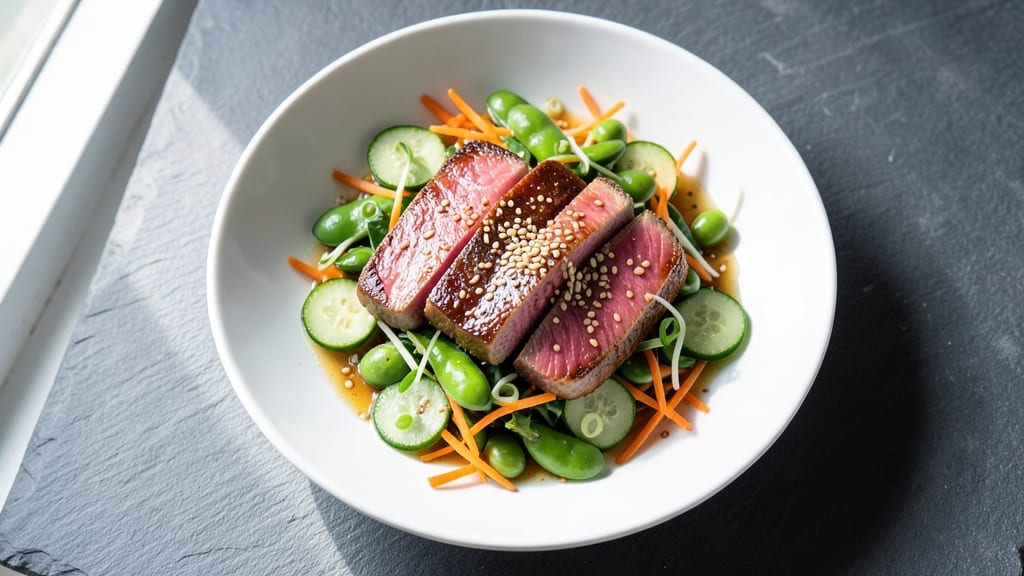
This Asian ahi tuna salad recipe delivers the perfect balance of silky, seared tuna and bold Asian flavors in every bite. The secret lies in the sesame-kissed dressing—a harmonious blend of soy, ginger, and citrus—that transforms simple ingredients into a restaurant-worthy dish.
Whether you prefer your tuna raw or lightly seared, this recipe adapts effortlessly to your preference while keeping the texture tender and the flavors vibrant.
The foundation of this salad is high-quality ahi tuna, sliced thin and marinated just long enough to absorb the dressing without overpowering its natural richness. Paired with crisp vegetables like shredded carrots, cucumber, and edamame, the dish becomes a crunchy, refreshing bite that’s as satisfying as it is elegant.
The sesame seeds and scallions add a final touch of texture and aroma, elevating the salad to something truly special.
What sets this recipe apart is its versatility—serve it over a bed of greens for a light lunch, alongside steamed rice for a heartier meal, or even as a topping for sushi rolls.
The dressing can be adjusted to suit your taste, whether you prefer it lighter with extra citrus or bolder with a touch of chili. Every component comes together in a way that feels both restaurant-quality and entirely achievable at home.
The real magic happens in the final plating, where the contrast of textures—silky tuna, crisp vegetables, and toasted sesame seeds—creates a dish that’s as visually stunning as it is delicious.
Perfect for weeknight dinners or impressing guests, this salad proves that Asian-inspired flavors don’t require complicated techniques. Let’s get started!
Ingredients for asian ahi tuna salad
High-quality tuna, crisp veggies, and a bold sesame-kissed dressing transform simple ingredients into restaurant-worthy bites.
| Ingredient | Amount | Notes |
|---|---|---|
| Fresh Ahi Tuna Steak 🐟 | 1 lb | Sushi-grade, sliced thinly |
| Shredded Carrots 🥕 | 1 cup | Julienned for texture |
| English Cucumber 🥒 | 1 whole | Seedless, thinly sliced |
| Shelled Edamame 🌱 | ½ cup | Lightly steamed, cooled |
| Green Onions 🧅 | 4 whole | Thinly sliced, white and green parts |
| Toasted Sesame Seeds 🌰 | 2 tbsp | For garnish and crunch |
| Sesame Oil 🫒 | 2 tbsp | Toasted, not refined |
| Low-Sodium Soy Sauce 🥢 | 3 tbsp | Kikkoman preferred |
| Fresh Ginger 🌿 | 1 tbsp | Finely grated, fresh |
| Rice Vinegar 🍶 | 2 tbsp | Seasoned preferred |
| Honey 🍯 | 1 tbsp | For subtle sweetness |
| Sesame-Kissed Dressing 🥄 | ½ cup | Homemade or store-bought |
| Lime Juice 🍋 | 1 tbsp | Freshly squeezed |
| Red Chili Flakes 🌶️ | ½ tsp | Optional for heat |
| Baby Spinach 🌱 | 2 cups | For bedding greens |
The tuna is non-negotiable here—sushi-grade ahi from a trusted fishmonger (like Whole Foods or your local seafood counter) ensures silky texture. Look for vibrant red color and firmness when pressed. Slice against the grain for that perfect chewy bite. Kikkoman soy sauce is my go-to for that authentic umami punch, but any low-sodium brand works. The ginger should smell fresh and zesty—no dusty jars here. For the edamame, frozen is fine; just steam until bright green and cool completely before mixing. The cucumber? Seedless English cucumbers from the grocery store's produce section slice cleanly and stay crisp.
No sesame oil? Toasted peanut oil works in a pinch, though it lacks that nutty depth. Short on ginger? Ginger paste at half the amount gets you close. The dressing can be adjusted—more rice vinegar for tang, extra honey for sweetness. For a spicier kick, add a dash of sriracha or fresh chili paste. The baby spinach should be fresh (no wilted leaves)—Trader Joe's has pre-washed bags that save time. Want extra crunch? Add crispy fried shallots from the Asian aisle at Costco.
This salad shines fresh but reheats beautifully—just warm the dressing separately and toss. Keeps 2-3 days in the fridge, though the tuna stays best for 1 day max. Prep the dressing ahead and store it separately to keep everything crisp. For a make-ahead meal, marinate the tuna in the dressing for up to 4 hours before assembling. The sesame seeds toast best in a dry pan over medium heat for 2 minutes—watch them closely to avoid burning.
Why You'll Love This Recipe
- No-Fuss Assembly: The tuna steak is the star—just sear it rare, slice it thin, and toss with the prepped veggies. No chopping skills required; those shredded carrots and cucumber take two minutes with a box grater. Honestly, I’ve made this while scrolling through my phone.
- Umami Bomb: That first bite of seared ahi with the crisp edamame and green onions? Chef’s kiss. The soy-ginger dressing clings to the tuna like it’s been waiting its whole life for those shredded veggies to balance the richness. (Yes, even on a Tuesday night.)
- Lunchbox Hero: Pack it in mason jars or bento boxes—it holds up for days. My kids grab it for school lunches, and my husband takes it to work because it’s actually better cold than warm. (No sad, soggy salads here.)
- Budget Flex: Use canned tuna instead of ahi? Still delicious. Skip the edamame, add snap peas. The base is forgiving, but the flavor? That’s the real MVP. I’ve made this for $10 and felt like I spent $50.
Step-by-step instructions for Asian ahi tuna salad
Let's bring this vibrant dish together with precision and flair.
Prepare the Fresh Vegetable Components
Start by washing and thoroughly drying the 1 whole English Cucumber and 2 cups Baby Spinach. Using a mandoline or sharp knife, slice the cucumber into ⅛-inch thick rounds—this creates delicate, translucent pieces that won't overpower the tuna. For the 1 cup Shredded Carrots, use a julienne peeler or mandoline to create thin, matchstick-like strips that add satisfying texture without bulk.
Next, prepare the 4 whole Green Onions by separating the white and green portions. Thinly slice the whites into ¼-inch pieces and the greens into ½-inch lengths—this creates visual contrast while maintaining freshness. Lightly steam the 0.5 cup Shelled Edamame for 2 minutes until just tender, then immediately plunge into ice water to stop cooking. Drain well and let cool completely before adding to the salad.
Create the Signature Sesame Dressing
In a small bowl, whisk together the 0.5 cup Sesame-Kissed Dressing, 2 tbsp Sesame Oil, 3 tbsp Low-Sodium Soy Sauce, 2 tbsp Rice Vinegar, 1 tbsp Honey, 1 tbsp Lime Juice, and 0.5 tsp Red Chili Flakes. The dressing should be silky and well-emulsified—if it separates, whisk vigorously for 30 seconds to restore its velvety texture. Taste and adjust seasoning, adding a pinch more soy sauce for saltiness or honey for sweetness if needed.
Set aside 1 tablespoon of this dressing to toss with the tuna later—this keeps the delicate fish from becoming soggy. The remaining dressing will form the base of your salad's flavor profile, balancing the richness of the tuna with bright, umami notes.
Marinate and Sear the Ahi Tuna
Pat the 1 lb Fresh Ahi Tuna Steak completely dry with paper towels—this ensures maximum sear. Using a sharp knife, slice the tuna into ¼-inch thick medallions against the grain. In a bowl, gently toss the tuna with the reserved 1 tablespoon dressing, being careful not to overmix. Let it marinate for 5 minutes at room temperature while you prepare the pan.
Heat a nonstick skillet over medium-high heat until just smoking. Add the tuna in a single layer and sear for 1 minute per side until the edges turn opaque and slightly charred. The center should remain bright pink—this indicates perfect doneness. Transfer the tuna to a plate and let rest for 2 minutes before assembling the salad.
Assemble the Salad with Crunchy Textures
In a large bowl, combine the 2 cups Baby Spinach, 1 cup Shredded Carrots, sliced English Cucumber, and Green Onions. Drizzle ⅓ of the remaining dressing over the vegetables and toss gently to coat. The spinach should wilt slightly while retaining its vibrant color—this indicates proper seasoning and moisture balance.
Add the 0.5 cup Shelled Edamame and 2 tbsp Toasted Sesame Seeds to the bowl. Sprinkle the seeds evenly throughout—this adds a nutty crunch that contrasts beautifully with the silky tuna. Gently fold in the seared tuna medallions, arranging them on top for visual appeal. The salad should look vibrant with layers of green, white, and pink hues.
Finish with Garnishes and Serve Immediately
Divide the salad among 4 serving plates, reserving any remaining dressing for drizzling. Top each portion with an additional sprinkle of Toasted Sesame Seeds and a few Green Onion slices. The seeds should catch the light, highlighting the dish's fresh ingredients while adding a satisfying crunch with every bite.
Serve immediately while the tuna is still warm from searing—this ensures the perfect balance of temperatures and textures. The salad should deliver a harmonious blend of silky tuna, crisp vegetables, and nutty sesame flavors in every bite. For extra heat, add a pinch of Red Chili Flakes to each serving before eating.
Pro Tips For Making Asian Ahi Tuna Salad
- SEAR THE TUNA FAST: Hit the pan on high heat—this isn’t a slow cook. Ahi tuna turns rubbery if you linger, so aim for 1-2 minutes per side max. I learned this the hard way when my first attempt came out chewy instead of tender.
- DRESS CUCUMBER LIKE A PRO: Skip the soggy mess—pat the English cucumber thoroughly dry with a towel before slicing. Then, toss it in a bowl with 1 teaspoon rice vinegar and a pinch of salt for 10 minutes. This keeps it crisp and cuts the bitterness.
- DON’T OVERMIX THE SALAD: Tuna salad loses texture when you fold it to death. Instead, gently combine the sliced tuna with shredded carrots and edamame, then just toss in the cucumber and green onions at the very end. The salad stays light and fresh.
- UPGRADE WITH SESAME OIL: Swap generic oil for toasted sesame oil—just ½ teaspoon at the end. It adds depth without overpowering, and it’s the one thing that makes this dish taste authentically Asian. (Yes, even if you’re skeptical.)
Pro cooking tips for perfect results
Perfect Sear Technique
For restaurant-quality ahi tuna, the sear is everything. Use a nonstick skillet (like GreenPan) heated to medium-high until just smoking—this creates that coveted crust while keeping the center bright pink. I slice the tuna into ¼-inch medallions against the grain to maximize tenderness.
Sear for exactly 1 minute per side—any longer risks overcooking. Let the tuna rest 2 minutes before serving to redistribute juices. 🔥
Dressing Emulsion Secrets
The dressing is where flavor magic happens. Whisk toasted sesame oil last to prevent separation—it emulsifies better when added at room temperature. For extra stability, add ½ tsp xanthan gum (found in baking aisles) to thicken.
Taste as you go: balance soy sauce for saltiness, rice vinegar for tang, and honey for sweetness. If it separates, whisk in 1 tsp cold water to restore silkiness.
Vegetable Prep Pro Tips
Julienne carrots with a mandoline for uniform strips that stay crisp. For cucumber, slice ⅛-inch thick—thinner slices wilt faster but add delicate texture. Steam edamame just until bright green (about 2 minutes), then shock in ice water to stop cooking.
Pat all veggies very dry before assembling to prevent a soggy salad. 🥕
Marinating Without Overpowering
Tuna absorbs marinades quickly—limit contact to 5 minutes max. Use just 1 tbsp dressing per pound of tuna to avoid breaking down the protein. For raw tuna versions, marinate for no more than 3 minutes at room temperature.
Always use freshly squeezed lime juice (bottled lacks brightness) and chilled tuna straight from the fridge to maintain texture.
Plating for Visual Impact
Arrange tuna medallions fan-style on top of greens for dramatic presentation. Sprinkle sesame seeds in a zigzag pattern—they catch light beautifully. Use black sesame seeds for contrast if you want extra depth.
Serve on white plates to make colors pop, or use dark plates to highlight the tuna's pink hue. Garnish with microgreens for an upscale touch.
Temperature Control
Serve tuna immediately after searing—it cools quickly and loses texture. Keep the salad components chilled until assembly, but let the tuna sit at room temp for 5 minutes before searing.
For raw versions, serve on a chilled platter with ice underneath to maintain doneness. The ideal serving temp for seared tuna is 120-125°F internally—probe with a thermometer if unsure. 🌡️
Nutrition facts
Frequently asked questions
Can I make this salad with raw ahi tuna instead of seared?
For raw ahi tuna, simply slice the fish ¼-inch thick and marinate in the dressing for just 3 minutes at room temperature. Serve immediately on a chilled platter with ice underneath to maintain doneness. The texture will be more delicate, so assemble the salad right before serving to prevent wilting.
How do I store leftovers without ruining the texture?
Store the dressing and salad components separately in airtight containers. The tuna stays best for 1 day in the fridge, while the veggies keep for 2-3 days. Reheat the dressing separately and toss with chilled components just before serving. For raw versions, consume within 6 hours of preparation.
What's the best way to adjust the dressing for spicier or sweeter tastes?
For extra heat, add ½ tsp sriracha or 1 tsp fresh chili paste to the dressing. For more sweetness, increase honey to 2 tbsp or add 1 tsp maple syrup. Need tang? Add 1 extra tbsp rice vinegar. Always taste as you go—small adjustments make the biggest difference!
Can I substitute ingredients if I don't have sesame oil or edamame?
For sesame oil, use toasted peanut oil (1:1 ratio) or avocado oil—though the flavor will differ slightly. Swap edamame for ½ cup shelled peas or ¼ cup chopped cashews for crunch. The salad will still taste delicious, just with a different texture profile.
How do I know when my ahi tuna is perfectly cooked?
For seared tuna, the edges should be opaque and slightly charred while the center remains bright pink (about 120-125°F internally). For raw versions, look for vibrant red color and firm texture—it should spring back when pressed gently. Never eat tuna that smells fishy or has grayish hues.