
Side Dishes
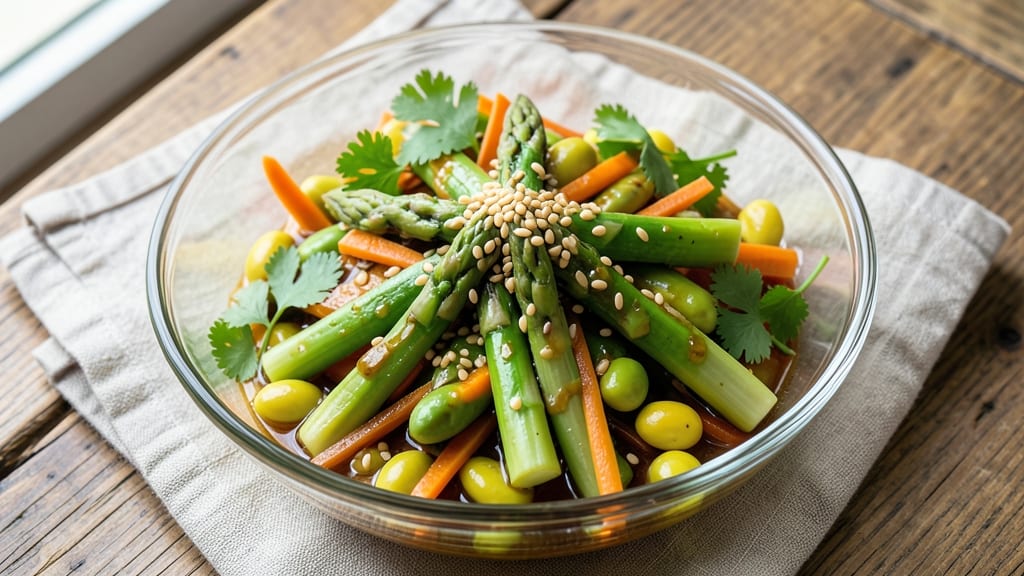
This Asian asparagus salad recipe transforms simple asparagus into a restaurant-quality side dish with crisp-tender stems and a bright sesame-ginger vinaigrette. The secret lies in blanching the asparagus just enough to soften without losing its natural snap, then tossing it with a dressing that balances sweet, savory, and umami flavors.
Fresh edamame, shredded carrots, and toasted sesame seeds add texture and color, while a touch of chili or lime keeps it vibrant.
What sets this salad apart is its perfect balance of textures—crisp asparagus, tender edamame, and crunchy carrots—all coated in a silky dressing that clings without overpowering. The sesame-ginger vinaigrette is quick to make but packed with depth, using simple pantry staples like soy sauce, rice vinegar, and sesame oil.
It’s the kind of dish that feels special yet requires minimal effort, making it ideal for weeknight dinners or elegant gatherings.
The result is a salad that’s as visually appealing as it is delicious, with bright green asparagus spears, creamy edamame, and a glossy dressing that ties everything together. The flavors are fresh, slightly tangy, and just sweet enough to satisfy, while the textures provide a satisfying contrast with every bite.
This recipe proves that even a simple vegetable like asparagus can be the star of the plate.
For added protein, toss in pan-seared tofu or shrimp, or keep it vegetarian for a lighter option. The salad holds up well in the fridge for a day, making it perfect for meal prep. Let’s get started on creating this vibrant, flavorful dish that’s sure to impress.
Ingredients for asian asparagus salad
Simple ingredients that transform into a restaurant-worthy Asian-inspired salad with perfect texture and flavor balance.
| Ingredient | Amount | Notes |
|---|---|---|
| Fresh Asparagus 🥦 | 1 lb | Medium spears, trimmed ends |
| Shelled Edamame 🌱 | 1 cup | Frozen or fresh, thawed |
| Carrots 🥕 | 2 medium | Shredded or julienned |
| Sesame Seeds 🌾 | 2 tbsp | Toasted for extra crunch |
| Sesame Oil 🫒 | 2 tbsp | Toasted sesame preferred |
| Soy Sauce 🍶 | 2 tbsp | Low-sodium preferred |
| Rice Vinegar 🍶 | 2 tbsp | Unseasoned preferred |
| Fresh Ginger 🧄 | 1 tbsp | Finely grated, fresh |
| Honey 🍯 | 1 tbsp | Or agave for vegan option |
| Lime Juice 🍋 | 1 tbsp | Freshly squeezed |
| Red Pepper Flakes 🌶️ | ½ tsp | Adjust for heat preference |
| Salt 🧂 | ½ tsp | Kosher or sea salt |
| Black Pepper 🌶️ | ¼ tsp | Freshly ground preferred |
| Sesame Oil 🫒 | 1 tsp | For finishing (extra) |
| Lime Zest 🍋 | 1 tsp | For garnish |
The asparagus is the star—look for bright green, firm spears at the grocery store. Trader Joe's or Whole Foods usually carry the best quality, but any well-stocked market will do. Trim the woody ends carefully with a sharp knife, leaving about an inch intact. For edamame, frozen is fine—just thaw and drain well before adding. The carrots should be fresh and crisp, not rubbery. If using pre-shredded, rinse it well to remove excess moisture. Toast your sesame seeds in a dry pan for 30 seconds until golden—they add incredible crunch and depth of flavor.
No sesame oil? Avocado oil or neutral oil works in a pinch, though it lacks the nutty flavor. Substitute honey with agave or maple syrup for vegan needs, but reduce to 1 tsp to avoid over-sweetness. Fresh ginger is ideal, but 1/2 tsp ground ginger works if you're short on time. For extra umami, add 1 tsp miso paste to the dressing. The rice vinegar should be unseasoned—seasoned versions can make the dressing too salty. If you can't find toasted sesame seeds, regular sesame seeds toasted in a dry pan for 1 minute will do, though they won't be quite as flavorful.
This salad keeps well in the fridge for up to 2 days, though the asparagus may soften slightly. Store dressing separately to maintain crispness. For meal prep, blanch the asparagus and edamame ahead, then refrigerate until ready to toss with dressing. The sesame seeds and lime zest are best added fresh before serving. If making ahead, omit the red pepper flakes until serving to preserve their heat. Garnish with extra sesame seeds and lime zest just before eating for maximum freshness.
Why You'll Love This Recipe
- No-Chop Needed: I swear by this trick—just snap the asparagus stalks and toss them in. No julienne skills required, and the carrots? A quick spiralizer or even a box grater does the job in seconds. Honestly, it’s the kind of salad that makes me feel like a chef without the fuss.
- Umami Bomb: That sesame oil and toasted sesame seeds? They’re the secret weapons. The nutty, toasty crunch from the seeds pairs perfectly with the fresh, slightly bitter asparagus, while the edamame adds a creamy, protein-packed punch. It’s the kind of flavor combo that makes you want to eat it straight from the bowl.
- Lunchbox Hero: Between us, this salad holds up way better than most greens. Pack it in a container with a sprinkle of extra sesame seeds, and it’s still crisp and delicious by lunchtime. My kids actually eat their veggies this way—no complaints, just clean plates.
- Budget Meal Magic: Fresh asparagus might seem fancy, but in season, it’s cheaper than you think. Pair it with affordable edamame and carrots, and you’ve got a salad that feels gourmet without breaking the bank. Plus, leftovers? They’re even better the next day—if there are any.
Step-by-step instructions for crisp-tender Asian asparagus salad
Here's how to achieve perfect texture and vibrant flavor in this refreshing salad.
Blanch and Shock the Asparagus
Fill a large pot with water and bring to a rolling boil. While waiting, trim the tough ends from the 1 lb fresh asparagus spears by snapping them at their natural break points. Add the spears to the boiling water and cook for exactly 1 minute 30 seconds—this ensures they're tender-crisp without becoming mushy.
Immediately transfer the asparagus to a bowl of ice water to stop the cooking process. Let them chill for 5 minutes until completely cooled. This shocking method preserves their bright green color and crisp texture. Drain well before proceeding.
Prepare the Sesame-Ginger Vinaigrette
In a small bowl, whisk together the 2 tbsp soy sauce, 2 tbsp rice vinegar, 1 tbsp honey, 1 tbsp freshly squeezed lime juice, and 1 tbsp finely grated fresh ginger until fully combined. The mixture should be smooth with no visible ginger particles. Season with the 0.5 tsp salt, 0.25 tsp black pepper, and 0.5 tsp red pepper flakes.
In a separate small bowl, combine the 2 tbsp sesame oil with 1 tsp lime zest. Whisk until the zest is fully incorporated and the oil becomes slightly cloudy. This creates a balanced dressing where the sesame oil carries the citrus notes from the lime zest.
Cook and Prepare the Edamame and Carrots
In a small saucepan, combine the 1 cup shelled edamame with 1 cup fresh water. Bring to a boil, then reduce heat to medium-low and simmer for 3 minutes until the edamame is heated through but still vibrant green. Drain immediately and plunge into ice water for 1 minute to stop cooking. Drain again and pat dry.
While the edamame cooks, prepare the 2 medium carrots by shredding or julienning them into thin strips. The finer the cut, the more evenly they'll absorb the dressing. Transfer the carrots to a medium bowl and set aside.
Assemble the Salad
In a large mixing bowl, combine the blanched asparagus, cooked edamame, and prepared carrots. Drizzle half of the vinaigrette over the vegetables and gently toss to coat evenly. The salad should be well-mixed but still retain some texture from the asparagus spears.
Sprinkle the 2 tbsp toasted sesame seeds over the salad and toss again just until combined. Add the remaining vinaigrette and toss one final time. The sesame seeds will add a delightful crunch that contrasts beautifully with the tender vegetables.
Finish and Serve
Transfer the salad to a serving platter and let it sit for 5 minutes before serving. This brief resting period allows the flavors to meld together and the dressing to fully coat each ingredient. Drizzle with the 1 tsp extra sesame oil just before serving to add a final layer of richness.
Garnish with additional lime zest if desired, and serve immediately while the asparagus remains crisp-tender. The salad pairs perfectly with grilled proteins or as a standalone light meal, offering a balance of textures and flavors in every bite.
Pro Tips For Making Asian Asparagus Salad
- Blanch Asparagus Just Until Bright: The second it turns dull green, pull it out—overcooking turns it into sad, limp sticks. I used to leave it in too long, thinking more heat meant better flavor, but this salad needs crisp texture. Aim for 1-2 minutes max in boiling water, then ice bath. (Yes, even if you’re impatient like me.)
- Shave Carrots Thinly for Crunch: Skip the julienne peeler—it makes them too thick. Use a mandoline on the thinnest setting or a sharp knife held flat against the cutting board. Thin shavings stay crisp longer in the dressing and add real texture contrast to the edamame and asparagus.
- Toast Sesame Seeds Low and Slow: I learned this the hard way—blasting them on high burns them to bitter dust. Spread them on a dry pan over medium-low heat, stirring constantly for 2-3 minutes until they’re golden and smell nutty. Remove immediately or they’ll darken fast.
- Dress Edamame Last to Keep It Tender: Tossing shelled edamame into the dressing too early makes it mushy. Add it right before serving—just a quick mix with the other ingredients. If you’re using frozen edamame, thaw and pat it dry first; excess moisture turns the salad soggy.
Regional styles of these flavors
Japanese Shio Salad Style
For a lighter take, prepare this as a Japanese shio salad by omitting the honey and adding 1 tbsp mirin to the dressing instead.
Use 1 tbsp toasted sesame oil and 1 tbsp rice vinegar, then finish with a sprinkle of flaky sea salt (like Maldon) and 1 tsp grated daikon radish for a refreshing, umami-forward twist. Serve with sushi rolls or grilled fish for an authentic Japanese meal. 🍣
Korean Kimchi Twist
Add a Korean-inspired kick by tossing in ¼ cup finely chopped kimchi (drained) and 1 tsp gochujang into the dressing. Use 1 tbsp toasted sesame oil and 1 tbsp rice vinegar, then finish with 1 tsp toasted sesame seeds and thinly sliced scallions.
The tangy, spicy kimchi cuts through the sweetness, making this salad a bold side for bulgogi or Korean BBQ. 🌶️
Thai-Inspired Peanut Dressing
Swap the sesame-ginger vinaigrette for a Thai peanut dressing by blending ¼ cup creamy peanut butter, 1 tbsp soy sauce, 1 tbsp rice vinegar, 1 tsp lime juice, 1 tsp honey, and 1 tsp sriracha.
Drizzle over the salad and top with crushed peanuts and cilantro. This version pairs perfectly with grilled chicken or tofu for a Thai-inspired meal. 🥜
Chinese Sesame Sauce Style
For a Chinese-inspired version, replace the vinaigrette with a sesame sauce by mixing 2 tbsp soy sauce, 1 tbsp hoisin sauce, 1 tbsp rice vinegar, 1 tbsp honey, and 1 tsp grated ginger.
Toss with shredded napa cabbage (½ cup) and thinly sliced green onions. Garnish with toasted sesame seeds and crushed peanuts for a crunchy, savory salad that complements stir-fried dishes or dumplings. 🥢
Vietnamese Fresh Herb Style
Transform this into a Vietnamese-inspired salad by adding mint, cilantro, and Thai basil (½ cup each). Use a dressing of 2 tbsp fish sauce, 1 tbsp lime juice, 1 tbsp rice vinegar, and 1 tsp sugar.
Toss with thinly sliced cucumber (½ cup) and rice noodles (½ cup cooked) for a lighter, herb-packed version. Perfect with grilled shrimp or spring rolls. 🌿
Nutrition facts
Frequently asked questions
Can I use white asparagus instead of green?
White asparagus works beautifully in this salad. Since it's naturally milder in flavor, you may want to add ½ tsp extra ginger or 1 tsp more soy sauce to the dressing for better depth. The blanching time remains the same, but white asparagus will be slightly more delicate. Peel the outer layer if it appears fibrous.
How do I make this salad spicier?
For extra heat, increase the red pepper flakes to 1-2 tsp in the dressing. You can also add 1 tsp sriracha or ½ tsp chili crisp to the vinaigrette. For a smoky kick, sprinkle ½ tsp smoked paprika over the salad before serving. Always taste as you go!
What's the best way to store leftovers?
Store the salad components separately in airtight containers for up to 2 days. Keep the dressing in a small jar and refrigerate the asparagus, edamame, and carrots in another container. Re-toss with dressing just before serving and add fresh sesame seeds and lime zest for maximum freshness. The asparagus may soften slightly but will still taste delicious.
Can I make this salad ahead of time?
Yes, but with a few adjustments. Blanch and shock the asparagus, then store it separately. Cook the edamame and shred the carrots ahead, but keep them refrigerated until ready to assemble. Make the dressing fresh and toss everything together just before serving. This preserves the crisp texture of the vegetables and keeps the salad vibrant.
What are good protein pairings for this salad?
This salad pairs wonderfully with grilled shrimp, pan-seared tofu, or thinly sliced chicken breast. For a vegetarian option, try adding ½ cup marinated tempeh or ¼ cup chopped cashews. The light, fresh flavors complement heartier proteins beautifully while keeping the dish balanced.