Sauces & Condiments
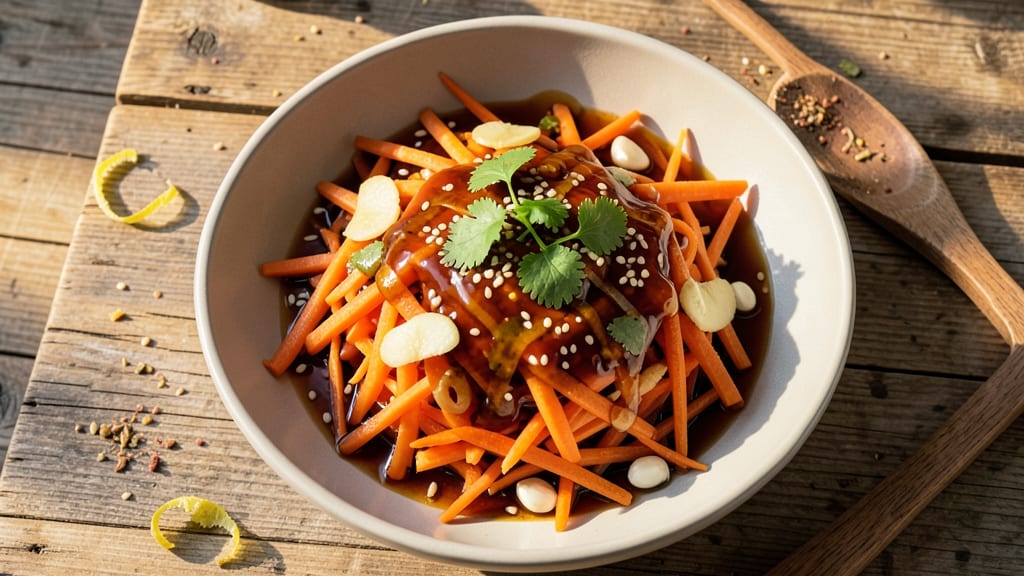
This Asian carrot salad dressing recipe transforms simple bowls into vibrant, umami-packed meals with just seven ingredients and 10 minutes of prep.
The perfect balance of sweet, tangy, and savory flavors comes from a blend of sesame oil, rice vinegar, and a touch of honey—creating a dressing that clings beautifully to crisp vegetables while adding depth to any dish.
What makes this recipe stand out is its versatility: it elevates salads, glazes proteins, or even doubles as a marinade for tofu or chicken.
The foundation of this dressing lies in its umami-rich base, where soy sauce and a hint of garlic provide that signature Asian depth.
Fresh ginger adds a subtle warmth that brightens the dressing, while a dash of chili (optional) introduces a gentle kick for those who crave a little heat. Unlike store-bought versions, this recipe uses real ingredients—no artificial flavors or preservatives—so every spoonful tastes fresh and intentional.
The result is a dressing that’s light enough to drizzle but bold enough to make the main event.
What you’ll end up with is a glossy, aromatic dressing that turns ordinary salads into showstoppers. The carrot-inspired name isn’t just for flavor—it’s a nod to the natural sweetness of carrots, which pairs beautifully with the dressing’s tangy-savory profile.
Whether you’re serving it over a crunchy slaw, tossing it with noodles, or using it as a glaze for grilled proteins, this dressing delivers restaurant-quality flavor with minimal effort.
Best of all, it keeps well in the fridge for up to a week, so you can make a batch and enjoy it all week long.
For those who love customization, this dressing is endlessly adaptable. Swap the honey for maple syrup for a deeper caramel note, or add a splash of lime juice for extra brightness.
It’s the kind of recipe that proves simple ingredients can do extraordinary things when combined thoughtfully. Let’s get started—your next bowl is about to get an upgrade.
Ingredients for asian carrot salad dressing
Seven simple ingredients create a dressing that transforms ordinary salads into restaurant-quality bowls.
| Ingredient | Amount | Notes |
|---|---|---|
| Sesame Oil 🫒 | ¼ cup | Toasted for nutty aroma |
| Rice Vinegar 💧 | ⅓ cup | Unseasoned preferred |
| Honey 🍯 | ¼ cup | Light or wildflower variety |
| Soy Sauce 🍶 | ¼ cup | Low-sodium for balance |
| Fresh Ginger 🌿 | 1 tbsp | Finely grated, fresh only |
| Garlic Cloves 🧄 | 2 cloves | Minced or pressed |
| Red Chili Flakes 🌶️ | ½ tsp | Adjust for heat preference |
The sesame oil is the flavor anchor—toasted sesame oil from Trader Joe's or Asian markets has the richest aroma. Look for bottles labeled 'toasted' or 'aromatic'; the unrefined kind has more depth. Rice vinegar should be unseasoned—any brand works, but Kikkoman is widely available. Fresh ginger and garlic are non-negotiable here; pre-minced garlic often has additives that dull the flavor. The honey should be light or wildflower to avoid overpowering the dressing's balance. For the soy sauce, low-sodium keeps the dressing from becoming too salty, especially if you're drizzling generously.
No sesame oil? Avocado oil or light olive oil works in a pinch, though it lacks that nutty depth. Swap honey for maple syrup or agave for a different sweetness profile. If you can't find unseasoned rice vinegar, apple cider vinegar adds a fruity twist. For extra brightness, add 1 tbsp lime juice—it cuts through the richness beautifully. The chili flakes are optional but recommended; if you prefer no heat, simply omit them. This dressing keeps well when stored properly, so don't hesitate to make a batch—it's that good.
Store in an airtight container in the fridge for up to 1 week. The flavors meld beautifully over time, so it often tastes even better the next day. For longer storage, transfer to a sterilized jar and keep it in the fridge for up to 2 weeks. Shake well before each use, as the ingredients may separate slightly. This dressing doubles as a marinade for tofu or chicken—just reduce the honey to 2 tbsp and add 1 tsp cornstarch to thicken slightly for glazing. Freeze for up to 3 months if you want to make a big batch ahead of time.
Why You'll Love This Recipe
- Five-Ingredient Magic: This dressing comes together with just a whisk and a jar—no fancy techniques. I swear, the moment I mix sesame oil’s nutty warmth with rice vinegar’s sharp tang, my kitchen smells like a little Asian bistro.
- Umami Bomb: That soy sauce isn’t just there to salt—it’s the secret weapon. When it marries with fresh ginger’s zing and a drizzle of honey, every bite of your salad gets this deep, savory punch that sticks with you.
- Leftover Hero: Make a double batch and store it in the fridge. Drizzle it over noodles, toss it with cold cuts, or even use it as a marinade. Honestly, I’ve had this dressing last me a full week without getting tired of it.
- Budget Brightener: Sesame oil and soy sauce are pantry staples that cost next to nothing, yet they transform basic greens into something special. Between us, this is how I make $5 worth of ingredients feel like a gourmet splurge.
Step-by-step instructions for Asian carrot salad dressing
This dressing delivers perfect balance—sweet, tangy, and umami-rich for vibrant carrot salads.
Toast the Sesame Oil for Depth of Flavor
Heat the 0.25 cup sesame oil in a small saucepan over low heat for 2-3 minutes until it shimmers and releases a nutty aroma. Watch closely—you want it warm but not smoking. Remove from heat immediately after topping to prevent bitterness. This toasting enhances the oil's natural flavor and creates a richer base for your dressing.
Let the toasted oil cool for 5 minutes before using. The slight warmth helps the other ingredients emulsify better, but it should never be hot when you mix it with the vinegar. If you skip this step, your dressing will taste flat compared to the full, toasty flavor you're aiming for.
Combine Wet Ingredients for Initial Blend
In a medium bowl, whisk together the 0.33 cup rice vinegar, 0.25 cup honey, 0.25 cup soy sauce, and the cooled toasted sesame oil. Start with a quick stir to incorporate all ingredients, then whisk vigorously for 30-45 seconds until the mixture begins to thicken slightly. The honey and soy sauce will create a syrupy base that helps bind the dressing.
Here's where it gets important: taste the mixture now. You'll notice it's tangy from the vinegar, sweet from the honey, and salty from the soy sauce. This initial blend should taste balanced but slightly incomplete—you'll add the fresh ginger and garlic next to round out the flavors. If it tastes too sweet, add a pinch more soy sauce; if too tangy, a drizzle of honey.
Add Aromatics for Complexity
Grate the 1 tablespoon fresh ginger using a fine grater or microplane, then mince the 2 cloves garlic. Add both to the bowl and whisk continuously for 1 minute until the ginger dissolves completely and the garlic is fully incorporated. The ginger should become nearly invisible in the mixture, creating a smooth texture without graininess.
This is the moment that matters: the ginger and garlic infuse the dressing with their signature warmth and depth. You'll smell the fresh, bright aroma of ginger mingling with the toasty sesame oil. If you notice any undissolved bits, whisk for an additional 30 seconds—this ensures every bite of your salad gets that full flavor experience.
Finish with Heat and Emulsify
Sprinkle in the 0.5 teaspoon red chili flakes and whisk for 10-15 seconds to distribute evenly. The chili adds a subtle heat that cuts through the sweetness and enhances the umami notes. Taste again now—you should detect all components working together: the tang of vinegar, sweetness of honey, saltiness of soy, nutty sesame, fresh ginger, garlicky punch, and just a hint of spice.
For the final texture, transfer the dressing to a clean jar and seal tightly. Shake vigorously for 15-20 seconds until fully emulsified. This step is crucial—it creates a silky, cohesive dressing that clings beautifully to carrot ribbons or salad greens. The dressing should coat the back of a spoon without separating. If it does separate slightly, shake again before using.
Rest and Adjust for Perfect Balance
Let the dressing rest at room temperature for 10 minutes before serving. This resting period allows all the flavors to meld completely. After resting, give it one final taste and adjust if needed: a drizzle of honey for more sweetness, a splash of rice vinegar for tang, or a pinch more soy sauce for saltiness.
When ready to use, shake again to re-emulsify. This dressing keeps well in the refrigerator for up to 1 week, though it's best used within 3-4 days for maximum freshness. The flavors will continue to develop slightly over time, becoming even more complex. Drizzle generously over your carrot salad for a vibrant, umami-rich dressing that elevates every bite.
Pro Tips For Making Asian Carrot Salad Dressing
- STRAIN THE GINGER: Grate it fresh—no shortcuts—but then strain the pulp through a fine-mesh sieve before adding it to the dressing. That gritty texture ruins the silky finish, and you’ll taste the difference in every bite. (I learned this after serving a batch where the dressing felt like sandpaper.)
- WHISK THE SESAME OIL LAST: Mix everything except the sesame oil first. Adding it last keeps its nutty aroma from cooking off—just a quick swirl at the end. Overdo it, and your dressing tastes like a burnt frying pan. (Yes, I’ve done that.)
- USE RAW HONEY, NOT COOKED: Store-bought honey is fine, but if you’re using the kind from the farmers' market, let it sit at room temp for 10 minutes first. Cold honey won’t blend smoothly, and your dressing will look clumpy. (Your whisk will thank you.)
- DILUTE THE SOY SAUCE: Thin 1 tablespoon of soy sauce with 1 teaspoon of warm water before adding it to the dressing. It mixes better, prevents clumping, and stops the dressing from turning into a thick, gloopy mess. (I used to skip this—don’t.)
Essential equipment for asian carrot salad dressing
Whisk Essentials
You’ll need a balloon whisk or French whisk for this dressing—I use my OXO Good Grips whisk because it’s sturdy yet easy to handle. The fine tines create a silky emulsion that clings beautifully to carrot ribbons. A small mixing bowl (8-10 inches) works best for whisking without splashing. 🥄
Measuring Tools
Precision matters here, especially with the sesame oil and honey. I recommend a liquid measuring cup with clear markings for the wet ingredients, and a small kitchen scale if you want to get fancy with exact weights.
For the ginger and garlic, a microplane is my go-to—it grates finely without pulping, which keeps the texture smooth. 📏
Storage Containers
Transfer your finished dressing to an airtight glass jar or leak-proof container for storage. I love Weck jars or mason jars because they’re durable and easy to shake. For longer storage, a sterilized glass jar is ideal—plastic can absorb odors over time. Label with the date to track freshness. ❄️
Optional Tools
A small saucepan is only needed if you want to toast the sesame oil—otherwise, skip it. For extra smoothness, blend the dressing briefly in a mini immersion blender (like the Magic Bullet Mixing Fork) to eliminate any lingering ginger or garlic bits.
A fine-mesh strainer helps if you prefer a completely smooth texture. 💡
Heat Source
If toasting the sesame oil, use a small saucepan on low heat—never medium or high, or it’ll burn. A gas stove gives you better temperature control than electric, but an electric burner works fine if you monitor it closely. Keep a kitchen timer nearby to avoid over-toasting. ⏱️
Nutrition facts
Frequently asked questions
Can I make this dressing without sesame oil?
Yes! For a similar nutty depth, substitute 0.25 cup avocado oil or light olive oil. However, the flavor won't be identical—the toasted sesame oil is what gives this dressing its signature umami richness. If you're avoiding sesame for allergies, try toasted walnut oil for a different but still aromatic profile.
How long does this dressing last, and can I freeze it?
This dressing stays fresh in an airtight container in the fridge for up to 1 week, with peak flavor within the first 3-4 days. For longer storage, freeze it in 1-tablespoon portions for up to 3 months. Thaw overnight in the fridge before using—never microwave frozen dressing, as it can break the emulsion.
What's the best way to store leftover dressing?
Transfer to a clean, airtight glass jar and refrigerate immediately. The dressing may separate slightly over time—just shake vigorously before using. For extra freshness, add a small piece of parchment paper over the surface to prevent a skin from forming. If it thickens too much, thin with 1 teaspoon water or rice vinegar.
Can I use this dressing on proteins besides chicken?
This dressing works beautifully as a marinade for tofu, shrimp, or even seared salmon. For marinating, reduce the honey to 2 tablespoons and add 1 teaspoon cornstarch to help it cling. Marinate proteins for 15-30 minutes (tofu absorbs quickly) before cooking. The dressing also makes an excellent glaze when reduced by half on the stove.
Why does my dressing look separated after refrigeration?
This is normal! The ingredients naturally separate when cold. Simply shake the jar vigorously for 20-30 seconds until fully emulsified. If it continues separating, stir in 1 teaspoon water or rice vinegar to help bind the mixture. For a smoother texture, blend briefly with an immersion blender before serving.