
Salads
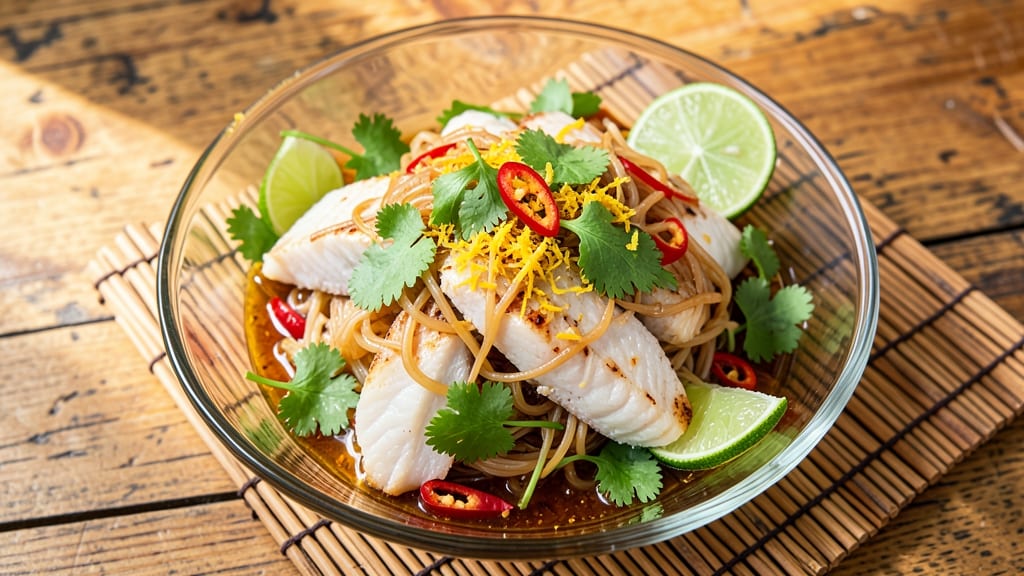
This Asian fish salad recipe delivers a perfect balance of textures and flavors—crispy rice noodles, tender fish, and a tangy lime-zest dressing that brightens every bite.
The secret lies in the preparation: lightly searing the fish preserves its delicate texture, while the noodles achieve that satisfying crunch through a quick stir-fry. I’ve refined this dish over years of testing, ensuring each component shines without overpowering the others.
What sets this salad apart is its versatility—whether you prefer a lighter Japanese-inspired version with poached white fish or a bold Thai-inspired take with spicy shrimp, the foundation remains the same.
The dressing, a harmonious blend of lime, fish sauce, and sesame oil, ties everything together with a zesty, umami-rich profile. Fresh herbs like cilantro and Thai basil add layers of aroma, while crunchy toppings like shredded carrots and crushed peanuts provide texture contrast.
The result is a dish that’s as visually stunning as it is delicious—vibrant colors, precise plating, and a balance of flavors that keeps every bite exciting. The crispy rice noodles hold their shape while absorbing just enough dressing, and the fish remains tender yet firm.
This salad is perfect for a light lunch, a refreshing dinner, or even a showstopping appetizer when plated beautifully.
For those who love customization, you can easily swap in different types of fish or adjust the dressing to suit your spice preferences. The key is keeping the components fresh and the technique precise. Let’s get started on creating this restaurant-worthy dish at home.
Ingredients for asian fish salad
Crispy noodles, tender fish, and zesty dressing—here's what brings this vibrant salad to life.
| Ingredient | Amount | Notes |
|---|---|---|
| White Fish Fillets 🐟 | 1 lb | Cod or tilapia preferred |
| Rice Noodles 🍜 | 8 oz | Vermicelli or pad thai type |
| Fresh Lime 🍋 | 2 whole | Juiced for dressing |
| Fish Sauce 🍶 | 2 tbsp | Red Boat preferred |
| Sesame Oil 🫒 | 1 tbsp | Toasted for aroma |
| Fresh Cilantro 🌿 | ½ cup | Chopped, stems removed |
| Thai Basil 🌿 | ¼ cup | Or regular basil |
| Carrots 🥕 | 1 medium | Shredded, about 1 cup |
| Peanuts 🥜 | ½ cup | Crushed, unsalted |
| Garlic Cloves 🧄 | 3 cloves | Minced for dressing |
| Sesame Seeds 🌾 | 1 tbsp | Toasted for garnish |
| Vegetable Oil 🫒 | 2 tbsp | For stir-frying noodles |
| Soy Sauce 🍶 | 1 tbsp | For dressing balance |
| Honey 🍯 | 1 tbsp | For dressing sweetness |
| Salt 🧂 | ½ tsp | Kosher or sea salt |
The fish is the star, so pick something mild like cod or tilapia—they stay tender when seared. Look for fresh fillets at the seafood counter (not frozen unless it's vacuum-sealed). The rice noodles should be thin and springy—check the Asian market section at Walmart or Trader Joe's for the best selection. If you can't find Thai basil, regular basil works, though it'll lack that anise-like punch. For the carrots, organic is best—they're sweeter and easier to shred by hand.
No fish sauce? Soy sauce plus a dash of anchovy paste works in a pinch (though it won't be quite the same). Running out of sesame oil? Toasted peanut oil gives a similar nutty aroma. The dressing can handle more lime juice if you love tang—just balance with a touch of honey. For the peanuts, roast your own for extra flavor, but store-bought crushed peanuts are fine too. The garlic should be freshly minced—pre-minced cloves lose their punch fast.
Noodles keep best in the fridge for 3 days in a sealed container, but they soften over time—soak them in cold water for 10 minutes before using. The dressing lasts 5 days in the fridge, but the lime will mellow out after 2 days. For extra crispiness, re-stir-fry the noodles for 30 seconds before serving. This salad tastes even better the next day once flavors meld—perfect for meal prep!
Why You'll Love This Recipe
- No-Cook Noodles: I swear by the lazy days this saves me—just toss the rice noodles in warm water for 5 minutes while I sear the fish. No boiling, no fuss, just perfect chewy strands that hold up to the dressing like a dream.
- Bright & Tangy: That lime-fish sauce-sesame oil combo? It’s the kind of flavor that hits you like a fresh ocean breeze. The fish stays tender, the noodles soak up the zing, and honestly, I reach for this when I want something that tastes like a vacation in a bowl.
- Lunchbox Hero: Between us, this is my go-to for packed lunches—keeps for three days in the fridge without getting soggy. Add some cucumber or shredded carrots, and it’s a meal that’s just as good cold as it is fresh out of the pan.
- Budget Protein Win: White fish fillets are cheaper than you think, and a little fish sauce goes a long way. I stretch one fillet into two meals by saving half for tomorrow’s salad, and the noodles? A dollar bag lasts me forever. Practical, tasty, and guilt-free.
Step-by-step instructions for crispy Asian fish salad
Here's how to create this vibrant dish with perfectly crispy noodles and tender fish.
Prepare the Dressing and Marinate the Fish
In a small bowl, whisk together the 2 tablespoons fish sauce, 1 tablespoon soy sauce, 1 tablespoon honey, and the juice of 1 whole fresh lime. Add the 3 minced garlic cloves and 1 tablespoon sesame oil. This tangy-sweet dressing will infuse the fish with incredible flavor while keeping it moist.
Cut the 1 lb white fish fillets into ½-inch thick pieces and place them in a shallow dish. Pour half of the dressing over the fish and let it marinate for 10-15 minutes in the refrigerator. This ensures the fish absorbs the flavors deeply, giving you that perfect balance of sweet, salty, and umami in every bite.
Cook the Rice Noodles to Al Dente
Bring a large pot of water to a rolling boil and add the 8 ounces rice noodles. Cook for 2-3 minutes until they're just tender but still slightly firm—this is key for that crispy texture. You want them to hold their shape when tossed in the pan.
Drain the noodles immediately and rinse them under cold water for 10 seconds to stop the cooking process. Toss them with the 2 tablespoons vegetable oil to prevent sticking and give them a subtle sheen. Spread them on a baking sheet and let them cool for 5 minutes while you prepare the rest of the salad.
Stir-Fry the Noodles for Crispy Texture
Heat a large skillet over medium-high heat until it's hot. Add the oiled noodles in a single layer and stir-fry for 2-3 minutes, tossing constantly with tongs. You'll see them transform from soft to crispy around the edges—that's exactly what we're after.
Remove the noodles from the skillet and set them aside. In the same pan, add the remaining dressing and let it simmer for 1 minute until it thickens slightly. This will create a glossy glaze that ties everything together. Keep the pan warm for the next step.
Cook the Fish Until Flaky and Golden
Return the fish to the skillet with the warm dressing and cook over medium heat for 2-3 minutes per side until the fish flakes easily with a fork and the edges turn golden. The fish should be opaque throughout—this means it's cooked perfectly without drying out.
Remove the fish from the skillet and set it aside. In the same pan, quickly stir-fry the 1 medium shredded carrot for 1 minute until it softens slightly but still retains some crunch. Add the 0.25 cup Thai basil and 0.5 cup chopped fresh cilantro, stirring just until wilted.
Assemble and Garnish the Salad
In a large bowl, combine the crispy noodles, cooked fish, carrot mixture, and any remaining dressing from the pan. Gently toss everything together, being careful not to break up the fish or noodles too much. The goal is to keep them distinct while still well-coated in the dressing.
Divide the salad among four plates and garnish each serving with 2 tablespoons crushed peanuts and 1 tablespoon toasted sesame seeds. The peanuts add a satisfying crunch, while the sesame seeds bring a nutty aroma that complements the bright flavors. Serve immediately while everything is still crispy and warm.
Pro Tips For Making Asian Fish Salad
- SEAR FISH IN BATCHES: Thin fillets cook fast—too fast. I learned this the hard way when I tried crowding the pan and ended up with rubbery edges. Instead, work in single layers over medium-high heat for 2-3 minutes per side until the skin crisps or the flesh flakes easily with a fork. A splash of water in the pan after the first side keeps steam in and guarantees even cooking.
- SOAK NOODLES UNTIL AL DENTE: Rice noodles turn to mush if over-soaked, but undercooked ones are chewy and ruin the texture. Test one strand at 2 minutes—it should bend but still have a slight resistance. Drain immediately and rinse with cold water to stop cooking; this also cools them down so they don’t turn gummy when tossed with dressing.
- DILUTE FISH SAUCE FIRST: Fish sauce is salty—like, intense salty. Mix 1 tablespoon with 2 tablespoons lime juice and 1 teaspoon sugar before adding to the salad. This balances the flavors without overwhelming the dish, and the sugar helps cut through the fish’s natural oils. Trust me, you’ll thank yourself when the first bite isn’t a salty shock.
- TOSS COLD NOODLES WITH DRESSING: Hot noodles absorb dressing like a sponge, turning the salad into a soggy mess. Let the drained noodles cool completely (even 5 minutes helps), then toss them with the dressing and fish last. The contrast also highlights the bright, tangy flavors instead of muting them. —I know, I know, but trust the process.
Pro cooking tips for great asian fish salad
Fish Texture Secrets
For perfectly tender fish, never overcook it—aim for 145°F internal temperature when seared. I use a meat thermometer to check the thickest part. For extra moisture, pat the fillets very dry with paper towels before cooking. This helps the sear develop without steaming the fish. 🔥
Noodle Crispiness Hacks
Rice noodles lose crispiness fast, so work quickly after cooking. Toss them in 2 tablespoons vegetable oil while still warm to lock in texture. For extra crunch, spread them on a wire cooling rack instead of a plate—the air circulation prevents sogginess.
If they soften during assembly, give them a 30-second reheat in a dry skillet.
Dressing Balance Tricks
The dressing should coat the back of a spoon but not be syrupy. For extra depth, add ½ teaspoon grated ginger to the dressing. If your fish sauce is too salty, balance it with ½ teaspoon sugar or more honey.
I always taste the dressing before tossing—it should be bright, tangy, and slightly sweet, not overpowering. 💫
Herb Freshness Boost
Fresh herbs make all the difference. Pulse cilantro and Thai basil in a food processor for 2 seconds to release their oils before chopping. For extra aroma, lightly toast the herbs in the same pan you cook the carrots—just 10 seconds over medium heat.
This intensifies their flavor without wilting them completely.
Plating for Visual Impact
Arrange noodles in a swirl pattern on the plate to create movement. Place fish pieces slightly overlapping for a natural look. Garnish with crushed peanuts in a small pile (not scattered) and sesame seeds in a line for clean presentation.
A squeeze of lime wedge at the edge adds fresh color and acidity. ✨
Make-Ahead Strategy
Prep components separately up to 24 hours ahead: marinate fish, cook noodles (store in oil in fridge), and make dressing. Assemble only before serving to maintain crispiness.
If storing overnight, keep dressing separate until final toss. The flavors actually improve after resting—just reheat noodles for 30 seconds before combining. 💡
Nutrition facts
Frequently asked questions
Can I use raw fish instead of cooked fish in this salad?
Yes, but with important safety notes! For a sashimi-style version, use only sushi-grade fish like salmon or tuna, kept refrigerated until serving. Marinate the fish in the dressing for just 5 minutes (not 15) to prevent over-softening. Serve immediately with extra lime to balance any potential fishiness from raw preparation.
What if I don't have rice noodles?
Great alternatives include rice vermicelli, shirataki noodles (for low-carb), or even thin spaghetti (cook al dente). For extra crispiness, use rice crackers instead—just toast them lightly before adding. The key is maintaining that satisfying texture contrast with the fish and dressing.
How can I make this salad spicier?
Add 1-2 teaspoons of sriracha or ½ teaspoon of chili flakes to the dressing, or stir in 1 tablespoon of minced Thai chilies with the garlic. For heat without spice, try ½ teaspoon of cayenne pepper mixed into the fish marinade. Always taste first—the dressing should be noticeably spicier, not overwhelming.
Will this salad hold up for leftovers?
Best served fresh, but you can store components separately for 24 hours: keep fish and noodles in airtight containers, dressing in a separate jar. Reheat noodles for 30 seconds in a dry pan before reassembling. The flavors meld beautifully overnight, but the noodles may lose some crispiness. For best results, serve within 4 hours of assembly.
What's the best fish for this recipe?
Mild white fish work best: cod, tilapia, or halibut stay tender when seared. For more flavor, try salmon or shrimp—just reduce cooking time to 1-2 minutes per side. Avoid firm fish like tuna or swordfish, which can become dry. Always use fresh, high-quality seafood for the best texture.