Side Dishes
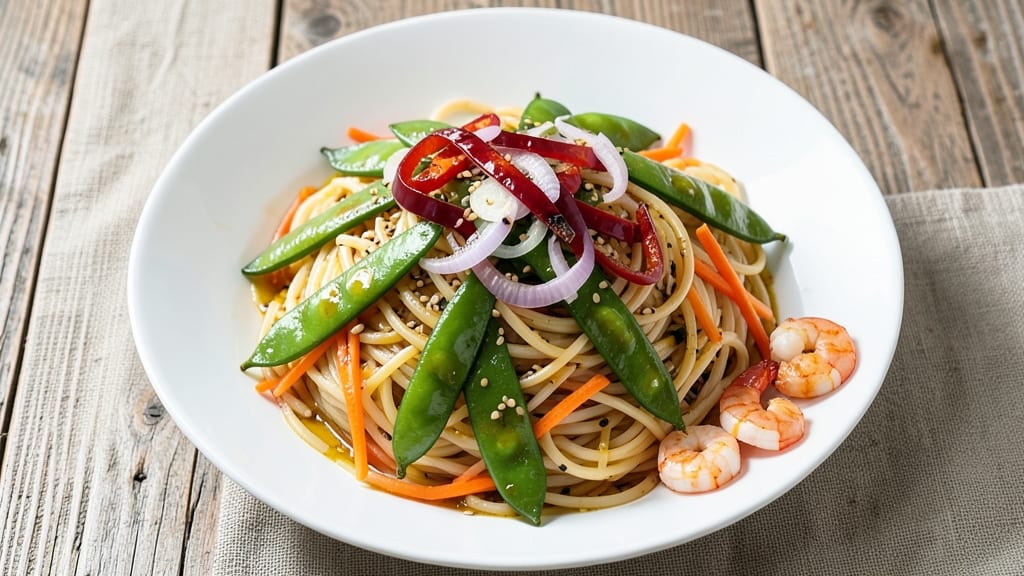
This Asian spaghetti salad recipe transforms a classic side into a vibrant, crunchy dish with bold flavors you won’t find in traditional versions. The secret lies in the crunchy sesame-peanut dressing, which blends nutty, tangy, and slightly spicy notes for a perfect balance.
I developed this recipe after craving something fresh, protein-packed, and full of texture—no soggy lettuce here. The foundation starts with perfectly cooked spaghetti, tossed while still warm to absorb the dressing completely.
Fresh vegetables like bell peppers, carrots, and edamame add bright crunch, while optional protein like shrimp or tofu keeps it satisfying. The dressing itself is a game-changer: toasted sesame seeds, creamy peanut butter, and a hint of chili oil create a coating that’s addictive in every bite.
What makes this salad stand out is the harmony of textures—crispy fried shallots, chewy noodles, and tender veggies all come together in one bite. It’s fresh enough for summer picnics but hearty enough for a main dish. The best part?
It stays crispy even hours after assembly, making it perfect for meal prep. Serve it chilled or at room temperature, and watch how quickly it disappears from the table. Whether you’re hosting a potluck or packing lunches, this salad delivers restaurant-quality flavor with minimal effort. Let’s get started!
Ingredients for asian spaghetti salad
Here’s your crunchy, nutty, and vibrant Asian spaghetti salad—packed with textures that’ll disappear faster than you can say sesame peanut dressing!
| Ingredient | Amount | Notes |
|---|---|---|
| Spaghetti 🍝 | 8 oz | Cooked al dente, tossed warm |
| Red Bell Peppers 🍅 | 1 whole | Thinly sliced, any color |
| Carrots 🥕 | 2 medium | Julienned or thinly sliced |
| Edamame 🌱 | 1 cup | Shelled, frozen or fresh |
| Fresh Shallots 🧅 | 3 whole | Thinly sliced, fried crispy |
| Shrimp (optional) 🦐 | 8 oz | Cooked, peeled, chopped |
| Firm Tofu (optional) 🥬 | 6 oz | Pressed, cubed, pan-fried |
| Sesame Seeds 🌰 | ¼ cup | Toasted, for garnish |
| Peanut Butter 🥜 | ½ cup | Creamy, unsweetened |
| Sesame Oil 🫒 | ¼ cup | Toasted, for flavor |
| Rice Vinegar 🍶 | ¼ cup | White or seasoned |
| Soy Sauce 🍶 | ¼ cup | Low-sodium preferred |
| Chili Oil 🌶️ | 1 tbsp | For spicy kick |
| Honey 🍯 | 1 tbsp | For balancing sweetness |
| Garlic Cloves 🧄 | 3 cloves | Minced, for dressing |
The bell peppers and carrots are your crunchy stars—farmers market peppers have the best flavor, but grocery store works too. Look for crisp, firm carrots (no rubbery ones!). Edamame? Frozen is perfect—just thaw and drain. Shrimp or tofu? Both add protein, but tofu soaks up flavor like a champ. If using shrimp, cook it just until pink—overcooking makes it tough. The shallots? Fried until golden—that’s where the magic happens.
No peanut butter? Almond butter or tahini works in a pinch, but peanut’s got that nutty depth. Short on sesame oil? Toasted sesame seeds + a little olive oil gets you close. Chili oil too spicy? Skip it or use sriracha at half the amount. The dressing’s the hero—whisk everything together, then let it sit for 10 minutes so flavors meld. Pro tip: Toast your sesame seeds in a dry pan for 2 minutes—they’ll smell amazing and add extra crunch.
This salad stays crispy for 3 days in the fridge—store the dressing separately and toss before serving. Meal prep hack: Keep components separate (noodles, veggies, protein, dressing) so everything stays fresh. The fried shallots? Store in an airtight container and add them fresh when ready to eat. Double the dressing—you’ll want leftovers for sandwiches or wraps!
Why You'll Love This Recipe
- No-Cook Crunch: I swear by the raw bell peppers and carrots—no boiling, no waiting, just slice and toss. The crunch alone keeps this salad feeling fresh even after sitting in the fridge.
- Umami Bomb: That crispy fried shallot crumble? Absolute game-changer. It turns a simple spaghetti salad into something dangerously addictive—like a little Asian-inspired flavor explosion in every bite.
- Lunchbox Hero: Between us, this is my go-to packed lunch. The edamame adds protein, the noodles hold up all day, and it’s the only salad that doesn’t get soggy by noon.
- Budget Win: Spaghetti, bell peppers, and carrots are cheap staples, but the edamame and shallots make it feel special. Honestly, I make this twice a month just because it’s so dang satisfying.
Step-by-step instructions for Asian spaghetti salad
Here's how to assemble this vibrant, crunchy salad with a dressing that's pure flavor magic.
Cook and Prepare All Ingredients
Start by cooking the 8 oz spaghetti according to package instructions until al dente. Drain immediately and rinse under cold water to stop the cooking process. Toss with a light coating of sesame oil while still warm to prevent clumping.
While the pasta cooks, prepare the vegetables. Thinly slice the 1 whole red bell pepper into strips and julienne the 2 medium carrots into matchsticks. Shell the 1 cup edamame (frozen works perfectly) and thaw if needed. Thinly slice the 3 whole fresh shallots and set aside for frying later.
If using, press and cube the 6 oz firm tofu and pan-fry until golden brown. Cook the 8 oz shrimp (optional) until just pink and chop into bite-sized pieces. These components will add texture and protein to balance the fresh vegetables.
Fry the Shallots for Crunchy Texture
Heat 1 tablespoon sesame oil in a small skillet over medium heat. Add the sliced shallots and fry for 3-4 minutes until they become golden brown and crispy. Remove with a slotted spoon and drain on paper towels to remove excess oil.
These crispy shallots add a wonderful crunch that contrasts beautifully with the soft spaghetti. Don't skip this step—they're the secret to that restaurant-quality texture. If you prefer extra crispiness, fry them in batches to avoid overcrowding the pan.
Make the Signature Sesame-Peanut Dressing
In a small bowl, whisk together the 0.5 cup peanut butter, 0.25 cup sesame oil, 0.25 cup rice vinegar, 0.25 cup soy sauce, 1 tablespoon honey, and 1 tablespoon chili oil. Add the 3 minced garlic cloves and whisk until smooth.
This dressing is where the magic happens. The peanut butter gives richness, the sesame oil adds depth, and the vinegar cuts through the fat for balance. The honey and chili oil create that perfect sweet-spicy contrast that makes this salad unforgettable. Taste and adjust—you might want more soy sauce for saltiness or extra honey for sweetness.
Assemble the Salad
In a large bowl, combine the cooked spaghetti, red bell pepper strips, julienned carrots, edamame, crispy shallots, and any optional protein (tofu or shrimp). Pour the dressing over everything and toss gently but thoroughly to coat all ingredients evenly.
Let the salad sit for 5-10 minutes to allow all the flavors to meld together. This resting time is crucial—it lets the dressing penetrate the pasta and vegetables, creating that perfect balance of textures and tastes. If you're serving immediately, give it at least 5 minutes of resting time before serving.
Garnish and Serve
Transfer the salad to serving plates and sprinkle generously with the 0.25 cup toasted sesame seeds. These seeds add that final nutty crunch and visual appeal that makes the dish look as good as it tastes.
Serve immediately while everything is still crisp and vibrant. This salad is best enjoyed fresh, with the contrast of warm spaghetti, crisp vegetables, and that irresistible peanut dressing. Pair it with grilled meats or use it as a complete meal on its own—it's that good!
Pro Tips For Making Asian Spaghetti Salad
- Rinse the Pasta Cold: Drain your cooked spaghetti and hit it with a quick cold-water rinse—right after draining. This stops the cooking process instantly and keeps the noodles from turning mushy when you toss them with the dressing later. I used to skip this and wondered why my salad always felt soggy.
- Shred Carrots Thin: Use a peeler or mandoline for even, paper-thin shreds—thicker slices stay crunchy but look unprofessional. Thin shreds soften just enough to absorb flavor without turning to mush. (Yes, it takes 2 minutes extra, but your salad will look like it came from a restaurant.)
- Shell Edamame Fresh: Skip the pre-shelled shortcut—freshly shelled edamame adds texture and stays crisp longer. Just snap the pods open with your thumbs (it’s faster than you’d think) and toss in whole. The pods add a fun crunch if you’re feeling fancy.
- Toast Shallots First: Sauté the shallots in the dressing oil for 2 minutes before adding everything else—they’ll mellow out their bite and deepen the flavor. Burnt? No, just golden. (This is the thing that makes your salad taste like it was made with intention, not just thrown together.)
Best sauces and condiments for asian spaghetti salad
Peanut Sesame Dressing
This is the star of the salad—a creamy, nutty, and slightly tangy dressing that ties everything together. Start with ½ cup creamy peanut butter (I love Smucker’s Natural for its smooth texture) and whisk it with ¼ cup toasted sesame oil for that deep, toasty flavor.
Add ¼ cup rice vinegar to brighten the dressing and cut through the richness, followed by ¼ cup low-sodium soy sauce for umami depth. A touch of 1 tbsp honey balances the saltiness, while 1 tbsp chili oil (like La Choy) adds a subtle kick.
Finish with 3 minced garlic cloves for a savory punch. 🌶️
Let the dressing sit for 10 minutes before using—this allows the flavors to meld beautifully. If it thickens too much, stir in 1-2 tsp warm water to loosen it. Trust me, the longer you let it rest, the better it tastes!
Spicy Chili Oil Swap
If chili oil is too intense, swap it for ½ tbsp sriracha mixed with ½ tbsp honey—this gives you a similar sweet-spicy balance. For extra heat, add ½ tsp gochujang (Korean chili paste) to the dressing.
I’ve also used 1 tsp sambal oelek for a different kind of spice, but adjust to your taste. The key is to keep the dressing vibrant and not overpower the fresh vegetables. 🔥
Sesame-Ginger Dressing
For a lighter, fresher twist, try a sesame-ginger dressing instead. Mix ¼ cup tahini, 2 tbsp rice vinegar, 1 tbsp honey, 1 tbsp grated fresh ginger, 1 tbsp sesame oil, and 1 tsp soy sauce.
This version is brighter and less heavy, perfect if you prefer a more herbaceous flavor. Garnish with extra sesame seeds and thinly sliced scallions for freshness. ✨
Sweet and Tangy Mango Dressing
For a tropical twist, blend ½ cup ripe mango purée, 2 tbsp rice vinegar, 1 tbsp lime juice, 1 tbsp honey, 1 tbsp sesame oil, and a pinch of salt.
This dressing adds a sweet, fruity contrast that pairs beautifully with the crunchy elements. It’s especially great if you’re serving the salad at a summer BBQ or potluck. 🍍
Extra Crunch Toppings
Boost the texture game with toppings like crushed peanuts, toasted coconut flakes, or fried wonton strips. I love adding ½ cup crushed peanuts right before serving—they add a satisfying crunch that disappears in seconds.
For a smoky touch, sprinkle ½ tsp smoked paprika over the salad before garnishing. These toppings elevate the dish from good to unforgettable! 🥜
Nutrition facts
Frequently asked questions
Can I make this Asian spaghetti salad ahead of time?
This salad actually tastes better after 24 hours as the flavors meld together. Store all components separately in airtight containers—keep the dressing separate until ready to serve. The noodles will stay al dente, and the veggies will maintain their crunch. Just give everything a good toss before serving.
What if I don't like peanuts? Are there good substitutes?
No problem! Swap the peanut butter for almond butter or tahini (sesame paste) for a nut-free option. For a seed-based alternative, try sunflower seed butter. All three work beautifully in the dressing—just adjust the honey slightly if needed. The key is maintaining that creamy, nutty base.
How do I keep the spaghetti from getting soggy?
Rinse the cooked spaghetti with cold water immediately after draining, then toss with a light coating of sesame oil while still warm. Store it in an airtight container in the fridge, and keep the dressing separate until serving. When ready to eat, toss everything together quickly. This method preserves the texture for up to 3 days.
Can I use whole wheat or gluten-free pasta?
Yes! Whole wheat pasta works perfectly and adds extra fiber. For gluten-free, choose a high-quality brand like Barilla GF or Jovial—they hold up well to the dressing. Just cook them according to package instructions (they may take slightly longer) and rinse thoroughly. The flavor profile stays the same, just with a nuttier texture.
What's the best way to add extra protein?
For a hearty meal, try grilled chicken (chopped), seared tofu cubes, or crispy baked tempeh. If you love seafood, add cooked shrimp or crab meat. For vegetarian options, try roasted chickpeas or crumbled feta cheese. Just