
Salads
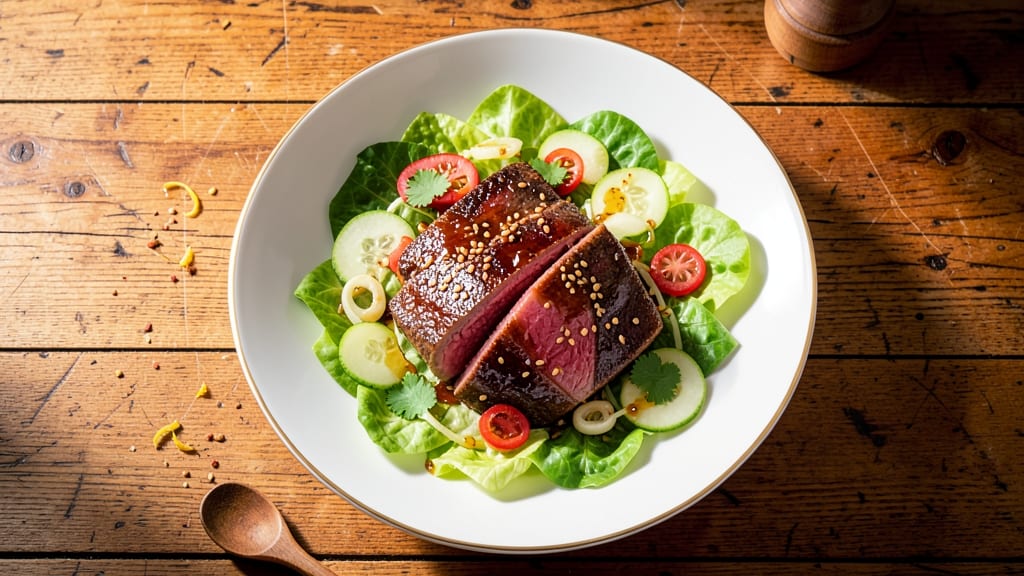
This Asian tuna steak salad recipe delivers restaurant-quality flavor with perfectly seared rare tuna and a crispy sesame crunch that transforms a simple salad into an elegant dish.
The secret lies in the high-heat sear that locks in juices while creating a delicate char, paired with a tangy sesame-soy dressing that bridges traditional Asian flavors with fresh, vibrant greens.
I developed this recipe after years of perfecting the balance between tender tuna and bold seasonings—no overpowering flavors here, just clean, bright, and satisfying bites.
The foundation of this salad is sushi-grade tuna steak, seared just 30 seconds per side for rare doneness, then topped with a toasted sesame-ginger dressing that adds depth without overwhelming.
Crispy fried shallots and toasted sesame seeds provide that essential crunch, while butter lettuce and thinly sliced cucumber keep the texture light and refreshing. The result is a dish that feels both sophisticated and effortless—ideal for weeknight dinners or weekend entertaining.
What makes this recipe stand out is the sesame crunch that elevates every bite, achieved through a simple frying technique that turns ordinary sesame seeds into golden, shatteringly crisp bits.
The dressing—a blend of soy sauce, rice vinegar, sesame oil, and a touch of honey—ties everything together with a perfect balance of umami, acidity, and sweetness. This isn’t just a salad; it’s a complete meal with protein, freshness, and texture in every forkful.
Serve this salad immediately for the best texture and flavor, or assemble ahead and sear the tuna just before serving to maintain that perfect rare doneness. Pair it with steamed jasmine rice or edamame for a full Asian-inspired spread.
The technique here is simple, but the result is anything but ordinary—proof that a few high-quality ingredients and precise timing can create a dish worthy of any table.
Ingredients for asian tuna steak salad
Restaurant-quality ingredients for a salad that packs bold Asian flavors and crispy crunch in every bite.
| Ingredient | Amount | Notes |
|---|---|---|
| Sushi-Grade Tuna Steak 🐟 | 1 lb | Thinly sliced, 1/2-inch thick |
| Sesame Seeds 🌿 | ¼ cup | White or black, toasted |
| Shallots 🧅 | 2 whole | Thinly sliced for frying |
| Butter Lettuce 🥬 | 4 cups | Outer leaves removed |
| English Cucumber 🥒 | 1 whole | Thinly sliced, peeled |
| Sesame Oil 🫒 | 2 tbsp | Toasted, for frying |
| Soy Sauce 🍶 | 3 tbsp | Low-sodium preferred |
| Rice Vinegar 🍶 | 2 tbsp | Seasoned, for balance |
| Honey 🍯 | 1 tbsp | Light for subtle sweetness |
| Fresh Ginger 🧄 | 1 tbsp | Grated, for dressing |
| Vegetable Oil 🫒 | ½ cup | High smoke point for frying |
| Salt 🧂 | 1 tsp | Kosher, for seasoning |
| Black Pepper 🌶️ | ½ tsp | Freshly cracked |
| Lemon Juice 🍋 | 1 tbsp | Freshly squeezed |
The tuna is non-negotiable here—sushi-grade is a must for safe, tender slices. Grab it from Whole Foods or your fishmonger, asking for the freshest cut possible. 1/2-inch thick slices sear perfectly without overcooking. For the sesame seeds, Trader Joe's has the best toasted variety in bulk—white or black, your call. Shallots add that sweet crunch when fried, so pick firm, pale ones without sprouts. Butter lettuce should be crisp and vibrant; avoid wilted outer leaves at the store. English cucumbers? Seedless varieties slice cleaner and stay fresher longer.
No sesame oil? Toasted peanut oil works in a pinch, but sesame is essential for that authentic umami punch. Swap rice vinegar for apple cider vinegar if needed, though it’ll taste slightly different. Honey lovers can use agave for a vegan option, but honey’s subtle sweetness is ideal. For the ginger, freshly grated beats powdered every time—just a quick zest over the dressing does the trick. The shallots? Slice them paper-thin for maximum crispiness when fried. And if you’re short on time, store-bought crispy shallots from the Asian aisle save steps without sacrificing flavor.
Tuna stays best 1-2 days in the fridge, sealed tightly in its original packaging. The dressing keeps for 5 days in a jar, but the sesame seeds lose their crunch after 3 days—fry fresh for the best texture. Portion the salad in advance but sear the tuna last-minute to keep it rare. Leftover tuna? Wrap tightly and freeze for up to 1 month—it reheats beautifully in a pan with a splash of soy sauce. The crispy shallots? Store in an airtight container and they’ll stay crunchy for 1 week. Double the dressing batch—it’s perfect for drizzling over rice or noodles too.
Why You'll Love This Recipe
- No-Fuss Assembly: I swear, this salad takes less time than waiting for takeout. Slice the tuna, toss the cucumber and lettuce—no dressing needed. The sesame seeds and shallots add flavor without extra bowls.
- Umami Bomb: That first bite of seared tuna with crispy shallots? It’s like a tiny flavor explosion. The raw tuna stays tender, while the toasted sesame seeds give it this addictive crunch.
- Lunchbox Hero: Between us, this is my go-to for packed lunches. The tuna holds up for hours, and the cucumber keeps it fresh. Honestly, it’s the only salad I actually look forward to eating cold.
- Budget Luxury: Fresh tuna feels fancy, but here’s the trick—it stretches far. Use half a steak for two servings, and the rest? Perfect for next day’s bento or a quick snack. No waste, all flavor.
Step-by-step instructions for Asian tuna steak salad
Here's how to create a restaurant-worthy tuna steak salad with that perfect crispy sesame crunch you crave.
Prepare the Crispy Sesame Garnish
Heat 2 tablespoons sesame oil in a small skillet over medium heat until shimmering. Add the 0.25 cup sesame seeds and toast them for 2-3 minutes until they turn a rich golden brown and smell nutty. Stir constantly to prevent burning—you want them crispy, not burnt.
Transfer the toasted sesame seeds to a paper towel-lined plate to cool completely. They'll lose some crispness as they cool, but this is perfect for the final garnish. Set aside until ready to use. The aroma alone will make your salad irresistible!
Sear the Tuna Steak to Rare Perfection
Pat the 1 lb sushi-grade tuna steak completely dry with paper towels—this ensures maximum sear. Season both sides generously with 1 teaspoon salt and 0.5 teaspoon black pepper. Heat 0.5 cup vegetable oil in a large skillet over high heat until it reaches 375°F (about 3-4 minutes).
Carefully place the tuna steak in the hot oil and sear for 1 minute 30 seconds per side for medium-rare (adjust time for your preferred doneness). You'll know it's ready when the exterior develops a beautiful mahogany crust and the internal temperature reaches 125°F for rare. Remove and let rest for 2 minutes before slicing against the grain into ¼-inch thick pieces.
Fry the Shallots for Crunchy Topping
Using the same skillet (cleaned with a paper towel), add 2 whole shallots that have been thinly sliced. Heat over medium heat with no additional oil until the shallots begin to sizzle. Cook for 3-4 minutes until they turn golden brown and crispy, stirring occasionally. They should be fragrant and slightly caramelized.
Remove the shallots and drain them on a fresh paper towel. These crispy shallots will add another layer of texture that perfectly complements the tuna. Keep them warm until ready to assemble the salad. If they cool too much, simply reheat in the skillet for 30 seconds before serving.
Assemble the Refreshing Dressing
In a small bowl, whisk together 3 tablespoons soy sauce, 2 tablespoons rice vinegar, 1 tablespoon honey, 1 tablespoon freshly grated ginger, and 1 tablespoon freshly squeezed lemon juice. The mixture should be smooth and slightly thick. Taste and adjust seasoning—you might want to add a touch more honey for sweetness or rice vinegar for acidity.
This dressing is the secret to balancing the rich tuna with bright, refreshing flavors. The ginger adds warmth, the lemon juice brightens everything up, and the honey rounds out the soy sauce's saltiness. Let it sit for 5 minutes to allow the flavors to meld before using.
Build the Perfect Salad
Arrange 4 cups butter lettuce on each of four plates, removing any tough outer leaves. Top with ¼ of the sliced English cucumber (thinly sliced and peeled) for each serving. Drizzle 1 tablespoon of the dressing over each portion, reserving any extra for serving.
Place the sliced tuna steak over the lettuce and cucumber, then sprinkle with the crispy shallots and toasted sesame seeds. The contrast of textures—creamy tuna, crispy shallots, crunchy sesame seeds, and tender lettuce—is what makes this salad extraordinary. Serve immediately while everything is at its peak texture and temperature!
Pro Tips For Making Asian Tuna Steak Salad
- SEAR TWO MINUTES MAX: That tuna steak turns rubbery fast—hit a screaming-hot pan (no preheating) and cook just 60-90 seconds per side. Overcook it, and you’ll end up with chewy sadness instead of that perfect medium-rare bite. I learned this the hard way after a well-intentioned 3-minute sear left me with fish that could’ve doubled as shoe leather.
- SLICE SHALLOTS THINLY: Skip the chopping knife for shallots—use a mandoline or sharp chef’s knife to slice them paper-thin. The goal is translucent, barely-there layers that’ll caramelize slightly when tossed with the salad. Thick slices? They’ll just sit there like little rocks in your mouth.
- DRY THE TUNA WELL: Pat that tuna steak thoroughly with paper towels before searing—wetness = steam = uneven cooking. I used to rush this, and the outside would stick or steam instead of getting that beautiful crust. Trust me, the extra 30 seconds saves your dish.
- TOSS CUCUMBER IN ICE WATER: English cucumbers are watery beasts—toss them in ice-cold water for 10 minutes before slicing, then drain and dry. This removes excess moisture so your salad stays crisp instead of turning into a soggy mess. (Yes, even if you’re impatient like me.)
Troubleshooting perfect results
Tuna Overcooked?
If your tuna steak turns gray or rubbery, it’s overdone. The key is precision: use a meat thermometer and aim for 125°F internal temp for rare. I’ve ruined tuna by leaving it too long—1 minute 30 seconds per side max over 375°F oil.
If it’s already tough, try slicing it thinly and serving it cold with extra dressing to mask the texture. 🌡️
Dressing Too Salty?
Start with low-sodium soy sauce to control flavor. If it’s still too strong, balance it with 1 extra tbsp honey or ½ tsp grated ginger.
I once over-salted mine and fixed it by adding 1 tbsp lemon juice and 2 tbsp cold water to dilute. Taste as you go—adjust gradually! 🍶
Sesame Seeds Not Crispy?
Toast sesame seeds over medium heat until golden brown, not dark brown. If they’re soft, they weren’t hot enough. For extra crunch, fry them in ½ cup vegetable oil for 1-2 minutes in a 350°F oven (spread on a baking sheet) instead of a skillet.
Store them in an airtight container to preserve crispness. 🌿
Lettuce Too Wilted?
Butter lettuce wilts fast—keep it cold until serving. If it’s already limp, swap for baby spinach or shredded cabbage for structure. For extra crunch, add ¼ cup sliced radishes or thinly sliced jicama to the base. Chill the greens for 10 minutes before assembling to refresh them. ❄️
Shallots Burning?
Shallots cook fast—watch them closely! Reduce heat to medium-low if they brown too quickly. If they burn, start fresh with thinner slices and less oil. For a backup, use store-bought crispy shallots (found in the Asian aisle) as a shortcut. 🧅
Tuna Too Dry?
Dry tuna means it wasn’t rested long enough. Let it rest for 2-3 minutes after searing to redistribute juices. If it’s already dry, slice it thinner and serve with extra dressing. For extra moisture, brush the tuna with 1 tsp sesame oil before searing. 💧
Nutrition facts
Frequently asked questions
Can I use frozen tuna for this recipe?
Fresh, sushi-grade tuna is essential for this dish—frozen tuna won't deliver the same tender texture or rich flavor. If you must use frozen, thaw it overnight in the fridge and pat it completely dry before searing. For best results, always buy the freshest cut possible from a trusted fishmonger.
What if I don't have sesame seeds?
You can substitute with toasted sunflower seeds or crushed peanuts for a similar crunch, though the flavor will differ slightly. For authenticity, try toasted pumpkin seeds—they add a nutty depth that works surprisingly well. If you're avoiding nuts completely, use crispy fried onions instead.
How do I adjust this for spicier flavors?
Add ½ teaspoon of chili crisp or 1 teaspoon of sriracha to the dressing for immediate heat. For deeper spice, mix 1 teaspoon of gochujang (Korean chili paste) into the dressing or top the salad with thinly sliced jalapeños for fresh, fiery crunch. Balance with extra honey if needed.
Can I make this ahead of time?
Prepare all components except the tuna up to 2 days ahead, storing them separately in airtight containers. Assemble the salad just before serving and sear the tuna fresh to maintain its perfect rare doneness. The dressing and crispy toppings keep well, while the greens stay freshest when added last-minute.
What's the best way to serve this salad?
This elegant dish works beautifully as a light lunch or dinner starter. Pair it with steamed jasmine rice or cold soba noodles for a complete meal. For extra presentation, serve on a chilled platter with edamame and pickled ginger on the side. The crispy textures and bright flavors make it perfect for sharing!