
Sauces & Condiments
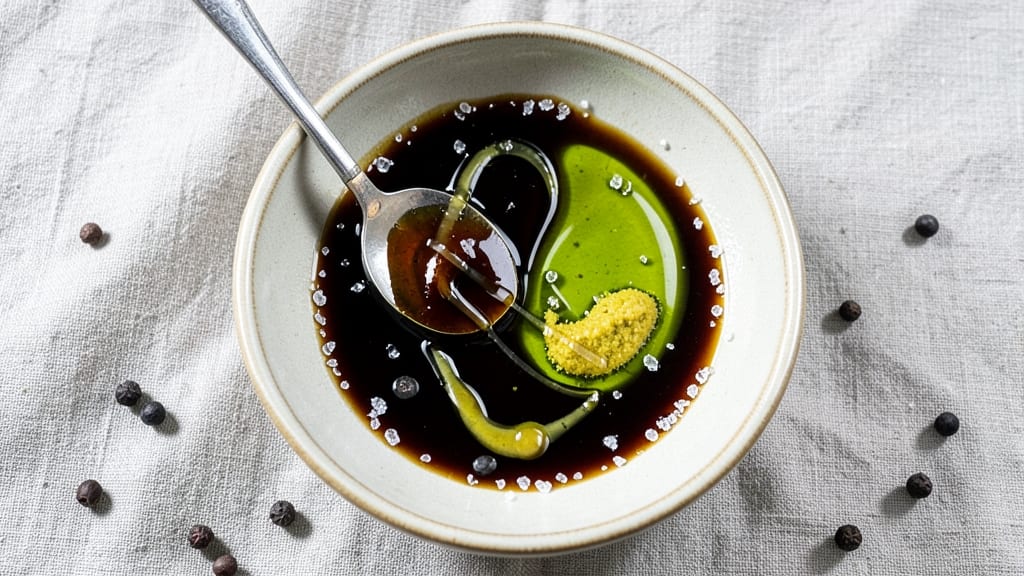
This balsamic glaze salad dressing recipe transforms simple greens into a gourmet experience with just five ingredients and ten minutes of effort. The secret lies in the balance of rich balsamic vinegar and smooth olive oil, creating a sweet-tart drizzle that elevates any salad or dish.
Professional chefs rely on this technique to add depth without overpowering delicate flavors—now you can too.
The magic happens when you simmer balsamic vinegar until it thickens into a glossy glaze, then whisk it with olive oil, Dijon mustard, and a touch of honey for natural sweetness.
This versatile dressing works on everything from arugula to grilled chicken, and it keeps beautifully in the fridge for up to two weeks. The reduction process intensifies the balsamic flavor, turning ordinary ingredients into something extraordinary.
What you’ll end up with is a bold, glossy dressing that clings to greens like a fine sauce, adding a sophisticated sweet-tart contrast. The texture is silky-smooth, with just the right viscosity to drizzle elegantly over salads, roasted vegetables, or even as a marinade for meats.
It’s the kind of dressing that makes even the simplest meal feel like a restaurant-worthy creation.
For best results, use high-quality balsamic vinegar and let the glaze cool completely before mixing with the other ingredients. This ensures a smooth, professional finish every time. The dressing’s shelf life extends to two weeks when stored properly, making it perfect for meal prep or gifting in small jars.
Ingredients for balsamic glaze salad dressing
Five ingredients, ten minutes—transform ordinary salads into restaurant-worthy creations with this bold dressing.
| Ingredient | Amount | Notes |
|---|---|---|
| High-Quality Balsamic Vinegar 🍷 | ½ cup | Aged 12+ years preferred |
| Extra-Virgin Olive Oil 🫒 | ½ cup | Light fruity variety preferred |
| Dijon Mustard 🥫 | 1 tbsp | Whole grain for texture |
| Raw Honey 🍯 | 1 tbsp | Local preferred for flavor |
| Diamond Crystal Kosher Salt 🧂 | ¼ tsp | Fine grain preferred |
| Freshly Ground Black Pepper 🌶️ | ⅛ tsp | Freshly cracked for aroma |
| Garlic Cloves 🧄 | 1 clove | Minced for subtle flavor |
The balsamic vinegar is the heart of this dressing. Gourmet grocery stores like Whole Foods or specialty shops carry aged varieties that deliver deeper caramel notes—look for labels indicating 12+ years of aging. Trader Joe's also stocks excellent options at a fraction of the price. For the olive oil, California-based brands like Corto or Lucini offer that perfect balance of fruitiness without overpowering the balsamic's sweetness. The Dijon mustard should be whole grain—it adds subtle texture that separates this from basic vinaigrettes. I always keep a small jar of Maille on hand for this exact purpose, though any quality brand works.
No aged balsamic? Regular balsamic vinegar reduced longer (20-25 minutes) creates a similar depth. Substituting honey? Maple syrup or agave work in a pinch, though honey's floral notes elevate the dressing. The garlic is optional but recommended—roasted garlic adds a mellow sweetness that pairs beautifully with the glaze. For those avoiding honey, date syrup provides a comparable viscosity and subtle sweetness. The salt and pepper are non-negotiable for balance, but feel free to adjust to taste once you've made the base dressing—this is where the magic happens in personalizing the flavor profile.
This dressing keeps beautifully in an airtight container for up to two weeks in the refrigerator. The glaze thickens as it cools, so give it a quick whisk before each use. For gifting, portion into small jars with a drizzle of the dressing on top—Etsy sellers use this exact presentation for their best-selling products. The glaze can be made ahead and stored separately for up to one month in the fridge, then combined with the other ingredients when ready to use. The dressing's versatility makes it perfect for meal prep—drizzle over roasted vegetables, toss with grilled chicken, or use as a marinade for steak.
Why You'll Love This Recipe
- Five-Ingredient Magic: I swear by this—just whisk together balsamic, olive oil, Dijon, honey, and salt. No fancy tools, no stress, no waiting for anything to marinate. Honestly, I’ve made it while chatting on the phone, and it still comes out rich and balanced every time.
- Sweet-Savory Balance: That honey and Dijon combo? It’s where this dressing gets its soul. The balsamic’s tang cuts through the richness of the olive oil, while the honey adds this unexpected depth—like a sophisticated whisper instead of a shout. (Yes, even on a Tuesday night.)
- Works Anywhere: Drizzle it over greens for a lunch upgrade, toss it with roasted veggies for dinner, or use it as a marinade for chicken. I’ve even poured it over vanilla ice cream (don’t judge me). The versatility is the real MVP here—it’s my go-to for anything needing a little wow.
- Makes Leftovers Shine: A little goes a long way, so you’ll have extra for days. Store it in the fridge, and it keeps for weeks—perfect for when you’re prepping meals ahead. Between us, I’ve had this dressing last me through an entire month of lunches, and it never loses its punch. Budget-friendly? Absolutely.
Step-by-step instructions for perfect balsamic glaze salad dressing
This method delivers a rich, balanced dressing with a glossy finish every time.
Simmer the Balsamic Vinegar to Concentration
Pour the 0.5 cup high-quality balsamic vinegar into a small saucepan and place it over medium heat. Let it simmer uncovered for 8-10 minutes, stirring occasionally, until it reduces by about half and becomes syrupy. You'll notice the color deepens to a rich amber and the aroma intensifies—this concentrated base is what creates that signature balsamic glaze texture.
Watch carefully as it reduces—balsamic vinegar burns easily when overheated. When it reaches a thick, glossy consistency that coats the back of a spoon, remove it from heat immediately. This reduction step transforms ordinary vinegar into a complex, flavorful syrup that carries the entire dressing.
Whisk in Olive Oil and Mustard
Transfer the reduced balsamic to a heatproof bowl and let it cool for 2-3 minutes. While it cools, whisk in the 0.5 cup extra-virgin olive oil and 1 tablespoon Dijon mustard using a fork or small whisk. Start with slow strokes to combine, then increase speed until the mixture emulsifies completely—you should see a smooth, velvety consistency without separation.
The Dijon mustard acts as an emulsifier here, helping the oil and vinegar blend seamlessly. If you notice any separation, simply whisk vigorously for another 30 seconds to restore the emulsion. This step is crucial for achieving that signature glossy finish that makes this dressing so appealing.
Incorporate Honey and Seasonings
Add the 1 tablespoon raw honey, 0.25 teaspoon Diamond Crystal kosher salt, and 0.125 teaspoon freshly ground black pepper to the mixture. Stir gently with a spoon until fully incorporated, being careful not to overmix. The honey should dissolve completely, adding a subtle sweetness that balances the vinegar's acidity.
Now add the 1 minced garlic clove and stir once more. The garlic should be evenly distributed but not overpowering—just enough to add depth without dominating the flavor profile. Taste the dressing at this stage and adjust seasoning if needed. The salt should enhance the flavors without being salty, and the pepper should add a subtle warmth that complements the sweet-tart balance.
Rest and Emulsify for Perfect Texture
Let the dressing rest at room temperature for 10-15 minutes before using. This resting period allows the flavors to fully meld and the emulsion to stabilize completely. During this time, give it one final gentle stir to ensure everything is well combined.
The dressing should now have a glossy, syrupy texture that clings beautifully to greens and other salad ingredients. If it appears too thick after resting, you can thin it slightly with 1-2 teaspoons of warm water, stirring gently until it reaches your desired consistency. This dressing is now ready to elevate any salad from ordinary to extraordinary.
Pro Tips For Making Balsamic Glaze Salad Dressing
- Whisk in stages: Start by mixing the balsamic vinegar, Dijon mustard, and honey together first—this helps the mustard dissolve smoothly. Then slowly drizzle in the olive oil while whisking constantly. I used to pour everything in at once, and it always ended up grainy, no matter how hard I whisked.
- Use aged balsamic: Skip the cheap stuff—aged balsamic vinegar (at least 10 years) has depth and complexity that cheap versions lack. It’s pricier, but the dressing tastes like it was made by someone who actually cares. (Yes, even if you’re impatient like me.)
- Salt the mustard: Taste the Dijon mustard before adding it to the mix—it’s often unsalted, and you’ll need to adjust. A pinch of kosher salt here saves you from over-salting the whole dressing later. I learned this the hard way after ruining a batch of vinaigrette.
- Thin with water: If the dressing is too thick after whisking, add water one teaspoon at a time until it reaches a pourable consistency. Too much liquid all at once turns it watery—this way, you’re in control. (And no, olive oil won’t fix it once it’s gone wrong.)
Flavor customization for this dish
Sweet-Tart Variations
For a fruitier profile, add 1 teaspoon of balsamic-infused strawberry jam (simmer ½ cup jam with 1 tbsp balsamic vinegar for 5 minutes) to the glaze before mixing with oil.
This adds a jammy depth that pairs beautifully with goat cheese salads. I’ve also found that swapping honey for fig jam creates a luxurious, caramelized note perfect for winter dishes. 🍇
Herb-Infused Twists
Fresh herbs elevate this dressing instantly. Try infusing the olive oil with 1 tbsp chopped fresh rosemary or thyme by heating it gently for 2 minutes before whisking into the dressing. For a Mediterranean touch, add ½ tsp dried oregano directly to the glaze while reducing.
I love using basil-infused olive oil (steep ¼ cup fresh basil in ½ cup oil for 30 minutes) for a pesto-like brightness that works on caprese salads.
Spicy Kick Options
For heat lovers, stir in ½ teaspoon of red pepper flakes or 1 teaspoon of hot honey (like Chipotle or Sriracha-infused) into the finished dressing. A pinch of smoked paprika adds warmth without overpowering.
I’ve also experimented with a balsamic-chili glaze by reducing ¼ cup balsamic vinegar with 1 teaspoon chili flakes for 10 minutes before mixing—it’s a game-changer for spicy tuna salads. 🌶️
Umami Boosters
Deepen the flavor with 1 teaspoon of soy sauce or ½ teaspoon of fish sauce (trust me, it works!). For a meaty note, add 1 tsp miso paste to the glaze while reducing.
I often use balsamic vinegar reduced with 1 tsp Worcestershire sauce for a savory depth that pairs perfectly with grilled meats or roasted vegetables. A splash of balsamic reduction (store-bought or homemade) also adds complexity without extra effort.
Nutty Additions
For texture and richness, whisk in 1 tablespoon of finely chopped toasted walnuts or pecans right before serving. For a smoother option, blend 1 tbsp tahini into the dressing—it adds a creamy, nutty undertone that balances the acidity beautifully.
I’ve also found that a drizzle of toasted sesame oil (just ½ teaspoon) at the end creates an unexpected but delicious fusion twist for Asian-inspired salads. 🌰
Seasonal Adaptations
Summer calls for brightness: add 1 teaspoon of lemon zest or 1 tbsp fresh lemon juice to the glaze while reducing. For fall, swap honey for maple syrup and add ½ teaspoon of cinnamon—it’s a cozy pairing with roasted butternut squash.
Winter versions benefit from a pinch of nutmeg or ½ teaspoon of balsamic reduction with a splash of port wine. Spring salads shine with peppermint-infused olive oil (steep 2 crushed leaves in oil for 1 hour) for a refreshing twist.
Nutrition facts
Frequently asked questions
Can I make this balsamic glaze without simmering?
The reduction step is key for that signature thick, glossy texture—but if you're short on time, you can substitute with 2 tablespoons of store-bought balsamic reduction (like the kind you'd drizzle over desserts). Just whisk it with the other ingredients as directed. The flavor won't be quite as concentrated, but it'll still taste delicious!
How much dressing should I use per salad?
Start with 1-2 tablespoons per serving for a light drizzle, or 2-3 tablespoons if you want a more generous coating. This dressing is intense, so less is often more—especially if your salad already has strong flavors like cheese or nuts. Taste as you go and adjust to preference.
Why did my dressing separate?
Separation usually happens when oil and vinegar aren't properly emulsified. Whisk vigorously for 30-60 seconds to restore the blend, or add 1 teaspoon of Dijon mustard (the natural emulsifier) and whisk again. For extra insurance, stir in 1 teaspoon of warm water to help bind the ingredients. The resting time helps prevent this too—always let it sit 10 minutes before using.
Can I use this dressing on non-salad dishes?
This versatile glaze works beautifully as a marinade for chicken or steak, a drizzle over roasted vegetables, or even a glaze for grilled shrimp. For marinades, use ¼ cup per pound of meat and let it sit for 2-4 hours before cooking. The sweet-tart balance enhances grilled flavors perfectly.
What's the best way to store leftovers?
Transfer to an airtight container and refrigerate for up to 2 weeks. The dressing may thicken slightly when cold—give it a quick whisk before using. For longer storage, freeze in 1-tablespoon portions in ice cube trays, then transfer to a freezer bag. Thaw overnight in the fridge before using to preserve texture.