
Salads
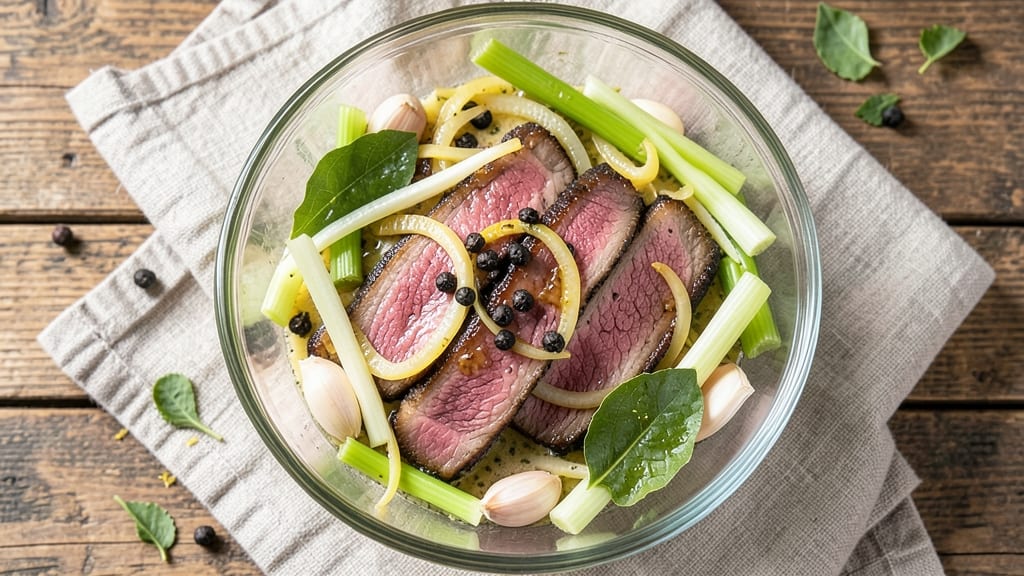
This beef tongue salad recipe transforms a humble cut into a luxurious centerpiece with silky, melt-in-your-mouth slices and a crisp celery crown topping. 💛 The secret lies in slow-cooking the tongue until it falls apart tenderly, then slicing it paper-thin for delicate layers.
Unlike traditional French preparations, this version balances rich umami with bright, fresh toppings for a modern twist that still honors classic techniques.
What sets this recipe apart is the two-stage cooking process—first boiling to tenderize, then simmering in aromatics to infuse deep flavor. The celery crown, made from thinly sliced celery and crispy fried shallots, adds a satisfying crunch that contrasts beautifully with the tongue's velvety texture.
This isn't just a salad; it's a showstopper that elevates any meal from ordinary to extraordinary.
You'll start with a foolproof preparation method that ensures perfect texture every time, followed by a simple yet elegant assembly of mixed greens, herbed vinaigrette, and optional garnishes like pickled onions or capers.
The result is a dish that's equal parts comforting and refined—ideal for dinner parties or a special weeknight treat when you want to impress without fuss.
Whether you're serving this as a standalone salad or pairing it with crusty bread and wine, the combination of textures and flavors makes it unforgettable. The beef tongue's natural richness pairs beautifully with the salad's bright acidity, creating a balance that's both sophisticated and approachable.
Let's get started on creating this showstopper dish.
Ingredients for beef tongue salad
Sixteen ingredients transform humble beef tongue into a luxurious centerpiece salad with velvety texture and crisp contrast.
| Ingredient | Amount | Notes |
|---|---|---|
| Beef Tongue 🥩 | 2 lb | Whole, fresh, skin removed |
| Yellow Onions 🧅 | 1 whole | Medium, thinly sliced |
| Garlic Cloves 🧄 | 8 cloves | Peeled, smashed |
| Fresh Bay Leaves 🌿 | 4 whole | Dried substitute works |
| Black Peppercorns 🌶️ | 1 tbsp | Whole, lightly crushed |
| Celery Stalks 🥬 | 4 whole | Thinly sliced for crown |
| Shallots 🧅 | 6 whole | Minced for frying |
| Extra-Virgin Olive Oil 🫒 | ½ cup | For frying shallots |
| Mixed Greens 🌱 | 10 oz | Butter or spring mix |
| Red Wine Vinegar 🍷 | ¼ cup | For herbed vinaigrette |
| Dijon Mustard 🥫 | 1 tbsp | For vinaigrette |
| Fresh Parsley 🌿 | ¼ cup | Chopped for garnish |
| Salt 🧂 | 2 tsp | Kosher or sea salt |
| Granulated Sugar 🍬 | 1 tsp | For shallot frying |
The beef tongue is the star—look for fresh, whole tongues from specialty butchers or high-end grocers like Whole Foods or Eataly. Size matters: 2 pounds yields perfect slices for 6 servings. The skin must be removed before cooking, which takes about 10 minutes of careful peeling. For the celery crown, crisp, fresh stalks are essential—avoid any with brown spots or wilted ends. The shallots should be firm and pale purple, not green or sprouting. If your grocery store lacks specialty cuts, check the butcher counter or order online from purveyors like Snake River Farms—they ship nationwide.
No fresh bay leaves? Dried will work at one-fourth the amount, but fresh infuses deeper flavor. Substituting red wine vinegar? Apple cider vinegar adds subtle sweetness, while balsamic creates richer depth. The celery crown can be prepped ahead—store sliced celery in water in the fridge for up to 3 days. For the shallots, if you can't find fresh, jarred capers work in a pinch for a briny crunch. The mixed greens should be vibrant and crisp—avoid wilted or yellowed leaves. If using pre-washed greens, dry them thoroughly before tossing with vinaigrette to prevent sogginess.
The cooked tongue keeps 3 days refrigerated in its cooking liquid, which you can repurpose as a flavorful broth. For the celery crown, fry the shallots just until golden—overcooking turns them bitter. Store assembled salad in an airtight container with a paper towel pressed on top to absorb moisture. The vinaigrette separates naturally; simply whisk before serving. This dish shines at room temperature, so let it sit 30 minutes before serving to enhance textures. Portion individual servings for elegant plating—each slice of tongue should be paper-thin and fanned atop greens with a celery crown arc.
Why You'll Love This Recipe
- Here’s what sold me: this keeps perfectly for days, so I prep a big batch on Sunday and toss it into wraps, sandwiches, or over greens all week. My kids groan when I pack it, but they’re the first to finish their portions.
- Simmer-and-Slice Simple: I swear by this recipe because it’s one of those meals that feels fancy but takes zero effort—just simmer the tongue with onions, garlic, and bay leaves, then slice. No chopping, no fuss, and honestly, the hardest part is waiting for it to cook.
- Umami Bomb: That beef tongue? It’s like a meaty, buttery cloud when it’s done right—tender with a crispy edge, and the garlic and peppercorns infuse it with this deep, savory punch. Between us, I’ve never met a salad that hits harder than this one.
- Lunchbox Legend: Here’s what sold me: this keeps perfectly for days, so I prep a big batch on Sunday and toss it into wraps, sandwiches, or over greens all week. My kids groan when I pack it, but they’re the first to finish their portions.
Step-by-step instructions for beef tongue salad
Transforming beef tongue into silky slices requires patience and precision—here's the professional method.
🔥 Step 1: Simmer the Beef Tongue Until Fork-Tender
Place the 2 lb beef tongue in a large pot and cover completely with cold water. Add the 1 whole yellow onion (quartered), 8 cloves garlic, 4 whole bay leaves, 1 tbsp black peppercorns, and 2 tsp salt. Bring to a boil over high heat, then reduce to a simmer and cook uncovered for 3 hours.
Here's the thing—beef tongue needs time to break down. After 3 hours, check for doneness by piercing with a fork. It should slide in easily with no resistance. If not, continue simmering for another 30-60 minutes. The liquid should reduce significantly, leaving you with rich, flavorful broth.
👨🍳 Step 2: Create the Celery Crown and Shallot Frying Base
While the tongue simmers, prepare the celery crown by thinly slicing the 4 whole celery stalks into ¼-inch thick rounds. Set aside. In a small skillet, heat 0.5 cup extra-virgin olive oil over medium heat until shimmering. Add the 6 whole shallots (minced) and 1 tsp granulated sugar, cooking for 8-10 minutes until golden brown and caramelized.
Don't walk away during this step. The sugar helps create a beautiful caramelization, but too much heat will burn the shallots. You'll know they're ready when they're deep golden and smell intensely sweet. Remove from heat and set aside—these will be the crunchy crown for your salad.
🍳 Step 3: Prepare the Herbed Vinaigrette
In a small bowl, whisk together the 0.25 cup red wine vinegar, 1 tbsp Dijon mustard, and remaining 1 tsp salt until fully combined. Slowly drizzle in the 0.25 cup extra-virgin olive oil (reserved from shallot frying) while whisking continuously. The emulsion should thicken slightly but remain pourable.
Taste and adjust seasoning if needed. I like to add a pinch more salt or a splash of vinegar for balance. The vinaigrette should be tangy with a subtle sweetness from the caramelized shallots. Cover and let it rest at room temperature while you finish the tongue.
🥘 Step 4: Slice and Assemble the Salad
Once the tongue is fork-tender, drain it and let it cool slightly. Using a sharp knife, slice the tongue into ¼-inch thick slices against the grain. Arrange the 10 oz mixed greens on a large platter. Top with the sliced tongue, celery crown, and caramelized shallots. Drizzle generously with the herbed vinaigrette.
Garnish with 0.25 cup chopped fresh parsley for color and freshness. The contrast of textures—silky tongue, crisp celery, and caramelized shallots—makes this salad extraordinary. Serve immediately while the tongue is still warm and the greens are crisp.
⏰ Step 5: Rest and Serve for Maximum Flavor
Let the salad rest for 5 minutes before serving. This allows the flavors to meld and the vinaigrette to fully coat the ingredients. The tongue will continue to tenderize slightly during this time, becoming even more fork-tender.
For presentation, I like to arrange the celery crown in a circular pattern around the edges of the platter, creating a visual border that frames the rich beef tongue. The caramelized shallots add a sweet contrast that balances the savory tongue perfectly. Each bite should deliver rich, velvety texture with bright acidity and herby freshness.
Pro Tips For Making Beef Tongue Salad
- SIMMER LOW AND SLOW: After boiling the tongue hard for 2 hours, drop the heat to a bare simmer—just enough to keep bubbles breaking occasionally at the surface. I used to crank the heat too high after the initial boil, and the outside would dry out while the center stayed tough. A gentle simmer for the last 30 minutes keeps the texture buttery and the flavor deep.
- SCORE THE TONGUE FIRST: Run a sharp knife along the tongue’s surface in a crosshatch pattern before cooking—this lets the spices and aromatics penetrate deeper. I learned this the hard way when my first attempt came out bland; the scoring also helps the meat separate cleanly later. Don’t go too deep, just shallow cuts through the outer layer.
- CRUSH PEPPERCORNS COARSELY: Whole peppercorns in the braise add aroma, but for the salad, crush them just enough to release flavor without turning to powder. I used to grind them fine, and the salad tasted like it had been hit with a pepper mill—now I use the flat side of a knife for a few quick smashes. This keeps the texture interesting and the flavor balanced.
- CHILL THE TONGUE FAST: Drain the cooked tongue and plunge it into an ice bath for 10 minutes before slicing. This stops the cooking process and makes it easier to peel—no more wrestling with stubborn skin. I used to let it cool on the counter, and it always ended up chewy. Ice baths also help the slices hold their shape in the salad.
Regional styles of beef tongue salad
Classic French Style
In France, beef tongue salad (salade de langue) traditionally features tender slices arranged over crisp greens with a simple vinaigrette. The French version often includes pickled onions for tangy contrast and cornichons for briny crunch.
I've seen it served with baguette slices on the side to soak up the rich juices. The key difference? French preparations focus on minimal garnishes, letting the tongue's natural flavor shine through. 🌟
Italian Inspired
Southern Italy transforms beef tongue into insalata di lingua, often incorporating sun-dried tomatoes, olive tapenade, and fresh basil. The Italians use a garlic-infused olive oil instead of vinaigrette, creating a more robust dressing.
For an authentic touch, add thinly sliced prosciutto and arugula—the peppery greens cut through the richness beautifully. This version is perfect for summer gatherings where bold flavors reign.
British Pub Tradition
The British serve beef tongue salad as a pub classic, often with horseradish cream and watercress for a peppery kick. Their version typically includes mustard seeds in the dressing and crispy fried onions scattered on top.
I've seen it presented with buttered toast soldiers on the side—ideal for dipping into the rich, savory juices. The British approach is heartier, designed for casual dining where texture plays a starring role.
Modern Fusion Twist
For a contemporary take, try adding avocado slices, pomegranate seeds, and a citrus vinaigrette with orange zest. This fusion version works beautifully with quinoa or farro mixed into the greens for extra texture.
I've also seen it topped with toasted pumpkin seeds for crunch and fresh mint for brightness. The modern approach balances tradition with vibrant, unexpected flavors that appeal to younger palates.
Spanish Tapas Style
In Spain, beef tongue salad becomes ensalada de lengua, often served as part of a tapas spread. The Spanish version includes roasted red peppers, marinated artichokes, and olives alongside the tongue.
They use a sherry-infused vinaigrette for depth, and the salad is typically served room temperature with crusty bread and dry sherry. This version is perfect for sharing among friends during tapas nights.
American BBQ Fusion
Southern-style adaptations incorporate smoked paprika, bbq sauce drizzle, and pickled jalapeños for heat. The American version often features cornbread croutons mixed into the greens and a smoky bourbon vinaigrette.
I've seen it topped with crumbled blue cheese for a tangy contrast. This fusion is ideal for backyard cookouts, where bold flavors and smoky aromas take center stage. 🔥
Nutrition facts
Frequently asked questions
Why does beef tongue need such a long cooking time?
Beef tongue contains dense connective tissue that requires 3+ hours of slow simmering to break down into tender, fork-tender slices. The collagen in the tissue converts to gelatin during cooking, creating that signature silky texture. Rushing this process results in chewy, unsatisfying bites—patience is key for perfect results.
Can I substitute beef tongue with another protein?
While beef tongue offers unmatched texture, you could try pork tongue (cooks faster) or extra-thick beef short ribs (simmered until tender). For a vegetarian alternative, marinated and sliced portobello mushrooms can mimic the meaty texture when cooked properly. However, none will replicate the tongue's natural richness and gelatinous quality.
How do I prevent the celery crown from getting soggy?
To maintain crispness, slice celery only when ready to assemble the salad and pat it completely dry with paper towels. Store pre-sliced celery in water in the fridge for up to 3 days, changing the water daily. For extra insurance, lightly fry the celery slices in oil for 1-2 minutes> before adding them to the salad.
What's the best way to store leftovers?
Store cooked beef tongue in its cooking liquid in an airtight container for 3 days> in the fridge. Reheat gently in the liquid to maintain moisture. For the celery crown, keep the fried shallots separate and reheat in a dry pan for 1-2 minutes> before reassembling. The vinaigrette should be stored separately and whisked before using.
Can I make this salad ahead of time?
Prepare all components separately up to 2 days> ahead: cook and slice the tongue, make the vinaigrette, and fry the shallots. Assemble just before serving to preserve crisp textures. The tongue can be reheated gently in its cooking liquid, while the celery crown should be added fresh for maximum crunch.