
Side Dishes
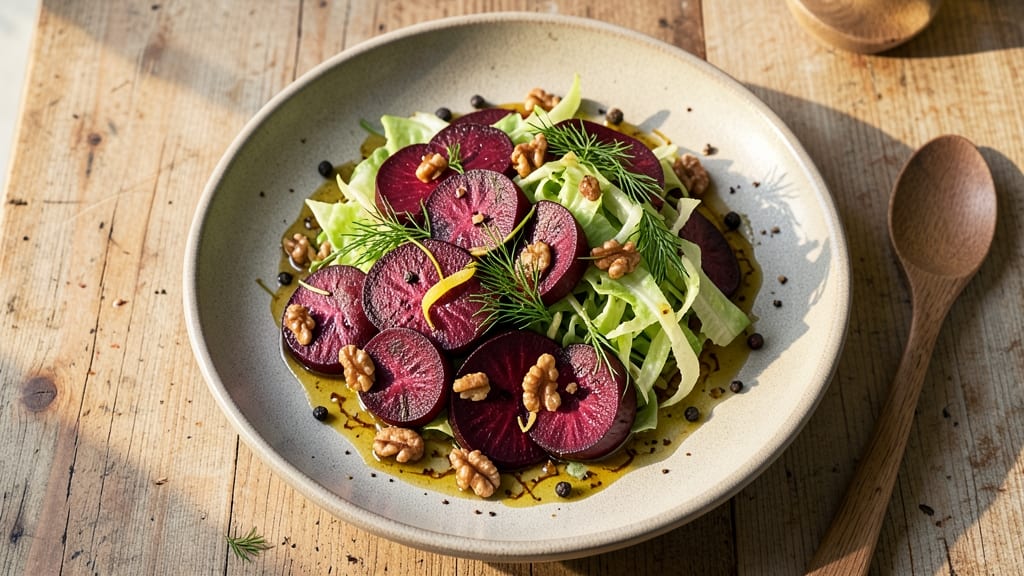
This beet and cabbage salad recipe transforms humble vegetables into a vibrant, nutrient-packed dish that’s as beautiful as it is delicious. 🌟 The secret lies in roasting the beets until tender and caramelized, then pairing them with crisp cabbage and a tangy balsamic dressing that ties everything together.
I developed this recipe after realizing how often simple salads get overlooked—until they’re elevated with bold flavors and textures.
The process is straightforward but yields restaurant-quality results: peeling and roasting beets until fork-tender, shredding cabbage for crunch, and finishing with a bright vinaigrette that cuts through the earthy sweetness.
This salad isn’t just a side—it’s a main dish for vegans or anyone craving a hearty, plant-based meal that’s packed with color and flavor. The combination of deep purple beets and green cabbage creates a stunning visual contrast, making it perfect for holidays or everyday lunches.
What makes this recipe stand out is the balance of textures—creamy roasted beets, crisp cabbage, and a dressing that’s tangy yet rich. The balsamic glaze adds a touch of sophistication, while walnuts or seeds provide extra crunch.
It’s the kind of salad that keeps well for days, making it ideal for meal prep or bringing to potlucks. Serve it chilled or at room temperature, and watch it disappear from the plate.
For presentation, layer the ingredients in a shallow dish or arrange them artistically on a platter. Garnish with fresh herbs or edible flowers for an extra touch of elegance.
This salad is versatile enough to pair with grilled meats, fish, or even as a standalone vegan main course. Let’s get started on creating this vibrant, crowd-pleasing dish!
Ingredients for beet and cabbage salad
Roasted beets and crisp cabbage form the vibrant heart of this restaurant-quality salad.
| Ingredient | Amount | Notes |
|---|---|---|
| Medium Beets 🍠 | 2 whole | Red or golden, peeled and quartered |
| Green Cabbage 🥬 | 4 cups | Shredded, core removed |
| Extra-Virgin Olive Oil 🫒 | ¼ cup | For roasting and dressing |
| Balsamic Vinegar 🍷 | ⅛ cup | For dressing and glaze |
| Maple Syrup 🍯 | 2 tbsp | For balsamic glaze |
| Dijon Mustard 🌶️ | 1 tbsp | For dressing tanginess |
| Walnuts 🌰 | ½ cup | Toasted, roughly chopped |
| Fresh Thyme Leaves 🌿 | 2 tbsp | Chopped, for garnish |
| Sea Salt 🧂 | 1 ½ tsp | Diamond Crystal preferred |
| Freshly Ground Black Pepper 🌶️ | ½ tsp | For seasoning |
| Lemon Juice 🍋 | 1 tbsp | Freshly squeezed |
| Garlic Cloves 🧄 | 2 cloves | Minced for dressing |
The beets are the star—organic red or golden from Whole Foods or your local farmers market deliver the deepest flavor. Look for firm, unblemished roots with vibrant color; avoid any with soft spots or cracks. Roasting transforms their earthy sweetness into a caramelized richness that pairs perfectly with the cabbage's crisp bite. For optimal results, roast them until fork-tender (about 45 minutes at 400°F), then cool before slicing. The cabbage should be green or purple, crisp, and free of yellowing leaves—Trader Joe's often carries excellent pre-shredded options if fresh isn't available.
No organic beets? Conventional store-bought works fine—just peel thoroughly. Substituting cabbage? Green or red cabbage works best; avoid savoy for this recipe. For the dressing, apple cider vinegar can replace balsamic if needed, though it lacks the same depth. The walnuts can be swapped for pecans or pumpkin seeds if you prefer a different texture. Fresh thyme is ideal, but dried thyme at one-third the amount works in a pinch. The garlic should be freshly minced—pre-minced garlic loses its punch quickly. For a gluten-free version, ensure your Dijon mustard is certified gluten-free.
Roasted beets keep well in the fridge for 5-6 days when stored in an airtight container with a paper towel to absorb moisture. The dressing separates naturally—simply whisk before using. For meal prep, assemble the salad just before serving to maintain crispness. The walnuts stay fresh for up to 2 weeks in a sealed container, while fresh thyme lasts 5-7 days wrapped in damp paper towels. This salad reheats beautifully for 2-3 days in the fridge, though it's best enjoyed fresh. Garnish with edible flowers or extra thyme just before serving to elevate presentation.
Why You'll Love This Recipe
- No Roasting Required: I swear by this trick—just boil the beets until tender, then cool them in ice water. That bright pink color stays vibrant, and the texture? Silky smooth without a single charred edge.
- Sweet-Tart Magic: The maple and balsamic glaze cuts through the cabbage’s crunch like a perfect balance. Honestly, the first time I tasted it, I grabbed seconds straight from the bowl.
- Lunchbox Hero: Between us, this salad holds up for days. Pack it in jars with the dressing on the bottom—no soggy cabbage here—and it’s my go-to for work lunches or school lunches that actually get eaten.
- Pantry Staple Power: Green cabbage lasts forever, and beets keep for weeks in the fridge. Mix in whatever you have—walnuts, goat cheese, or even leftover roasted chicken—and it’s still spot-on. Budget-friendly? More like budget-smart.
Step-by-step instructions for beet and cabbage salad
Transform simple ingredients into a stunning salad with perfect texture and bold flavors.
🔥 Step 1: Roast the Beets Until Tender
Preheat your oven to 400°F. Toss the 2 whole medium beets (peeled and quartered) with 2 tablespoons of the extra-virgin olive oil and ½ teaspoon of the sea salt. Spread them on a parchment-lined baking sheet in a single layer.
Roast for 30-35 minutes until completely tender and fork-pierceable with no resistance. The edges should be slightly caramelized, revealing their deep purple color. If they're browning too quickly, tent with foil to prevent overcooking. Let cool completely before handling—they'll be hot and slippery when fresh from the oven.
🍳 Step 2: Create the Balsamic Glaze
While the beets roast, combine ¼ cup balsamic vinegar, 2 tablespoons maple syrup, and 1 tablespoon Dijon mustard in a small saucepan. Bring to a gentle simmer over medium heat and reduce by half—about 8-10 minutes—until it thickens into a glossy, syrupy consistency.
Strain through a fine-mesh sieve to remove any impurities, then return to the pan. Whisk in 1 tablespoon lemon juice and set aside to cool. This glaze should coat the back of a spoon with a rich, tangy sweetness that will elevate every bite of your salad.
👨🍳 Step 3: Prepare the Cabbage and Walnuts
Shred the 4 cups green cabbage into thin ribbons using a sharp knife or mandoline. For even shreds, remove the core first and cut from the outer leaves inward. Transfer to a large bowl and toss with 1 tablespoon extra-virgin olive oil, 1 teaspoon sea salt, and ½ teaspoon black pepper.
In a dry skillet over medium heat, toast the ½ cup walnuts for 4-5 minutes until fragrant and lightly golden. Watch closely—they burn quickly. Transfer to a cutting board and roughly chop with a knife. Set aside to cool completely before adding to the salad.
🥘 Step 4: Assemble the Salad
In a large serving bowl, combine the cooled roasted beets, shredded cabbage, and toasted walnuts. Drizzle with the remaining 1 tablespoon extra-virgin olive oil and toss gently to distribute evenly. The beets should be warm enough to soften the cabbage slightly, creating a perfect textural contrast.
Drizzle the cooled balsamic glaze over the salad and toss again, being careful not to overmix. The vibrant purple of the beets will contrast beautifully with the green cabbage, creating a visually stunning dish. Sprinkle with the 2 tablespoons chopped fresh thyme leaves and 2 minced garlic cloves just before serving to preserve their fresh aroma.
⏰ Step 5: Rest and Serve
Let the salad rest for 10 minutes before serving. This allows the flavors to meld and the cabbage to soften slightly without wilting. The beets will retain their warmth, creating a delightful contrast with the crisp cabbage and nutty walnuts.
Serve immediately while the beets are still warm and the dressing is glossy. The salad should offer a perfect balance of earthy beets, peppery cabbage, sweet walnuts, and the tangy-sweet balsamic glaze. Garnish with additional thyme leaves for a pop of color and freshness.
Pro Tips For Making Beet And Cabbage Salad
- ROAST BEETS UNTIL TENDER: Cook the beets at 375°F (190°C) for 45-50 minutes—not until they’re fork-tender, but until they’re almost falling apart. I used to overcook them, turning them mushy, but this way they slice cleanly and hold their shape in the salad. (Yes, even if you’re impatient like me.)
- SHRED CABBAGE FINE AND DRY: Use a mandoline or sharp knife to slice the cabbage paper-thin—thicker strips stay chewy. Toss it with a pinch of salt and let it sit for 10 minutes before rinsing. This softens the edges and draws out moisture so it doesn’t make the salad soggy. (Your future self will thank you.)
- WHISK DRESSING IN STAGES: Combine the olive oil, balsamic, and maple syrup first, then whisk in a splash of cold water (about 1 tablespoon). This emulsifies the dressing so it clings to the beets and cabbage instead of pooling at the bottom. I learned this the hard way—skipping the water means a greasy, separated mess.
- ADD WALNUTS LAST: Toast ¼ cup of walnuts in a dry pan until fragrant (3-4 minutes), then sprinkle them over the salad right before serving. If you add them earlier, they’ll soak up the dressing and turn limp. (Sounds weird, but it works—trust the process.)
Dietary considerations for this dish
Vegan-Friendly Foundation
This salad is naturally vegan and packed with plant-based nutrition, making it perfect for vegan diets or anyone looking to reduce animal products. The roasted beets provide iron and fiber, while cabbage delivers vitamin C and K.
The balsamic glaze adds a touch of sophistication without any animal-derived ingredients, and walnuts contribute healthy fats and protein. 🌱
Gluten-Free Adaptations
This recipe is inherently gluten-free as long as you use certified gluten-free Dijon mustard. The original recipe calls for standard Dijon, but brands like Annie's or Maille offer gluten-free alternatives.
Always check labels, as some mustards contain hidden gluten. The rest of the ingredients are naturally gluten-free, so no substitutions are needed elsewhere.
Nut-Free Options
If you're avoiding nuts due to allergies, simply omit the walnuts from the recipe. Instead, add ¼ cup toasted pumpkin seeds or sunflower seeds for a similar crunchy texture.
These seeds also provide healthy fats and protein while keeping the dish nut-free. Toast them in the same way you would the walnuts for maximum flavor.
Low-Sugar Versions
For a lower-sugar option, reduce the maple syrup in the balsamic glaze to 1 tablespoon instead of 2 tablespoons. You can also substitute it with monk fruit sweetener or erythritol for a sugar-free alternative.
The glaze will still provide sweetness but with fewer calories and a lower glycemic impact. This adjustment keeps the salad's natural flavors intact while making it more diet-friendly.
Allergen Awareness
This salad contains common allergens like cabbage and walnuts, so it's important to be mindful if you're serving guests with dietary restrictions. For those avoiding nuts, as mentioned, swap in seeds.
If someone has a cabbage sensitivity, consider using shredded carrots or fennel as a substitute while keeping the beets as the star. Always double-check ingredient labels for potential cross-contamination warnings.
Meal Prep Considerations
When preparing this salad for meal prep, store the roasted beets and cabbage separately in airtight containers to maintain their texture. Keep the dressing and glaze in a separate container to prevent sogginess.
Reassemble the salad just before serving to ensure the cabbage stays crisp. This approach works well for up to 3 days in the refrigerator, making it an excellent option for batch cooking. 💡
Nutrition facts
Frequently asked questions
Can I use raw beets instead of roasted?
Raw beets work but won't have the same caramelized sweetness. For best flavor, roast them first—the process intensifies their natural sugars and creates a creamy texture that pairs perfectly with crisp cabbage. If you're short on time, thinly slice raw beets and quickly sauté them in olive oil for 3-4 minutes until just tender.
What's the best way to store leftovers?
Store components separately to maintain texture: roasted beets and cabbage in airtight containers, dressing in a separate jar. Keep the salad refrigerated for up to 3 days. Reassemble just before serving—this prevents the cabbage from becoming soggy. The balsamic glaze can be stored for 1 week in the fridge, though it's best used within 5 days.
Can I substitute red cabbage?
Red cabbage adds a beautiful color contrast and slightly sweeter flavor. Use the same quantity and preparation method. For extra vibrancy, toss the shredded red cabbage with 1 teaspoon lemon juice before mixing to preserve its color. The purple hues will complement the beets beautifully in presentation.
Why does my cabbage get soggy?
Cabbage wilts when exposed to moisture or warm temperatures. To prevent this, store it separately from the dressing and beets, and assemble the salad just before serving. If you must prep ahead, pat the cabbage dry with a paper towel before storing. Also ensure your beets are completely cooled before mixing to avoid steaming the cabbage.
Can I make this salad ahead of time?
Yes, but with a few adjustments. Roast the beets and make the dressing 1 day ahead—they keep well in the fridge. Shred the cabbage and store it separately in a dry container. When ready to serve, toss everything together and let it sit for 10 minutes to meld flavors. This approach maintains the best texture and taste.