
Sauces & Condiments
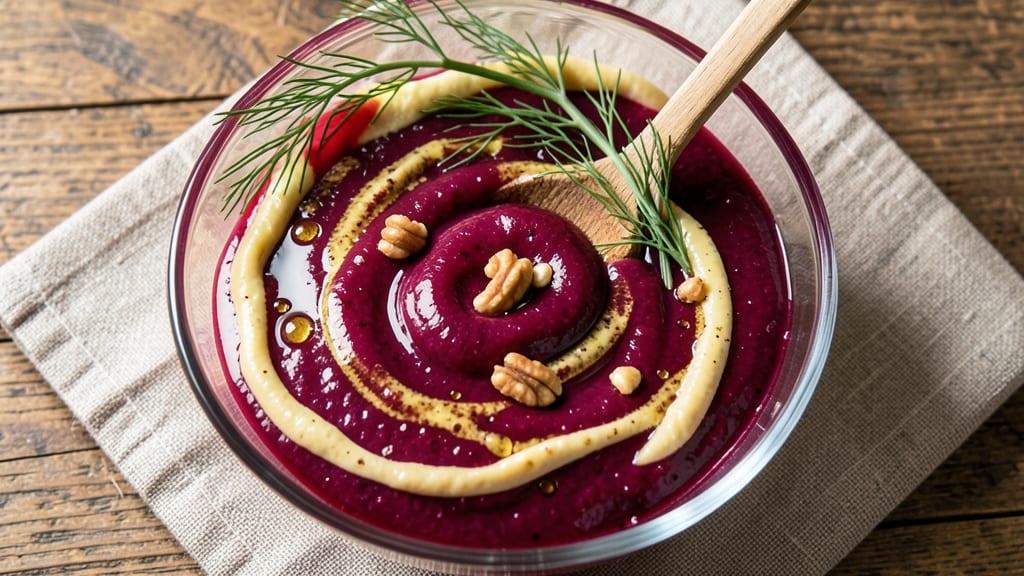
This beet juice salad dressing transforms ordinary greens into a vibrant, earthy masterpiece with just five ingredients and 10 minutes of prep time. The deep ruby hue isn't just visually stunning—it delivers a sweet-tangy balance that elevates everything from kale salads to grain bowls.
Unlike store-bought versions, this recipe uses real beet juice for bold flavor and natural sweetness without artificial additives.
The secret lies in the emulsification technique: blending tahini and apple cider vinegar creates a stable base that binds the beet juice without separating. A touch of maple syrup enhances the natural sweetness, while Dijon mustard adds depth and prevents the dressing from curdling.
What makes this recipe truly special is its versatility—it works as a marinade, dip, or finishing sauce too.
What you'll end up with is a rich, velvety dressing that coats greens perfectly while adding a subtle earthy sweetness that pairs beautifully with bitter greens or hearty grains. The color alone makes any dish look restaurant-worthy, but the flavor is where it truly shines—complex, balanced, and impossible to resist.
Store it in the fridge for up to 5 days, where the flavors deepen over time. This dressing transforms simple salads into gourmet experiences without the fuss. Let's get started on this vibrant, flavor-packed creation.
Ingredients for beet juice salad dressing
Five ingredients blend into a velvety dressing with restaurant-worthy depth and vibrant color.
| Ingredient | Amount | Notes |
|---|---|---|
| Beet Juice 🍠 | ½ cup | Freshly extracted, no added sugar |
| Tahini 🥜 | ¼ cup | Sesame paste, unsweetened |
| Apple Cider Vinegar 🍎 | ¼ cup | Raw, unfiltered preferred |
| Pure Maple Syrup 🍁 | 1 tbsp | Grade A or B, no additives |
| Dijon Mustard 🌶️ | 1 tsp | Whole grain, no sugar added |
| Water 💧 | ¼ cup | Filtered or spring water |
| Sea Salt 🧂 | ¼ tsp | Fine grain, Diamond Crystal |
| Lemon Juice 🍋 | 1 tsp | Freshly squeezed, organic |
The beet juice is the heart of this dressing—look for freshly extracted juice at health food stores or juice bars, as it delivers the most vibrant color and sweetness. Trader Joe's and Whole Foods carry excellent options in their refrigerated section. If you're using canned beets, roast them first for deeper flavor. Tahini should be smooth and free of grit; Kirkland Signature or Albertsons brands are reliable choices. Apple cider vinegar with the 'mother' (those cloudy bits) adds complexity—Bragg or Texas Caveman are top-tier options. The maple syrup enhances natural sweetness without overpowering, so grade A or B is ideal for its balanced flavor profile.
No tahini? Substitute with equal parts cashew butter or almond butter, though the flavor will shift slightly. Short on beet juice? Roasted red pepper puree works in a pinch, though the color will be more muted. Dijon mustard can be swapped for whole-grain mustard, but it may separate more easily. The water is crucial for emulsification—filtered or spring water prevents off-flavors. If you prefer a tangier dressing, increase the lemon juice by half a teaspoon. For a smoother texture, blend all ingredients until completely emulsified, then thin with an additional tablespoon of water if needed.
This dressing keeps beautifully in an airtight container in the fridge for up to 5 days, with flavors deepening over time. For longer storage, transfer to a sterile glass jar and freeze for up to 3 months. Shake vigorously before each use, as separation is normal. A thin layer of olive oil on top preserves freshness. The dressing's versatility makes it perfect for batch prep—make a double batch and use it as a marinade for grilled vegetables or a finishing sauce for roasted dishes.
Why You'll Love This Recipe
- Five-Ingredient Magic: I swear by this combo—no fancy techniques, just whisking together beet juice, tahini, and vinegar until it’s silky. Honestly, the hardest part is remembering to taste as you go.
- Earthy-Sweet Balance: That first tangy hit of apple cider vinegar gives way to a deep, caramelized sweetness from the maple syrup and beets. The Dijon mustard ties it all together like a perfect umami hug.
- Meal Prep MVP: I make a big batch on Sundays and keep it in the fridge for the week—drizzle it on grain bowls, toss with roasted veggies, or even stir into hummus. Between us, it’s my lazy lunch savior.
- No Waste, All Flavor: Use up leftover beet juice from roasted beets or smoothies instead of tossing it. A little goes a long way, and the tahini keeps costs down while packing serious protein punch. (Yes, even on a Tuesday night.)
Step-by-step instructions for vibrant beet juice dressing
This earthy, tangy dressing comes together in minutes with precise technique.
Whisk Tahini and Maple Syrup Until Fully Emulsified
In a medium bowl, combine the 0.25 cup Tahini and 1 tbsp Pure Maple Syrup. Using a whisk or small electric mixer, beat on medium speed for 2-3 minutes until completely smooth and creamy. The tahini should transform from a thick paste into a silky, homogeneous mixture with no visible streaks. This step is critical—any lumps will make your dressing grainy rather than velvety.
I like to work in a small bowl here so I can easily monitor the texture. If the mixture feels too thick, add 1-2 teaspoons of water gradually while whisking. The goal is a consistency similar to heavy cream—thick enough to coat a spoon but still pourable. This base will carry the vibrant beet color and rich sesame flavor throughout the dressing.
Gradually Incorporate Beet Juice and Vinegar
With the tahini mixture still in the bowl, slowly drizzle in the 0.5 cup Beet Juice while whisking continuously. The beet juice will initially resist incorporation, causing the mixture to separate temporarily. This is normal—keep whisking steadily for 3-4 minutes until the color becomes uniformly distributed and the texture remains smooth.
Next, add the 0.25 cup Apple Cider Vinegar in a slow stream, whisking constantly. The acidity will help break down any remaining tahini particles and create a stable emulsion. You'll notice the dressing lighten slightly in color as the vinegar integrates. Taste at this stage—the balance should be tangy with a hint of sweetness from the maple syrup. If it tastes too sharp, you can adjust later with more syrup.
Add Mustard, Lemon, and Salt for Depth of Flavor
Stir in the 1 tsp Dijon Mustard, 1 tsp Lemon Juice, and 0.25 tsp Sea Salt using a silicone spatula. The mustard will add subtle body and a slight peppery kick, while the lemon juice brightens the earthy flavors. At this point, the dressing should have a rich, complex aroma—like roasted beets with a touch of citrus and sesame.
If the dressing feels too thick after adding all ingredients, gradually incorporate the remaining 0.25 cup Water 1 tablespoon at a time, whisking well after each addition. The final texture should be like a thin but well-coated vinaigrette—thick enough to cling to greens but still pourable. The dressing should coat the back of a spoon without being runny.
Rest and Adjust for Perfect Balance
Let the dressing rest at room temperature for 10-15 minutes. This allows all the flavors to meld and the emulsion to stabilize. After resting, taste again and make any final adjustments. If it needs more sweetness, add another ½ teaspoon of maple syrup. If it's too tangy, a splash of water or another ¼ teaspoon of salt can help balance it.
The dressing should now have a vibrant magenta hue with a smooth, velvety texture. It should coat greens beautifully without overpowering their natural flavors. For best results, use the dressing within 3-4 days when stored in an airtight container in the refrigerator. The flavors will continue to develop slightly as it sits, becoming even more complex over time.
Pro Tips For Making Beet Juice Salad Dressing
- STRAIN THE BEET JUICE: Don’t grab that bottled beet juice—it’s packed with sugar and preservatives that’ll throw off your balance. Roast a whole beet (or use pre-cooked), then blend it with 2 tablespoons water, strain through a fine-mesh sieve, and press hard with a spoon. The fresh juice has a cleaner, brighter acidity that actually lets the tahini shine.
- WHISK THE TAHINI FIRST: Tahini clumps like a stubborn teenager. Before adding anything else, whisk it with 1-2 tablespoons warm water until completely smooth. This isn’t just about texture—it guarantees your dressing emulsifies properly and won’t separate later, even when tossed with greens.
- SWEAT THE VINEGAR: Apple cider vinegar is sharp enough to make your eyes water, but if you add it straight to the tahini, you’ll regret it. Mix it with the maple syrup first, then let it sit for 2 minutes. The sugar softens the acid’s bite, and the flavors meld instead of fighting each other.
- DON’T SKIP THE MUSTARD: Yes, it’s easy to forget, but Dijon mustard is the glue here. It cuts through the richness of the tahini and beet juice, preventing that cloying sweetness. Use 1 teaspoon—less won’t emulsify, more will overpower. Trust me, you’ll taste the difference.
Dietary considerations for this beet juice salad dressing
Vegan-Friendly Foundation
This dressing is naturally vegan and packed with plant-based nutrition, making it perfect for dietary restrictions. The tahini provides healthy fats and plant protein, while beet juice delivers antioxidants and natural sweetness without refined sugar.
The apple cider vinegar adds probiotic benefits, supporting gut health. I love that every ingredient aligns with plant-forward eating while delivering bold flavor. 🌱
Gluten-Free Assurance
All ingredients in this recipe are inherently gluten-free, making it safe for those with celiac disease or gluten sensitivity. The Dijon mustard is the only potential concern—always check labels for gluten-free certification.
I recommend Annie's or Maille brands, which are reliably gluten-free. The dressing's rich, earthy profile shines even without gluten-containing ingredients. 🌾
Low-Sugar Sweetness
The 1 tablespoon of maple syrup provides just 13 grams of sugar total, making this a low-sugar option compared to store-bought dressings that often contain 20+ grams per serving. The natural sweetness from beet juice and tahini reduces the need for added sugar while maintaining balance.
For even fewer carbs, reduce the syrup to ½ tablespoon—though you may need to boost tang with extra lemon juice. 🍯
Allergen Considerations
This recipe contains sesame (from tahini) and mustard, two common allergens. For sesame-free versions, substitute cashew butter (though texture will differ). Mustard-sensitive individuals can omit it entirely, though it adds depth—replace with 1 extra teaspoon of lemon juice for brightness.
Always label your dressing clearly if sharing with others. 🚨
Nutrient Boost Options
Want to supercharge the nutrition? Add 1 tablespoon of nutritional yeast for B vitamins and a cheesy flavor. Or blend in ½ teaspoon of turmeric for anti-inflammatory benefits and golden color.
I often add 1 teaspoon of hemp seeds for extra protein—just whisk them in at the end. These tweaks keep the dressing vegan while enhancing its health profile. 💪
Nutrition facts
Frequently asked questions
Can I make this dressing without tahini?
Yes! For a sesame-free version, substitute the 0.25 cup tahini with 0.25 cup cashew butter or 0.25 cup almond butter. The texture will be slightly different but still creamy. If you're avoiding nuts entirely, use 0.25 cup silken tofu blended smooth—it adds protein and helps with emulsification. Just whisk everything more vigorously to ensure a smooth finish.
Why did my dressing separate?
Separation happens when the emulsion breaks, usually from too much water or not enough whisking. To fix it, whisk the dressing vigorously for 2-3 minutes to re-emulsify. For future batches, add ingredients slowly while whisking constantly, and avoid adding all the water at once. A splash of lemon juice can also help stabilize the mixture.
How can I use this dressing beyond salads?
This versatile dressing works as a marinade for grilled vegetables or tofu, a dip for crudités, or a glaze for roasted sweet potatoes. It also elevates grain bowls, wraps, and even sandwiches. For extra richness, drizzle it over avocado toast or use it as a finishing sauce for sushi rolls. The earthy sweetness pairs beautifully with savory flavors.
Can I make this dressing with canned beets instead of beet juice?
Roast 2 medium canned beets (halved) at 400°F for 20 minutes, then blend with 0.25 cup water until smooth. Strain through a fine-mesh sieve to remove pulp, then use 0.5 cup of the strained liquid in place of beet juice. The color will be slightly deeper, and the flavor more concentrated. For extra vibrancy, add 1 tsp beet powder to the strained liquid.
Will this dressing stain my clothes?
Yes, beet juice is notorious for staining! To prevent accidents, wear an apron while handling it. If a stain occurs, blot immediately with a damp cloth, then treat with hydrogen peroxide or lemon juice before washing. For fabric stains, soak in cold water with a bit of dish soap before laundering. The vibrant color fades with washing, but fresh stains are tougher to remove.