
Salads
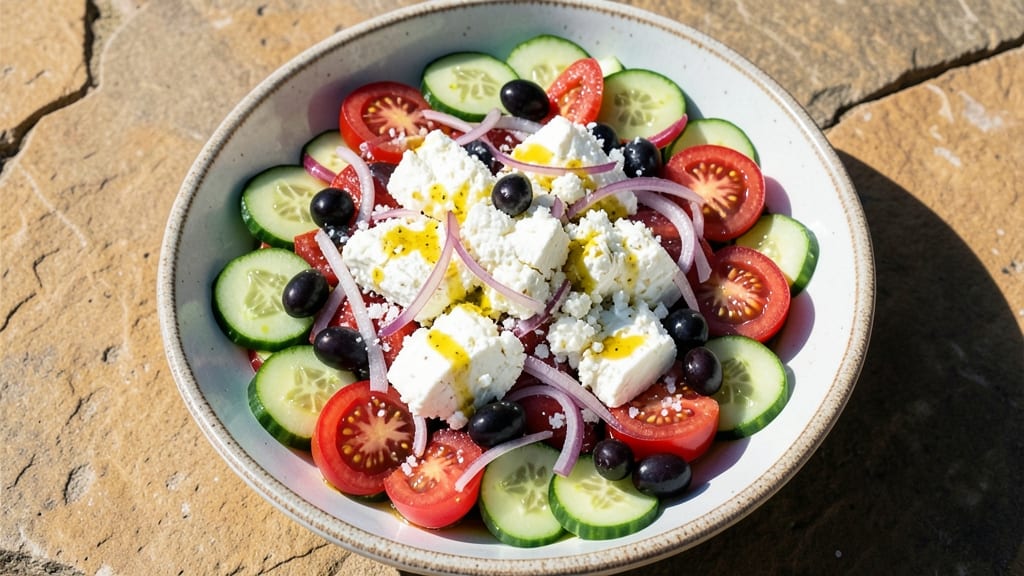
This best Greek salad recipe ever delivers the crispy cucumbers and golden feta that make Horiatiki unforgettable. 🌟 The secret lies in properly salting the cucumbers to remove excess moisture, then tossing everything with a bright lemon-olive oil dressing while still chilled.
I've perfected this version after years of testing—it's the one that gets rave reviews at dinner parties and family gatherings alike.
The foundation of an authentic Greek salad is simple: ripe tomatoes, crisp cucumbers, red onion, Kalamata olives, and feta cheese. What sets this recipe apart is the attention to texture—each component must be perfectly prepared.
The cucumbers get that signature crispness, the tomatoes stay juicy but firm, and the feta is cut into large cubes so every bite has that signature salty tang. Traditional Greek cooks know these details matter.
What you'll end up with is a salad that shines on the plate—vibrant colors, contrasting textures, and flavors that balance perfectly. The crisp cucumbers cut through the richness of the feta, while the lemon dressing ties everything together with a bright, zesty finish.
This isn't just any Greek salad; it's the one that makes people ask for the recipe again and again.
The beauty of this recipe is its versatility. Serve it as a light lunch alongside grilled meats or as a refreshing side dish for any Mediterranean meal. For an extra protein boost, add grilled chicken or shrimp.
And don't forget the presentation—arrange the ingredients artfully on a platter for that authentic Greek taverna look. Let's get started on creating this classic dish.
Ingredients for best greek salad recipe ever
These 13 ingredients transform into the crisp, vibrant Greek salad that steals every plate.
| Ingredient | Amount | Notes |
|---|---|---|
| Persian Cucumbers 🥒 | 2 large | Sliced into 1/2-inch thick rounds |
| Ripe Tomatoes 🍅 | 3 medium | Cored, cut into 1-inch wedges |
| Red Onion 🧅 | 1 medium | Thinly sliced into half-moons |
| Kalamata Olives 🫒 | ½ cup | Pitted, preferably fresh |
| Feta Cheese 🧀 | 8 oz | Block form, cut into 1-inch cubes |
| Extra-Virgin Olive Oil 🫒 | ½ cup | High-quality, fruity variety |
| Fresh Lemon Juice 🍋 | ¼ cup | Freshly squeezed, strained |
| Diamond Crystal Kosher Salt 🧂 | 1 ½ tsp | For salting cucumbers |
| Fresh Oregano 🌿 | 2 tbsp | Finely chopped, or dried equivalent |
| Fresh Dill 🌿 | 2 tbsp | Finely chopped, stems removed |
| Red Wine Vinegar 🍷 | 1 tbsp | For dressing acidity |
| Garlic Cloves 🧄 | 2 cloves | Minced for dressing |
| Black Peppercorns 🌶️ | ½ tsp | Freshly cracked |
The freshness of the produce makes or breaks this salad. For cucumbers, Persian varieties are ideal—their thin skin and tender flesh hold up perfectly to salting. Local farmers markets often carry the best tomatoes and herbs, but if shopping at Whole Foods, look for heirloom tomatoes labeled 'vine-ripened'. Kalamata olives should be plump and firm to the touch—avoid those with wrinkled skins. The feta? Block form only—pre-cubed varieties contain anti-caking agents that make it grainy. For the best flavor, Greek feta brands like Chrysovalantou are worth seeking out, though local artisanal cheeses work beautifully too.
No Persian cucumbers? English or lemon cucumbers work in a pinch—their slightly thicker skin requires an extra minute of salting. Cherry tomatoes can replace medium tomatoes, but they'll need a quick toss in boiling water to soften their skins slightly. Running short on fresh herbs? Dried oregano and dill at one-third the amount will suffice, but fresh is non-negotiable for that authentic Greek flavor. The dressing components can be adjusted—more vinegar for tang, less oil if you prefer a lighter salad. For a vegetarian protein boost, add white beans or chickpeas to the mix before serving.
Proper salting is the secret to crisp cucumbers. Toss the sliced cucumbers with salt and let them sit for 20 minutes before draining—this removes excess moisture without wilting. The dressing should be made just before serving to prevent the tomatoes from releasing too much liquid. Store components separately in airtight containers: cucumbers and tomatoes in one, feta and olives in another, dressing in a sealed jar. This salad keeps for 3 days in the fridge, but the cucumbers will lose their crispness after 24 hours. For best results, assemble right before serving to maintain that taverna-fresh crunch.
Why You'll Love This Recipe
- No Chopping Nightmare: I swear by Persian cucumbers here—they’re seedless and slice in seconds. No peeling, no fuss, just thin strips that stay crisp even when the salad sits. (Between us, I’ve tried regular cucumbers, and they turn to mush by lunch.)
- Salty-Sweet Magic: That first bite of juicy tomatoes, briny olives, and crumbly feta? It’s like a flavor party in your mouth. The red onion adds a sharp kick that makes the whole thing pop—no dressing needed to sell you.
- Lunchbox Hero: Pack this for work or school—it holds up for hours, and honestly? Nobody skips lunch when they’ve got this. The feta stays intact, the olives don’t get soggy, and the cucumbers stay cool. (My kid brings it every day. Yes, even on a Tuesday.)
- Budget-Friendly Staple: Feta and olives last weeks in my fridge, and tomatoes on sale? Game over. I make this twice a month, and it’s always the cheapest thing on the table—yet somehow feels fancy. (Not the prettiest, but the taste makes up for it.)
Step-by-step instructions for crispy Greek salad
Here's how to assemble a restaurant-quality Greek salad with perfectly crisp vegetables and feta that shines.
👨🍳 Step 1: Prepare and Salt the Vegetables
Start by slicing the 2 large Persian cucumbers into ½-inch thick rounds using a sharp chef's knife. Place them on a clean kitchen towel and sprinkle evenly with all 1.5 tsp Diamond Crystal kosher salt. This step is crucial—salting draws out excess moisture, ensuring your cucumbers stay crisp instead of soggy.
Next, cut the 3 medium ripe tomatoes in half lengthwise and remove the cores. Slice each half into 1-inch wedges. Thinly slice the 1 medium red onion into half-moons, separating the rings. Place both the tomatoes and onions on separate plates and let them sit for 10 minutes while you prepare the remaining ingredients. This brief rest allows the flavors to meld slightly before assembly.
🥘 Step 2: Make the Dressing and Assemble Components
In a small bowl, whisk together the 0.5 cup extra-virgin olive oil, 0.25 cup fresh lemon juice, 1 tbsp red wine vinegar, and 2 minced garlic cloves. Season with ½ tsp freshly cracked black peppercorns and 1 tsp Diamond Crystal kosher salt (reserving the remaining ½ tsp salt for later). The dressing should be emulsified but still slightly textured—this ensures it clings beautifully to the salad.
While the dressing rests, cut the 8 oz feta cheese into 1-inch cubes and arrange them on a separate plate. Pitted 0.5 cup kalamata olives should be spread out on another plate. Finely chop the 2 tbsp fresh oregano and 2 tbsp fresh dill, removing stems first. Keep all components separate until ready to assemble.
🍳 Step 3: Arrange for Maximum Crispness and Presentation
Working quickly, pat the salted cucumbers dry with paper towels to remove any residual moisture. Arrange them in a single layer on a large platter, slightly overlapping if needed. This base creates the foundation for your salad, ensuring every bite delivers that signature crisp texture.
Create a border around the cucumbers with the onion slices, then scatter the tomato wedges evenly across the center. Distribute the feta cubes and olives throughout, leaving small gaps for the herbs. Sprinkle the chopped oregano and dill evenly over the top—this step adds freshness and visual appeal.
🥄 Step 4: Drizzle and Serve Immediately
Just before serving, drizzle the dressing generously over the entire salad, working from the center outward. Use about ⅔ of the dressing for even coverage, reserving the rest for individual servings. The acidity from the lemon and vinegar will react with the feta, creating those beautiful shiny spots that make this salad truly special.
Gently toss the salad once to distribute the dressing, then serve immediately while everything remains crisp. For best results, assemble and serve within 10 minutes of preparation—this ensures the vegetables stay at their peak texture and the feta maintains its signature shine.
Pro Tips For Making Best Greek Salad Recipe Ever
- CHILL THE CUCUMBERS FIRST: I learned this the hard way—cutting Persian cucumbers straight from the fridge makes them waterlogged and soggy. Toss them in ice water for 10 minutes before chopping, then drain and pat very dry. This keeps your salad crisp instead of a sad, wilted mess.
- SOAK THE ONIONS: Red onions add bite, but they can overpower. Thinly slice them and soak in cold water for 5 minutes to mellow the sharpness. Drain well before adding—this balances the flavors without turning your salad into a tear-inducing experience.
- DRY THE FETA LIKE A PRO: Skip the paper towels. Lay feta on a wire rack for 15 minutes before crumbling it—this prevents a greasy salad. If you’re in a rush, blot with a clean kitchen towel, but don’t skip drying entirely. Trust me, the texture changes everything.
- ADD OLIVE BRINE TO DRESSING: Drain Kalamata olives and save that briny liquid. Mix a splash (about 1 tablespoon) into your dressing—it deepens the flavor instantly. I was skeptical until I tried it; now I never skip it. The saltiness cuts through the richness of the feta.
Common mistakes when making your best greek salad recipe ever
Over-Salting Vegetables
One of the biggest mistakes is over-salting the cucumbers or tomatoes. While salting is essential for crispness, using more than 1.5 tsp kosher salt for the cucumbers can make them bitter and mushy. I’ve seen people double the salt, thinking it’ll draw out more moisture—it doesn’t work that way.
Instead, stick to the 20-minute salt-and-drain method and use a light hand. The same goes for tomatoes: a pinch of salt helps, but too much will break down their texture. 🧂
Skipping the Resting Time
Rushing the 10-minute rest for tomatoes and onions is a common error that dulls their flavors. This brief pause lets the onions mellow and the tomatoes release just enough juice to soften slightly, making them more tender without losing their shape.
I once served a salad where I skipped this step, and the onions were harsh and the tomatoes mealy. Patience here makes all the difference!
Using Pre-Cubed Feta
Pre-shredded or pre-cubed feta is a shortcut that ruins the salad’s texture and flavor. These versions often contain anti-caking agents that make the cheese grainy and less creamy. Always use a block of feta and cut it yourself into 1-inch cubes just before serving.
The freshness and melt-in-your-mouth quality are worth the extra effort. Trust me, your taste buds will notice the difference. 🧀
Dressing Too Early
Making the dressing ahead of time and tossing it with the salad is a rookie move. The acidity in the lemon and vinegar will cause the tomatoes to release excess liquid, turning your crisp salad into a soggy mess.
Always prepare the dressing just before serving and drizzle it over the salad at the last minute. This keeps everything vibrant and crunchy. I’ve learned this the hard way—now I make the dressing last!
Ignoring the Plating Order
Tossing all the ingredients together in a bowl might seem efficient, but it destroys the salad’s visual appeal and texture contrast. The key is to arrange the components in layers: cucumbers as the base, onions as a border, tomatoes in the center, and feta/olives scattered on top.
This not only looks stunning but ensures every bite has the perfect balance of flavors and textures. Think of it like a Greek taverna platter—presentation matters! 🍽️
Using Low-Quality Olive Oil
Cutting corners with cheap or low-quality olive oil is a mistake that affects both flavor and texture. The dressing should be rich and fruity, not bitter or flat. Always use extra-virgin olive oil with a high acidity level (ideally 0.5% or lower) and a fruity, peppery finish.
Brands like Colavita or California Olive Ranch are reliable choices. The oil is the backbone of the dressing—don’t skimp on quality!
Nutrition facts
Frequently asked questions
Why do Greek salads need salting before serving?
The salting step is crucial for that signature crisp texture. When you sprinkle kosher salt on cucumbers and let them sit for 20 minutes, it draws out excess moisture through osmosis. This prevents the salad from becoming soggy while keeping the cucumbers perfectly crunchy. The same principle applies to tomatoes—just a light pinch enhances their flavor without breaking down their structure.
Can I make this Greek salad ahead of time?
For best results, assemble the salad just before serving to maintain crispness. However, you can prep components separately up to 24 hours ahead: store cucumbers and tomatoes in one container with a paper towel to absorb moisture, feta and olives in another, and dressing in a sealed jar. Keep everything refrigerated and assemble within 10 minutes of serving to preserve that taverna-fresh crunch.
What's the best way to store leftover dressing?
Store any unused dressing in an airtight container in the refrigerator for up to 5 days. The lemon juice helps preserve freshness, but the dressing may separate slightly. Simply whisk before using—it'll come back together beautifully. For longer storage, transfer to a sterile jar and keep in the fridge for up to 1 week.
How can I make this salad vegan?
Swap the feta for vegan feta alternatives (like Violife or Follow Your Heart brands) or omit it entirely. Add ½ cup white beans or chickpeas for protein, and use a vegan olive oil. The dressing remains the same since it's naturally vegan. For extra flavor, add marinated artichoke hearts or roasted red peppers.
Why does my Greek salad look different from restaurant versions?
Authentic Greek salads prioritize fresh, seasonal ingredients arranged artfully—not tossed together. The key differences are: cucumbers as the base, onions forming a border, and feta/olives scattered on top rather than mixed in. Restaurants often use larger feta cubes and arrange ingredients in concentric circles for visual appeal. Try plating components separately for that signature taverna look!