
Sauces & Condiments
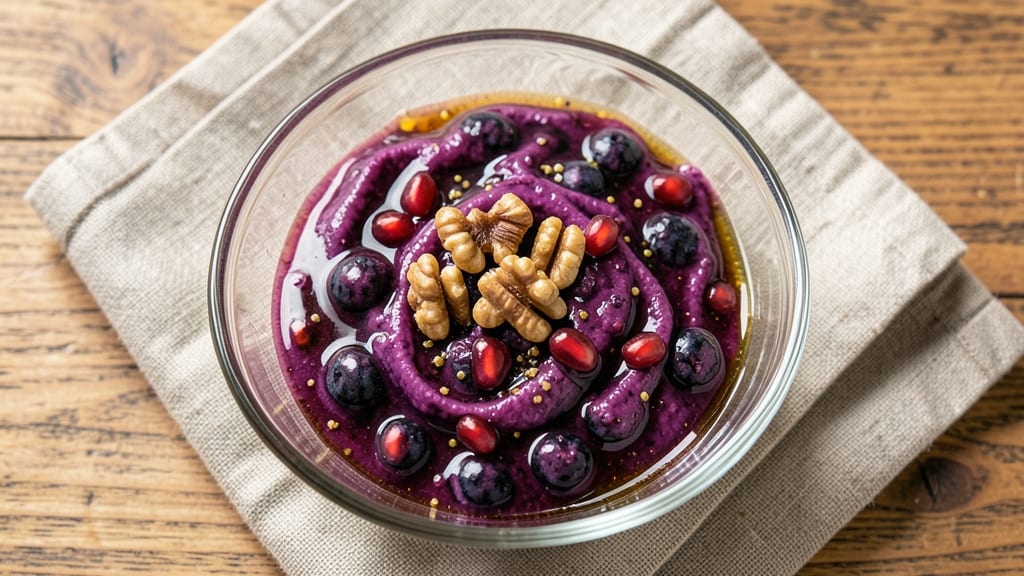
This blueberry pomegranate salad dressing transforms summer salads into vibrant, tangy-sweet masterpieces with just five simple ingredients. The combination of tart blueberries and jewel-like pomegranate seeds creates a dressing that's bright, complex, and packed with antioxidants—perfect for greens, grain bowls, or even drizzled over grilled chicken.
What makes this recipe stand out is how effortlessly it balances sweetness, acidity, and creaminess without relying on honey or dairy.
The secret lies in the emulsifier: a touch of Dijon mustard binds the oil and fruit puree, creating a silky texture that clings beautifully to every leaf. You won't find any artificial thickeners or preservatives here—just real fruit, vinegar, and a hint of maple syrup to round out the flavors.
This dressing stays fresh in the fridge for up to 10 days, making it ideal for meal prep or gifting in small jars.
What you'll end up with is a dressing that's visually stunning—deep ruby hues from the pomegranate seeds and blueberries—while delivering a flavor profile that's both refreshing and satisfying. The tartness cuts through rich ingredients like avocado or cheese, while the subtle sweetness keeps it from being too sharp.
It's the kind of dressing that makes you reach for the salad spoon first.
Use it immediately on mixed greens with nuts and dried fruit, or store it in a sealed jar for up to 10 days. The flavors actually improve as they meld, so leftovers taste even better the next day.
This isn't just another bottled dressing—it's a bright, summery upgrade that turns ordinary salads into showstoppers.
Ingredients for blueberry pomegranate salad dressing
Five vibrant ingredients create a dressing that's visually stunning and packed with summer flavors.
| Ingredient | Amount | Notes |
|---|---|---|
| Fresh Blueberries 🫐 | ½ cup | Pitted if possible, for smoother texture |
| Pomegranate Seeds 🍇 | ½ cup | Freshly extracted, vibrant red |
| Extra-Virgin Olive Oil 🫒 | ½ cup | Light, fruity variety preferred |
| Apple Cider Vinegar 🍏 | ¼ cup | Raw, unfiltered for depth |
| Pure Maple Syrup 🍁 | 1 tbsp | Grade A for subtle flavor |
| Dijon Mustard 🍯 | 1 tsp | High-quality, no additives |
| Sea Salt 🧂 | ¼ tsp | Fine grain, Diamond Crystal preferred |
| Fresh Lemon Juice 🍋 | 1 tbsp | Strained, no pulp |
The blueberries and pomegranate seeds are the heart of this dressing—look for deep blue and ruby hues, indicating peak freshness. Whole Foods or Trader Joe's carry excellent quality, especially in late summer. For pomegranate seeds, avoid pre-packaged mixes with added sugar; freshly extracted seeds make all the difference. The olive oil should be extra-virgin, with a fruity aroma that adds richness without overpowering the fruit's brightness. Apple cider vinegar should be raw and unfiltered for its complex flavor profile, and Bragg or Texas Pete are reliable brands.
No fresh blueberries? Frozen work perfectly—thaw and drain before using. Pomegranate seeds can be substituted with raspberries or blackberries for a similar tartness, though the ruby color will differ. Swap maple syrup for agave nectar if preferred, though maple adds a subtle caramel note. For a tangier dressing, increase the lemon juice by half a tablespoon. The Dijon mustard is critical—avoid powdered mustard, as it lacks the emulsifying power needed for a silky texture.
Store in an airtight jar in the fridge for up to 10 days, though flavors actually deepen over time. The dressing thickens slightly when chilled, so give it a stir before using. For meal prep, divide into small jars—perfect for gifting. If the dressing separates, whisk vigorously to re-emulsify. This dressing pairs beautifully with avocado, grilled chicken, or roasted vegetables, enhancing their natural flavors without overpowering them.
Why You'll Love This Recipe
- No Blender Needed: I swear by this recipe because it’s just a quick mash-and-whisk. No straining, no pulsing—just crush the blueberries and pomegranate seeds with a fork until they’re chunky but vibrant. The texture stays bright and fresh, not mushy.
- Sweet-Tart Magic: That maple syrup and apple cider vinegar combo? It’s the secret. The blueberries bring bright sweetness, the pomegranate adds a juicy tart punch, and the olive oil ties it all together with a silky richness. Honestly, it’s the kind of dressing that makes you pour it on everything—even toast.
- Weeknight Meal Upgrade: This dressing turns a basic salad into something special in two minutes. Toss it with greens for a brunch bowl, drizzle it over grilled chicken, or even mix it into yogurt for a dessert dip. (Yes, even on a Tuesday night.)
- Makes More Than You Think: A small jar of this goes a long way, and it keeps for days in the fridge. I’ve used it for salads, marinades, and even as a glaze for roasted veggies. Between us, it’s my go-to for when I need flavor without the fuss.
Step-by-step instructions for blueberry pomegranate salad dressing
This vibrant dressing balances sweet, tart, and nutty notes—perfect for summer salads.
Prepare the Fruit Base
In a small food processor, combine the 0.5 cup fresh blueberries and 0.5 cup pomegranate seeds. Pulse until the mixture reaches a coarse, chunky consistency—you want visible berry pieces but no whole seeds. This texture adds visual appeal and bursts of flavor with each bite.
If using pitted blueberries, you'll achieve an even smoother texture. Stop processing immediately when you see small berry fragments—over-processing turns the mixture into a purée, which can make the dressing too thick. Transfer the fruit mixture to a medium bowl and set aside.
Whisk Together Wet Ingredients
In the same bowl, add the 0.5 cup extra-virgin olive oil, 0.25 cup apple cider vinegar, 1 tbsp pure maple syrup, 1 tsp Dijon mustard, and 0.25 tsp sea salt. Using a whisk, combine these ingredients until fully emulsified and smooth. The olive oil should be completely incorporated, with no visible separation.
This is where the magic happens—the acidity of the vinegar and lemon juice will later balance the sweetness of the berries and maple syrup. The Dijon mustard adds a subtle tang that deepens the dressing's complexity. Whisk vigorously for at least 30 seconds to ensure all ingredients are fully integrated.
Incorporate the Fruit and Finish
Gently fold the fruit mixture into the wet ingredients using a silicone spatula. Reserve 2 tablespoons of the dressing in a small container—this will be your finishing touch later. The remaining dressing should have a vibrant, jewel-toned appearance with visible berry flecks.
Taste and adjust seasoning if needed. If the dressing tastes too sweet, add another ½ teaspoon of apple cider vinegar. If it needs more brightness, add ½ teaspoon of fresh lemon juice. The dressing should balance sweet, tart, and slightly nutty flavors with a smooth, velvety texture.
Rest and Refine the Dressing
Cover the bowl with plastic wrap and let the dressing rest at room temperature for 15-20 minutes. This allows the flavors to meld and the dressing to reach its ideal consistency. During this time, the acidity will continue to mellow slightly, creating a more harmonious taste profile.
Before serving, give the dressing one final stir. If it has thickened slightly, thin it with 1-2 teaspoons of water or additional vinegar until it reaches a pourable consistency. The reserved 2 tablespoons can now be drizzled over the salad just before serving—this adds a bright, fresh finish that elevates the presentation.
Pro Tips For Making Blueberry Pomegranate Salad Dressing
- Pulse, Don’t Blend: Use a food processor’s pulse function instead of blending continuously—this keeps the blueberries and pomegranate seeds intact for texture. After 3-4 pulses, taste before adding more; over-processing turns it into jam.
- Chill Before Mixing: Cold ingredients emulsify better. Pop the blueberries and pomegranate seeds in the freezer for 10 minutes first—this prevents the olive oil from separating when you add it.
- Vinegar First, Then Sweeten: Add the apple cider vinegar to the processor before the olive oil and maple syrup. This cuts through the fruit’s tartness more evenly, so you don’t end up chasing balance later.
- Toast the Seeds: Lightly toast the pomegranate seeds in a dry pan for 30 seconds—just until fragrant. It deepens their flavor without cooking the dressing, and the crunch stays intact. (Yes, even if you’re impatient.)
Creative variations of this recipe
Herbal Infusions
Add 1 tsp fresh mint or basil to the food processor with the fruit for a refreshing twist. The herbs infuse into the dressing while processing, creating a bright, aromatic profile that pairs beautifully with summer greens.
I find this works especially well with spinach or arugula salads—the herbal notes complement the berry sweetness perfectly. 🌿
Citrus Zest Boost
Zest ½ lemon or orange (about 1 tsp zest) and fold it into the dressing after resting. The citrus oils add a vibrant pop of flavor that brightens the dressing even more.
For a tropical variation, try lime zest—it creates a tangy, almost margarita-inspired dressing that’s perfect for Mexican-inspired salads with avocado or black beans.
Spiced Variations
For warmth, add ¼ tsp ground cinnamon or cardamom to the wet ingredients. These spices blend seamlessly with the berry flavors, creating a cozy yet sophisticated dressing. I love this version drizzled over roasted sweet potatoes or butternut squash salads.
A pinch of cayenne pepper adds subtle heat for those who enjoy a kick.
Nutty Upgrades
Stir in 1 tbsp almond butter or tahini after the dressing has rested for a rich, velvety texture. The nutty depth balances the fruit’s tartness beautifully. This works especially well with walnut or pecan-topped salads, adding a satisfying crunch and extra protein.
For a lighter option, use 1 tsp toasted sesame oil instead.
Global Flavors
Transform this dressing into a Mediterranean-inspired version by adding ½ tsp dried oregano and swapping the apple cider vinegar for red wine vinegar.
For an Asian twist, use rice vinegar and add 1 tsp toasted sesame seeds, creating a dressing that pairs wonderfully with soba noodle salads or grilled shrimp.
Nutrition facts
Frequently asked questions
Can I make this dressing without a food processor?
Mash the blueberries and pomegranate seeds with a fork or potato masher until you get a chunky consistency. For extra smoothness, blend them in a blender first, then strain through a fine-mesh sieve to remove seeds. The texture will be slightly smoother but still packed with flavor.
How do I store leftovers to keep them fresh?
Transfer the dressing to an airtight glass jar and refrigerate for up to 10 days. The flavors actually improve as they meld! If it separates, simply whisk or shake before using. For longer storage, freeze in ice cube trays and transfer to a freezer bag for up to 3 months.
What salads pair best with this dressing?
This vibrant dressing shines with leafy greens like spinach or arugula, but it also elevates grain bowls, roasted vegetable salads, and even grilled chicken or fish. The sweet-tart balance cuts through rich ingredients beautifully. Try it with quinoa, farro, or avocado for a showstopping meal.
Why does my dressing look separated?
This happens when the emulsion breaks, usually from too much oil or not enough emulsifier. Whisk vigorously to re-combine, or add ½ teaspoon Dijon mustard to help stabilize it. For extra insurance, chill the dressing for 10 minutes before serving—it thickens slightly when cold.
Can I use this dressing for other dishes besides salads?
Yes! Drizzle it over grilled meats, roasted potatoes, or even pasta dishes for a fruity glaze. It also makes a delicious dipping sauce for fresh fruit or veggie sticks. The sweet-tart profile works surprisingly well with cheese boards too!