
Side Dishes
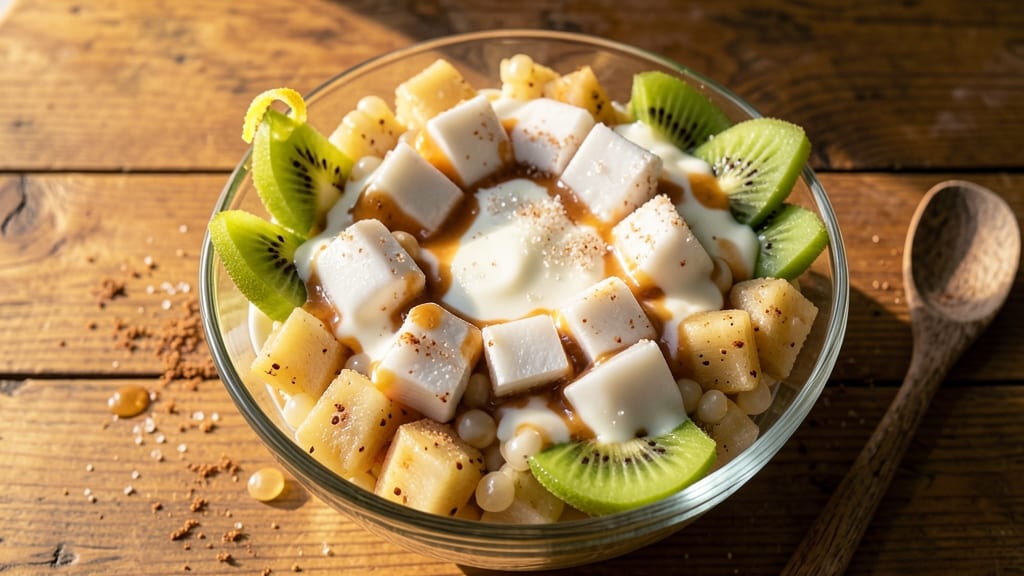
This buko salad recipe for 1 kilo transforms simple ingredients into a velvety, chewy masterpiece that’s been beloved in Filipino homes for generations. The secret lies in perfectly soaked young coconut, tender young jackfruit, and a sweetened cream that binds everything together like a tropical hug.
I’ve perfected this version to deliver the ideal texture—creamy, chewy, and refreshing—every single time.
The magic begins with the buko, or young coconut, which needs to soak for at least 4 hours (or overnight for maximum tenderness).
While it softens, you’ll mix a luscious cream of sweetened condensed milk and evaporated milk, then layer it with jackfruit, sago pearls, and a touch of vanilla for depth. The chilling process lets the flavors meld into a dessert that’s as comforting as it is elegant.
What you’ll end up with is a 1-kilo dessert that’s visually stunning—creamy layers of coconut and cream, studded with translucent sago pearls and juicy jackfruit. The texture is a perfect balance: the buko stays chewy, the cream stays silky, and the sago adds a delightful bite.
It’s the kind of dessert that disappears quickly but leaves everyone asking for seconds.
Serve it chilled in a glass bowl for an impressive presentation, or portion it into individual cups for a crowd-pleasing treat. This recipe is foolproof, traditional, and guaranteed to transport your taste buds to the tropics—no passport required. Let’s get started!
Ingredients for buko salad recipe for 1 kilo
These tropical staples blend into a dreamy dessert that's chewy, creamy, and irresistible.
| Ingredient | Amount | Notes |
|---|---|---|
| Young Coconut (Buko) Flesh 🥥 | 14 oz | Freshly scraped from 1 large young coconut |
| Young Jackfruit 🍈 | 12 oz | Fresh, ripe, peeled and shredded |
| Sago Pearls 💎 | 1 cup | Pre-cooked, translucent type |
| Sweetened Condensed Milk 🥛 | 14 oz | High-quality brand preferred |
| Evaporated Milk 🥛 | 12 oz | Full-fat for creaminess |
| Granulated Sugar 🍚 | ½ cup | Fine grain preferred |
| Vanilla Extract 🌸 | 1 tsp | Pure vanilla preferred |
| Lime Juice 🍋 | 2 tbsp | Freshly squeezed |
| Gelatin 🍬 | 1 tsp | Unflavored, for setting |
| Cold Water 💧 | ¼ cup | For gelatin activation |
| Garnish: Toasted Coconut Flakes 🥥 | 2 tbsp | Optional for topping |
| Garnish: Fresh Mint Leaves 🌿 | 4 whole | Chopped for garnish |
The buko is non-negotiable—fresh young coconut from an Asian market or specialty store gives the best texture. Look for one with vibrant green flesh and no brown spots. Trader Joe's often carries pre-scraped buko in cans, but fresh is worth the effort. For jackfruit, young green (not ripe yellow) is essential—it should be firm but tender enough to shred easily. If you can't find fresh, canned jackfruit in water works in a pinch, but drain and rinse thoroughly. Sago pearls? Pre-cooked saves time, but if you're making them from scratch, soak them for 20 minutes before adding to the salad.
No fresh coconut? Coconut milk isn't a substitute—this dessert needs the actual texture. Short on jackfruit? Extra buko or shredded pineapple stretches it, but the flavor won't be identical. For the milk, full-fat versions are a must—skimmed makes the cream too thin. The gelatin is key for that perfect set—unflavored only, no fruit punch flavors. If you're avoiding gelatin, agar-agar works at double the amount, but the texture will be firmer. For the sugar, fine grain dissolves better than coarse, and vanilla? Pure extract beats imitation every time.
This keeps beautifully—5-7 days in the fridge if stored in an airtight container. The longer it chills, the creamier it gets. For serving, I like to portion it into individual glasses with a scoop of coconut flakes and mint leaf on top. Freezes for 2 months too, though the sago pearls get softer after thawing. Pro tip: Make a double batch—this disappears faster than you'd think, and leftovers make amazing milkshakes.
Why You'll Love This Recipe
- No-Cook Magic: I swear by this—just slice the buko and jackfruit, drain the sago, and mix. No stove, no fuss, just layers of cool, creamy goodness waiting in your bowl. The condensed milk and evaporated milk blend like they’re meant to be, turning this into my lazy Sunday afternoon staple.
- Chewy-Creamy Bliss: That first bite? The buko’s tender flesh with the jackfruit’s slight crunch, all hugged by the syrupy milk and plump sago pearls—it’s like dessert and a snack had a lovechild. Honestly, I’ve seen people eat this straight from the fridge like it’s ice cream, and I don’t blame them.
- Party in a Bowl: Serve it at birthdays, potlucks, or even as a post-dinner treat—this salad never feels out of place. Between us, I’ve used it to impress guests who thought I was a "real chef," and it’s always the first to disappear. (Yes, even on a Tuesday night.)
Step-by-step instructions for tropical buko salad
This creamy, chewy masterpiece comes together in layers—start with the gelatin base, then build the tropical medley.
Prepare the Gelatin Base
In a medium bowl, sprinkle the 1 teaspoon gelatin evenly over the ¼ cup cold water. Let it bloom for 5 minutes—you'll see it thicken into a jelly-like consistency. This step is crucial because blooming ensures even distribution of gelatin throughout the mixture, preventing lumps in your final salad.
Once bloomed, place the bowl over a pot of simmering water (double boiler method) and stir gently until the gelatin completely dissolves and the mixture becomes clear. Remove from heat immediately and let it cool to room temperature. This cooled gelatin will later bind all the creamy ingredients together, creating that signature silky texture.
Combine the Creamy Mixture
In a large mixing bowl, combine the 14 ounces sweetened condensed milk, 12 ounces evaporated milk, ½ cup granulated sugar, and 1 teaspoon vanilla extract. Whisk until the sugar dissolves completely—this ensures a smooth, lump-free base. The mixture should look like thick, pale caramel.
Gradually pour in the cooled gelatin mixture while whisking continuously. Then add the 2 tablespoons lime juice and mix well. The lime juice brightens the flavors and balances the sweetness. Set this mixture aside—it will be the creamy foundation of your salad.
Assemble the Tropical Layers
In a separate large bowl, combine the 14 ounces young coconut flesh (buko), 12 ounces young jackfruit, and 1 cup sago pearls. Gently fold these ingredients into the creamy mixture until everything is evenly distributed. Be careful not to overmix—you want the buko and jackfruit to retain their distinct textures while being coated in the creamy sauce.
Transfer the entire mixture to a 1-kilogram (approximately 2-pound) capacity serving dish or individual glasses. Smooth the top with a spatula for an even surface. This layering ensures each bite delivers the perfect balance of creamy sauce, chewy sago pearls, and tender tropical fruits.
Chill and Set
Cover the dish tightly with plastic wrap and refrigerate for at least 4 hours, or until fully set. The salad should have a firm, jelly-like consistency when gently shaken. This chilling time is essential—it allows the gelatin to fully set and the flavors to meld together perfectly.
For best results, chill overnight. The longer it sets, the more pronounced the textures become—the buko stays crisp, the jackfruit maintains its chewiness, and the sago pearls hold their shape while remaining tender. This patience ensures restaurant-quality texture in your homemade version.
Garnish and Serve
Before serving, sprinkle the 2 tablespoons toasted coconut flakes evenly over the top. Then, carefully arrange the 4 whole chopped fresh mint leaves on each serving portion. The toasted coconut adds a delightful crunch, while the mint leaves provide a refreshing contrast to the sweet and creamy flavors.
Serve chilled in individual glasses or bowls. Each spoonful should deliver a perfect harmony of textures—creamy sauce, chewy sago pearls, tender coconut and jackfruit, and that final crunch from the toasted coconut. This tropical delight is best enjoyed immediately after chilling, when all the textures are at their peak.
Pro Tips For Making Buko Salad Recipe For 1 Kilo
- CHOP BUKO SMALL: The bigger the chunks, the less creamy your salad gets—no one wants a mouthful of coconut wood. Aim for ½-inch cubes max, and if your knife gets dull mid-chop, switch it. I’ve seen people force through with a dull blade, and it turns the flesh mushy instead of tender.
- BOIL SAGO 3 MINUTES: Three minutes, no more. I learned this after turning my sago into glue twice—overcooked pearls turn to paste and ruin the texture. Use a slotted spoon to drain them immediately, then rinse under cold water to stop cooking. They’ll still be firm enough to bite but soft enough to blend into the creaminess.
- COOL JACKFRUIT BEFORE MIXING: Warm jackfruit releases water like a sad sponge, and suddenly your salad turns into a soggy mess. Run the chopped pieces under cold water or pop them in the fridge for 10 minutes first. Trust me, the texture stays crisp, and the condensed milk won’t get diluted into a watery puddle.
- LAYER MILKS LAST: Add the evaporated milk first, then the condensed milk—this keeps the sago from absorbing all the creaminess at once. Stir gently in a circular motion so the sago gets coated evenly. If you dump both milks together, you’ll end up with clumps of dry sago floating in a sweet syrup. (Yes, I’ve done it.)
Regional styles of buko salad recipe for 1 kilo
Filipino Home-Style
This is the classic version you’ll find in Filipino households, where buko salad is a staple dessert for gatherings. The key here is the long soak time—I’ve seen families soak their buko for up to 8 hours to achieve that ultra-tender texture.
The cream mixture is kept simple: just condensed milk, evaporated milk, and a touch of lime to brighten the sweetness. I like to add 1 extra tablespoon of sugar if serving to kids, as their taste buds often prefer it sweeter. 🥥
For an authentic touch, some families use leche flan instead of gelatin—simply layer the creamy mixture over a pre-made flan base. The contrast of the caramelized flan with the cool buko creates a restaurant-worthy presentation.
If you try this, let the flan set completely before adding the buko mixture to avoid a runny texture.
Modern Twist
For a lighter version, swap half the sweetened condensed milk for Greek yogurt—this cuts calories while keeping the creaminess. I’ve also seen versions with matcha powder (½ tsp) in the cream mixture for an earthy, vibrant twist.
The matcha pairs beautifully with the tropical flavors and adds a subtle umami depth. For color contrast, use red or green sago pearls instead of the traditional white. 💫
Another fun modern adaptation is adding diced mango or passion fruit to the buko mixture. The acidity from the fruit cuts through the richness, making each bite more refreshing.
Just be sure to add the fruit after the salad has chilled so it doesn’t release too much liquid and dilute the cream.
Regional Variations
In Visayas, the region famous for coconut farms, buko salad often includes freshly grated coconut mixed into the cream base for extra coconut flavor. They also use more lime juice (up to 3 tablespoons) to balance the sweetness.
The result is a tangier, more vibrant dessert that’s less cloying. 🍋
Up north in Baguio, the cooler climate inspires a spiced version with ½ teaspoon cinnamon and ¼ teaspoon nutmeg in the cream mixture. This adds warmth that pairs perfectly with the cool buko. For a festive touch, they sometimes top it with crushed pineapple instead of coconut flakes.
Vegan Adaptation
To make this dessert plant-based, replace the gelatin with ½ cup agar-agar powder (dissolved in 1 cup hot water) and use coconut cream instead of dairy milk. The coconut cream adds natural sweetness, so reduce the sugar to ¼ cup.
For the buko, ensure it’s extra tender since the texture will be slightly firmer without gelatin. 🌱
For the jackfruit, use young green jackfruit (not ripe) and shred it finely to mimic the texture of traditional buko salad. The sago pearls can stay the same, but if you’re avoiding gelatin entirely, skip them or use tapioca pearls that don’t require setting agents.
The result is still creamy and tropical, just with a lighter, plant-based profile.
Nutrition facts
Frequently asked questions
How long should I soak the buko for maximum tenderness?
The buko needs at least 4 hours of soaking, but for that ultra-tender texture, soak it overnight (8-12 hours). This ensures the coconut flesh becomes soft and absorbs the flavors beautifully. Just drain well before mixing to avoid excess water in your salad.
Can I substitute jackfruit if I can't find it?
Yes! You can replace jackfruit with extra buko (16 oz total) or shredded pineapple (12 oz) for a similar texture. If using pineapple, drain it well first to prevent a watery salad. The flavor will be slightly different but still delicious.
Why did my buko salad turn out too runny? This usually happens if the gelatin didn't set properly or if excess liquid from un-drained ingredients was mixed in.
How can I make this dessert less sweet?
Reduce the sugar by 2 tablespoons and add 1 extra tablespoon of lime juice to balance the sweetness. You can also replace 2 oz of sweetened condensed milk with plain Greek yogurt for a lighter, less sugary version. Taste as you go!
Can I make buko salad ahead of time?
This dessert actually tastes better after 24 hours in the fridge as the flavors meld together. Store it in an airtight container and garnish just before serving. It keeps well for up to 5 days, though the texture may soften slightly over time.