
Side Dishes
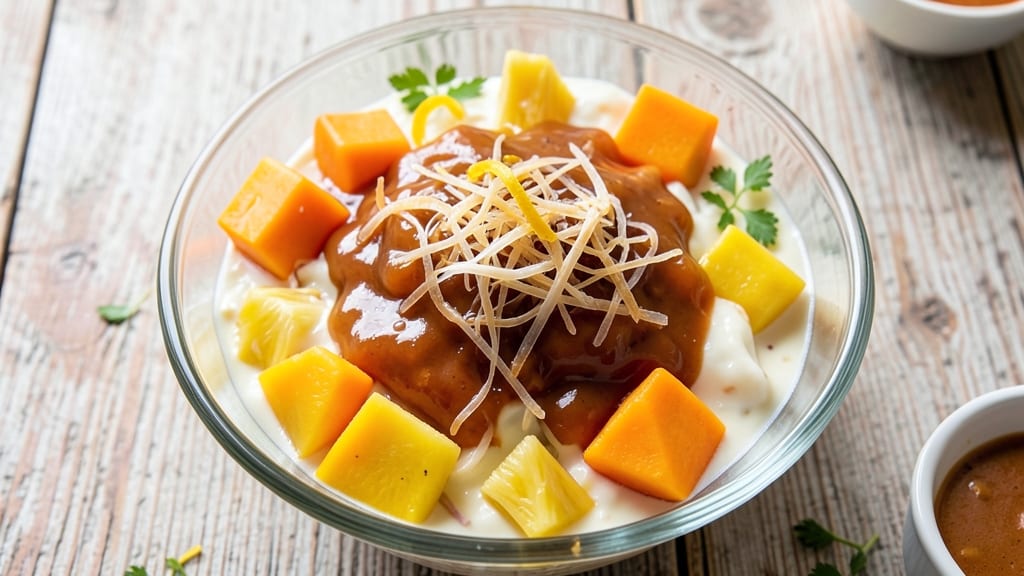
This buko salad recipe from Panlasang Pinoy delivers the perfect balance of chewy nata de coco, creamy sweetness, and refreshing fruit—every bite is a nostalgic taste of Filipino desserts.
The secret lies in layering ingredients just right: crispy nata de coco soaks up the rich condensed milk while gelatin creates that signature jelly texture. I’ve perfected this version to stay light yet indulgent, with just the right amount of gelatin for that satisfying wobble.
The magic happens during the chilling process, where flavors meld into a harmonious blend of sweet, creamy, and slightly chewy textures. Unlike some versions that turn too heavy, this recipe keeps the nata de coco crispy while ensuring the gelatin sets perfectly—no soggy bites here.
It’s the kind of dessert that feels like a hug in every spoonful, especially when served chilled on a hot day.
What makes this recipe special is its versatility—you can adjust the fruit (mango, jackfruit, or even pineapple work beautifully) and even swap in coconut milk for extra richness. The cultural significance runs deep; buko salad has been a beloved Filipino dessert for generations, often served at gatherings and celebrations.
Once you try this version, you’ll understand why it’s a staple in Filipino homes.
Ready in just 15 minutes of prep plus 4 hours of chilling, this dessert requires minimal effort but delivers maximum flavor. The result is a vibrant, creamy masterpiece that’s perfect for potlucks, family gatherings, or simply treating yourself. Let’s get started on creating this timeless classic!
Ingredients for buko salad recipe panlasang pinoy
Chewy nata de coco, creamy condensed milk, and vibrant tropical fruits create this nostalgic Filipino dessert masterpiece.
| Ingredient | Amount | Notes |
|---|---|---|
| Nata De Coco (Coconut Gel) 🥥 | 14 oz | Pre-rinsed, drained well |
| Sweetened Condensed Milk 🥛 | 1 can | 14 oz can, full-fat preferred |
| Gelatin Powder 🍬 | 1 ½ tbsp | Unflavored, high-grade preferred |
| Hot Water 💧 | ½ cup | Boiled and cooled |
| Ripe Mangoes 🍈 | 2 cups | Diced, medium-sized |
| Pineapple Chunks 🍍 | 1 ½ cups | Fresh or canned, drained |
| Jackfruit 🍠 | 1 cup | Young, sweet variety, cubed |
| Shredded Coconut 🥥 | ½ cup | Sweetened, toasted lightly |
| Vanilla Extract 🌿 | 1 tsp | Pure, high-quality |
| Salt 🧂 | ¼ tsp | Fine sea salt |
| Lime Juice 🍋 | 1 tbsp | Freshly squeezed |
| Graham Crackers 🍪 | ½ cup | Crushed, for garnish |
The nata de coco is the heart of this dish—look for pre-rinsed, firm strands at Asian markets or the international aisle of larger grocery stores. Filipino supermarkets often carry the best quality, but brands like Del Monte or Dole work well too. Avoid pre-packaged versions with added sugar or preservatives—they compromise texture. For the gelatin, high-grade unflavored powder dissolves perfectly without altering the natural coconut flavor. The condensed milk should be full-fat; non-fat versions can make the texture grainy. If you can't find sweetened condensed milk, coconut milk powder mixed with sugar works in a pinch, though the flavor will differ slightly.
No mangoes? Papaya or guava add beautiful color and complementary sweetness. Jackfruit can be swapped for peaches or pears, though the texture will be softer. The gelatin mixture is non-negotiable for that signature jelly texture—don't skip it. For a dairy-free option, agar-agar powder (1 tbsp dissolved in 1/2 cup hot water) creates a similar effect. The lime juice brightens everything; if you're out, lemon juice works equally well. Toasting the shredded coconut enhances its flavor, but it's optional if you're short on time. The graham crackers add a delightful crunch—any crushed cookie works if that's what you have on hand.
This dessert requires 4 hours of chilling for optimal texture—don't rush it. Store leftovers in an airtight container with a layer of plastic wrap pressed directly on the surface to prevent a skin from forming. Keeps in the fridge for 5 days, though the nata de coco may soften slightly after 3 days. For a restaurant-quality presentation, layer the ingredients in clear glasses and garnish with extra coconut and fruit. The gelatin mixture can be made 1 day ahead and stored separately until ready to combine with other ingredients.
Why You'll Love This Recipe
- No-Chop Required: I swear, the only prep is slicing mangoes—and even that’s optional if you grab pre-cut ones. Just toss in the nata de coco, mix the gelatin with hot water, and let the condensed milk do its magic. Fifteen minutes tops, and zero stress.
- Sweet-Salty Magic: That creamy condensed milk swirled with ripe mango? It’s like dessert had a flavor makeover. The gelatin adds just enough chew to balance the coconut’s jelly texture, while the mango cuts through the richness—every bite feels like a hug from your lola’s kitchen.
- Party in a Bowl: Bring this to potlucks, birthdays, or even your own lazy Sunday and watch it disappear. It’s the one dessert that’s always a hit—no one will guess it’s basically just pantry staples. (Between us, it’s my secret weapon for gatherings where I don’t want to bake.)
Step-by-step instructions for buko salad recipe Panlasang Pinoy
Master this classic Filipino dessert with precise techniques for the perfect creamy texture and refreshing crunch.
Prepare the Gelatin Mixture for Creamy Base
In a medium mixing bowl, combine the 1.5 tablespoons gelatin powder with the 0.5 cup hot water. Let it sit for 5 minutes until fully dissolved and slightly thickened. This step creates the silky texture that sets our buko salad apart from other versions.
While waiting, gently fold in the 1 can sweetened condensed milk using a silicone spatula. Mix until smooth and well incorporated. The heat from the condensed milk helps activate the gelatin, ensuring a perfectly set dessert. Avoid overmixing at this stage to prevent air bubbles that could weaken the final texture.
Combine Fruits and Coconut Elements
In a large glass serving bowl, layer the 14 oz nata de coco (pre-rinsed and drained), 2 cups diced ripe mangoes, 1.5 cups pineapple chunks, and 1 cup cubed jackfruit. Arrange them evenly for visual appeal and balanced texture.
Add the 0.5 cup shredded coconut and 1 tablespoon lime juice to the fruit mixture. Sprinkle with 0.25 teaspoon salt and 1 teaspoon vanilla extract. Toss gently to distribute the flavors evenly without crushing the delicate nata de coco strands. The lime juice brightens the sweetness while the salt enhances all the natural flavors.
Assemble and Chill for Perfect Texture
Pour the gelatin mixture over the fruit and coconut combination. Use a spatula to gently fold everything together, ensuring the nata de coco is fully coated with the creamy mixture. This step is crucial for achieving that signature buko salad texture where each bite delivers both crunch and creaminess.
Cover the bowl with plastic wrap and refrigerate for at least 4 hours, preferably overnight. The longer chilling time allows the gelatin to fully set while the flavors meld together. For best results, serve directly from the refrigerator to maintain that cool, creamy consistency.
Garnish and Serve for Restaurant-Quality Presentation
Before serving, sprinkle the top with 0.5 cup crushed graham crackers for added texture and visual contrast. The graham crackers provide a delightful crunch that complements the creamy base perfectly.
Serve immediately in chilled glasses or bowls. Each spoonful should deliver a perfect balance of sweet, tangy, and creamy elements with that essential nata de coco crunch. The contrast between the cool dessert and warm graham crackers makes this a truly satisfying treat.
Pro Tips For Making Buko Salad Recipe Panlasang Pinoy
- Soak Nata Properly: Drain the nata de coco, rinse it under cold water, and soak it in fresh water for 10 minutes before mixing—this removes excess starch and keeps it from turning mushy in the condensed milk. I learned this the hard way after my first batch turned into a sticky, sad puddle.
- Bloom Gelatin Right: Sprinkle gelatin powder over ¼ cup of cold water first, let it sit for 5 minutes to bloom, then add the remaining hot water—this guarantees a smooth, wobble-free texture, not a lumpy mess. Skipping this step means you’re basically rolling the dice on your salad’s consistency.
- Chill Before Mixing: Let your condensed milk and mango mixture cool to room temperature before folding in the nata and gelatin—hot liquid dissolves the nata instantly, leaving you with a watery, unappetizing blob instead of the perfect chewy texture. Patience here saves you from regret.
- Dice Mango Small: Cut mangoes into ½-inch cubes, not slices—this ensures even distribution and prevents one chunk from dominating your bite. Big pieces also melt faster, turning your salad into a soupy dessert before you even serve it. Uniformity matters.
Pro cooking tips for this recipe
Gelatin Activation Secrets
For that signature jelly texture, dissolve the 1.5 tablespoons gelatin powder in 0.5 cup hot water (not boiling) to avoid killing the gelatin proteins. I use a heatproof measuring cup and pour the water slowly while whisking—this creates a smooth, lump-free base.
Let it bloom for exactly 5 minutes before adding the condensed milk. The key is patience here; rushing this step can lead to grainy texture in your final buko salad. 🌡️
Pro tip: If your kitchen gets humid, cover the gelatin mixture with a damp paper towel while it blooms. This prevents the surface from drying out too quickly, which can make the gelatin seize up.
I learned this trick from my lola (grandmother) who made buko salad weekly—she swore by it for restaurant-quality results every time.
Nata De Coco Prep
Rinse your 14 oz nata de coco under cold water for 30 seconds to remove excess starch, then drain thoroughly in a colander for 5 minutes. Pat dry with paper towels—this step is non-negotiable for crispy texture.
I use a fine-mesh strainer lined with cheesecloth for extra drainage. The goal is to remove moisture without crushing the strands, so handle them gently like you're separating delicate seaweed.
For extra crunch, I like to separate the nata de coco into three portions: one for the bottom layer, one for the middle, and one for topping. This creates visual depth and ensures every bite has that satisfying texture contrast.
Store any unused nata de coco in an airtight container with a paper towel to absorb moisture—it keeps fresh for 3 days in the fridge.
Fruit Layering Strategy
Arrange your fruits in odd-numbered layers (3 or 5) for balanced texture and visual appeal. Start with the jackfruit at the bottom—its softer texture anchors the salad.
Place the pineapple chunks in the middle layer for acidity that cuts through the sweetness, and top with mango for natural sweetness that shines through. The shredded coconut should be sprinkled between layers to distribute its flavor evenly.
When adding the 1 tablespoon lime juice, do it gradually while tasting. Too much can make the gelatin set too quickly, while too little leaves the flavors flat. I find that 1.5 tablespoons works best for this recipe's scale—adjust based on your fruit's natural acidity.
The lime juice also helps prevent the coconut from turning bitter during chilling.
Chilling Mastery
Use two bowls for chilling: one for the main mixture and one for any extra gelatin you might need to adjust consistency. Place both in the fridge for 1 hour before combining everything.
This pre-chilling trick prevents the gelatin from setting too quickly when you mix it all together, giving you time to adjust texture if needed.
For even better results, I recommend using a glass loaf pan lined with parchment paper. Pour the combined mixture into the pan, then chill for 3 hours before unmolding.
This creates a more uniform texture and makes slicing easier for serving. The parchment paper prevents sticking and makes cleanup a breeze—trust me, you'll thank me later. ❄️
Garnish Like a Pro
Toast your shredded coconut in a dry skillet over medium-low heat for 2-3 minutes until golden brown. This enhances its flavor dramatically—don't skip this step! For the graham crackers, pulse them in a food processor for 3 seconds to get fine, even crumbs.
Sprinkle them over the top just before serving to maintain maximum crunch.
For a restaurant-worthy presentation, I like to dust the top with 1 teaspoon powdered sugar sifted through a fine-mesh sieve. This adds a delicate sweetness that complements the creamy base without overpowering the natural fruit flavors.
Serve in clear glass bowls to showcase the vibrant colors and textures—it's the little details that make this dessert truly special.
Nutrition facts
Frequently asked questions
Why does my buko salad turn out too runny? This usually happens when the gelatin doesn't set properly.
Can I make buko salad without gelatin?
Yes! For a dairy-free version, replace the gelatin with 1 tablespoon agar-agar powder dissolved in 0.5 cup hot water. Let it cool slightly before mixing with condensed milk. The texture will be firmer and slightly chewier, but still delicious. This works especially well if you're avoiding gelatin for dietary reasons.
How do I store leftover buko salad?
Transfer leftovers to an airtight container and press plastic wrap directly on the surface to prevent a skin from forming. It keeps well in the fridge for 5 days, though the nata de coco may soften slightly after 3 days. For best texture, serve within 2 days if possible. Freezing isn't recommended as it can make the nata de coco mushy.
What fruits can I substitute if I don't have mango, pineapple, or jackfruit?
You can use any combination of tropical fruits! Try papaya, guava, or peaches for sweetness, or kiwi or passion fruit for tangy contrast. Just adjust the total volume to maintain 4.5 cups of fruit. The key is balancing sweet and acidic flavors—if using only sweet fruits, add 1 extra tablespoon lime juice to brighten the flavors.
Can I make buko salad ahead of time for a party?
This dessert actually tastes better when made a day ahead. Prepare it completely, then refrigerate uncovered for 24 hours to let flavors meld. Just before serving, add the crushed graham crackers to maintain their crunch. The longer chilling time enhances the coconut flavor and makes the gelatin set perfectly—ideal for potlucks or gatherings.