Side Dishes
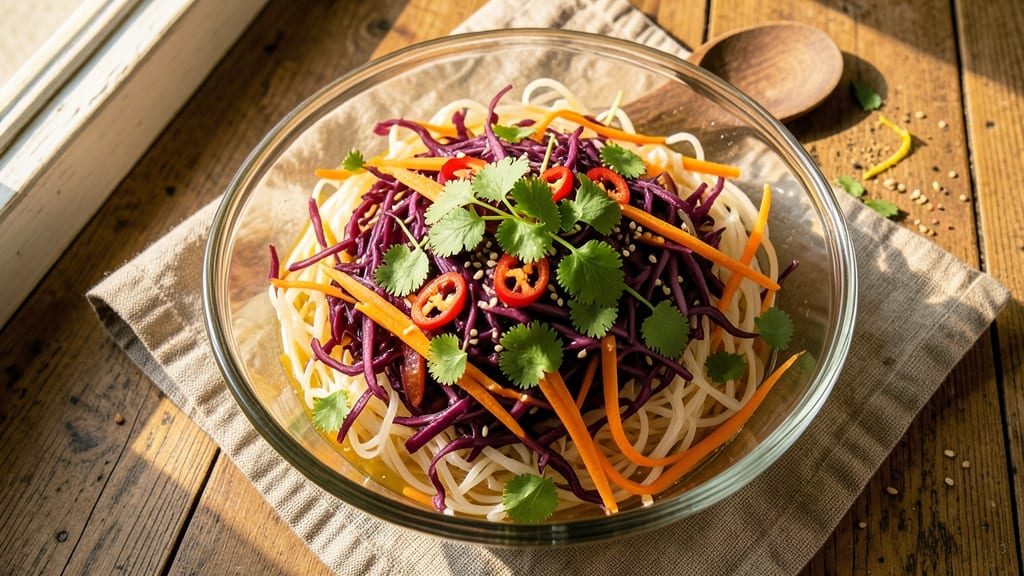
This Burmese noodle salad recipe brings the bold flavors of Southeast Asian street food to your kitchen table. 🌟 The tangy tamarind dressing cuts through the richness of peanuts, chili, and fresh herbs, creating a perfect balance of sweet, spicy, and umami.
Inspired by traditional Shan-style dishes, this recipe transforms simple ingredients into a vibrant, crunchy salad that’s as satisfying as it is refreshing.
The secret lies in the dressing—a blend of tamarind paste, lime juice, and a touch of fish sauce—that delivers that signature Burmese tang. Fresh vegetables like shredded cabbage and herbs add crunch and freshness, while toasted peanuts bring a satisfying crunch.
It’s a dish that’s both light enough for a summer meal and hearty enough to stand on its own.
What makes this recipe special is its adaptability. You can use rice noodles for a gluten-free option or swap in your favorite greens for extra freshness. The flavors develop as you mix, so the longer it sits, the better it tastes—perfect for meal prep or serving at gatherings.
Ready in just 30 minutes, this noodle salad is a celebration of Burmese cuisine, packed with texture and flavor. Here’s how to bring it to life in your kitchen.
Ingredients for burmese noodle salad
Bold flavors start with these fresh ingredients—tamarind, lime, and herbs bring the Burmese tang.
| Ingredient | Amount | Notes |
|---|---|---|
| Rice Noodles 🍜 | 8 oz | Glass or rice noodles preferred |
| Red Cabbage 🥬 | 3 cups | Shredded, thinly sliced |
| Carrots | 1 medium | Julienned, about 1 cup |
| Red Chili Peppers 🌶️ | 2 whole | Thinly sliced, like Thai chilies |
| Fresh Cilantro 🌿 | ½ cup | Chopped, stems removed |
| Fresh Mint Leaves 🌿 | ¼ cup | Chopped, loosely packed |
| Peanuts 🥜 | ½ cup | Toasted, roughly chopped |
| Tamarind Paste 🍯 | ¼ cup | Thick, unsweetened |
| Lime Juice 🍋 | ½ cup | Freshly squeezed |
| Fish Sauce 🍶 | 2 tbsp | Red Boat preferred |
| Soy Sauce 🥢 | 1 tbsp | Light or regular |
| Brown Sugar 🍚 | 2 tbsp | Packed, light brown |
| Garlic Cloves 🧄 | 3 cloves | Minced, fresh |
| Vegetable Oil 🫒 | 2 tbsp | For toasting peanuts |
| Salt 🧂 | ½ tsp | Kosher or sea salt |
The tamarind paste is non-negotiable here—Thai Kitchen brand at most grocery stores works great. If you can't find it, Trader Joe's carries it, or check the Asian market. Fresh herbs are key: cilantro and mint should be bright green, not wilted. The peanuts? Toast them yourself—store-bought versions taste stale. For the fish sauce, Red Boat is the gold standard, but any good-quality brand will do. The rice noodles? Glass noodles add chew, but regular rice noodles work too.
No tamarind paste? Lime juice plus 1 tbsp brown sugar mimics the tang, though it won’t be identical. Short on cilantro? Fresh basil or Thai basil adds a different but lovely flavor. The chilies can be swapped for red pepper flakes at half the amount if you prefer less heat. For a gluten-free option, ensure your soy sauce is tamari. The carrots? Baby carrots work fine—just slice them thinly. And if you’re feeling adventurous, add a handful of bean sprouts for extra crunch.
This salad tastes even better the next day—flavors meld beautifully. Store leftovers in an airtight container for 3-4 days in the fridge. The dressing keeps separately for 1 week, so you can make it ahead. For meal prep, portion the noodles and veggies in one container and the dressing in another—toss just before eating. The peanuts? Toast a big batch and store in a jar for 2 weeks—they’ll add crunch to anything.
Why You'll Love This Recipe
- No-Cook Prep Magic: I swear by this trick—just toss the pre-cooked rice noodles in cold water for 10 minutes while I chop the cabbage and carrots. No boiling, no waiting, no stress. The noodles soften perfectly without turning mushy, and honestly? That’s half the battle won before you even think about dressing.
- Spicy-Creamy Balance: Between us, this salad hits just right—the shredded red cabbage adds that satisfying crunch, while the thinly sliced carrots bring sweetness that makes every bite sing. Then there’s the chili oil or fresh chilies (your call), which turns it from good to dangerously addictive without overpowering the fresh cilantro’s bright finish.
- Lunchbox or Party Star: Here’s what sold me—this works everywhere. Pack it in bento boxes for school lunches (my kid actually eats the veggies now), bring it to potlucks where it disappears in minutes, or serve it as a side to grilled meats. The dressing clings to everything, so no soggy bottoms here.
- Budget Meal That Lasts: Red cabbage stays crisp for days, carrots hold their color, and rice noodles? Cheap as chips. I make a big batch on Sundays, and it’s still fresh by Friday—perfect for when I’m too tired to cook. Plus, the cilantro’s freshness peaks even after a few days, so flavor doesn’t fade. My wallet and taste buds thank me.
Step-by-step instructions for Burmese noodle salad
Let's build this vibrant salad with bold flavors and satisfying textures.
👨🍳 Step 1: Prepare the Crunchy Vegetable Mix
Start by shredding the 3 cups red cabbage into thin strips using a sharp knife or mandoline. I like to cut it into long, thin ribbons that'll hold up well in the salad. Next, julienne the 1 medium carrot into thin matchsticks—about 1 cup total. Thinly slice the 2 whole red chili peppers crosswise, keeping them whole if you prefer less heat.
Place all the vegetables in a large mixing bowl. Add the 0.5 cup chopped fresh cilantro and 0.25 cup chopped fresh mint leaves, then sprinkle with the 0.5 tsp salt. Toss gently to combine, being careful not to bruise the cabbage. Set aside while you work on the dressing and peanuts.
🔥 Step 2: Toast the Peanuts for Maximum Crunch
Heat a dry skillet over medium heat and add the 2 tbsp vegetable oil. Once the oil shimmers, add the 0.5 cup peanuts and toast for 3-4 minutes until they're golden brown and fragrant. Watch them closely—they burn quickly!
Transfer the toasted peanuts to a plate to cool slightly, then roughly chop them with a knife. The slight warmth helps release their oils, making them even more flavorful. Set aside for now—you'll add them just before serving.
🍳 Step 3: Cook the Rice Noodles Perfectly
Bring a pot of water to a rolling boil and add the 8 oz rice noodles. Cook for 3-4 minutes until they're tender but still slightly firm—they'll finish cooking in the dressing. Drain immediately in a colander and rinse under cold water to stop the cooking process.
I like to shock the noodles with cold water for about 10 seconds to prevent them from sticking together. Drain again and return them to the pot. Toss with 1 tbsp soy sauce while still warm to help them absorb the flavor. Let them cool completely before assembling the salad.
🥘 Step 4: Make the Tangy Tamarind Dressing
In a small bowl, whisk together the 0.25 cup tamarind paste, 0.5 cup lime juice, 2 tbsp fish sauce, 2 tbsp brown sugar, and 3 minced garlic cloves. Start with 0.25 cup water to thin it out, then adjust as needed—you want a smooth, pourable consistency that coats the noodles nicely.
Taste and adjust the balance: more lime for tang, more sugar for sweetness, or more fish sauce for umami. The dressing should be bright, slightly sweet, and deeply savory—this is where the magic happens. Set aside while you assemble everything.
🥘 Step 5: Assemble and Toss Everything Together
In a large bowl, combine the cooked noodles, vegetable mix, and toasted peanuts. Pour the dressing over everything and toss gently but thoroughly. The noodles should be lightly coated with dressing, not swimming in it. If it's too dry, add 1-2 tablespoons water to loosen it up.
Let the salad sit for 5-10 minutes before serving—this allows all the flavors to meld together beautifully. The cabbage will soften slightly, the peanuts will be perfectly crunchy, and the noodles will absorb all that tangy goodness. Serve immediately while everything's at its peak texture and temperature.
Pro Tips For Making Burmese Noodle Salad
- SOAK NOODLES IN ICE WATER: I learned this the hard way—rice noodles for this salad need to be al dente but not mushy. After boiling, plunge them into a bowl of ice water for 30 seconds. This stops the cooking instantly and keeps them from turning into glue. Drain well, then toss with the dressing—no soggy noodles here.
- SHRED CABBAGE THIN AND DRY IT: Red cabbage is the star, but thick shreds stay crunchy while everything else softens. Use a mandoline or knife to slice it paper-thin, then spread it on a towel and pat dry with another towel. This removes excess moisture so it absorbs the dressing instead of swimming in it.
- STOP CHILIS AT THE RIGHT SIZE: Whole dried chilies pack heat but lose their texture when chopped too small. For this salad, tear them into ½-inch pieces—big enough to see but small enough to chew. If you’re using fresh chilies, slice them thinly and soak in warm water for 5 minutes first to mellow the burn without losing flavor.
- TOSS NOODLES LAST: Add the noodles to the salad bowl after everything else is mixed. They’ll soak up the dressing too fast and turn limp. Instead, keep them separate until serving, then toss them in just before eating. This keeps the texture crisp and the flavors balanced—no one wants a sad, soggy noodle pile.
Creative variations of this burmese noodle salad
Shan-Style Spicy Twist
For a more authentic Shan-inspired version, add 1 tbsp Shan-style chili jam (available at Asian markets) to the dressing for a deeper, smokier heat. I like to fold in ¼ cup toasted sesame seeds and 2 tbsp chopped scallions for extra texture.
Serve with grilled chicken or tofu on the side—this version feels heartier and more like a traditional street food dish. 🌶️
Green Papaya Fusion
Swap the cabbage for 1 cup shredded green papaya (available at Asian markets) for a crisp, refreshing twist inspired by Thai green papaya salad. Add 1 tbsp palm sugar to the dressing and toss in ¼ cup crushed dried shrimp for an umami kick.
The papaya adds a bright, almost cucumber-like crunch that balances the richness perfectly. 🥬
Protein-Packed Add-Ins
Boost the dish with ½ lb grilled shrimp or crumbled rotisserie chicken for a protein punch. Toss the cooked protein with 1 tsp fish sauce and ½ tsp garlic powder before adding it to the salad.
For a vegetarian option, use marinated and pan-fried tofu—press it first to remove excess water for better texture. 🍤
Sweet & Tangy Variations
For a sweeter profile, increase the brown sugar to 3 tbsp and add 1 tsp grated ginger to the dressing. Balance it with extra lime juice (up to ⅔ cup) for brightness.
Another fun twist: stir in 2 tbsp hoisin sauce for a sticky, slightly sweet glaze that coats the noodles beautifully. 🍯
Noodle Swaps
Try rice vermicelli noodles for a lighter texture or soba noodles for a nutty flavor. For gluten-free, use shirataki noodles (rinsed well) or quinoa noodles. If you prefer chewiness, udon noodles work surprisingly well—just reduce the cooking time to 2 minutes to keep them al dente. 🍜
Herb & Crunch Upgrades
Boost freshness with ¼ cup chopped Thai basil or 1 tbsp minced lemongrass (bruised) in the dressing. For extra crunch, add ¼ cup toasted lotus root or crushed rice crackers on top.
If you love texture, sprinkle 1 tbsp crushed peanuts on top right before serving to keep them extra crisp. 🌿
Nutrition facts
Frequently asked questions
Can I make this Burmese noodle salad ahead of time?
The flavors actually improve when mixed and chilled! Store the noodles and vegetables separately in an airtight container for up to 2 days. Keep the dressing separate until ready to serve to prevent sogginess. Toss everything together just before eating for the best texture and flavor.
What if I can't find tamarind paste?
No worries! Mix ½ cup lime juice with 1 tbsp brown sugar for a similar tangy effect. For extra depth, add 1 tsp soy sauce to mimic the umami from tamarind. The flavor won't be identical, but it'll still taste delicious.
How spicy should the chili peppers be?
Use Thai bird's eye chilies for authentic heat, or swap for jalapeños if you prefer milder spice. Start with 1 chili and adjust to taste—you can always add more! For a smoky kick, toast the chilies in a dry pan for 10 seconds before slicing.
Can I make this salad gluten-free?
Use rice noodles (already gluten-free) and ensure your soy sauce is tamari. For extra protein, add grilled shrimp or tofu. The dressing remains naturally gluten-free as long as you avoid cross-contamination with gluten-containing ingredients.
What's the best way to store leftovers?
Keep the salad in an airtight container in the fridge for 3-4 days. The dressing can be stored separately for 1 week. For best texture, toss with a splash of water or lime juice before reheating (if serving warm). The peanuts stay crispy when stored in a sealed jar at room temperature.