
Salads
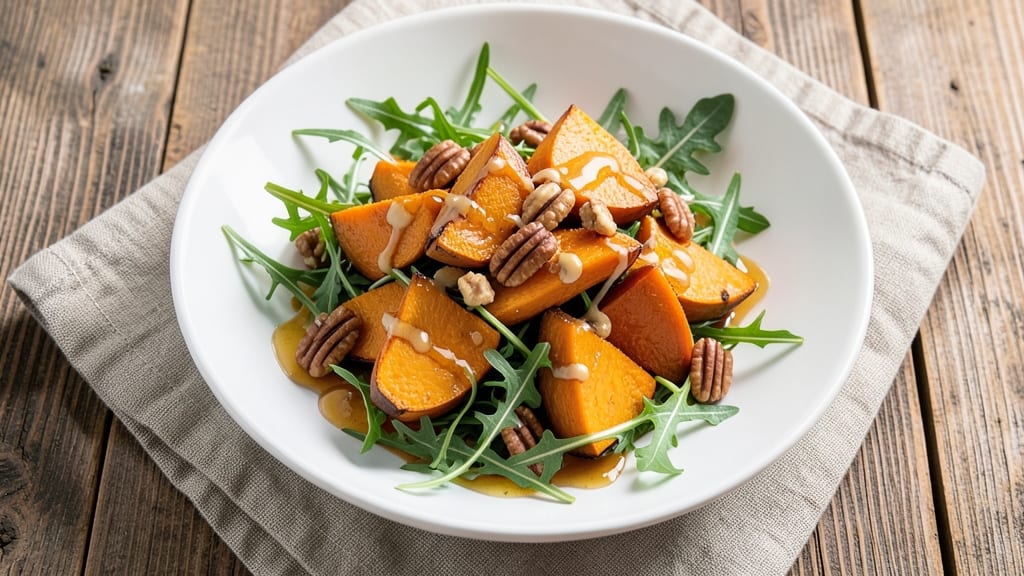
This butternut squash and arugula salad brings autumn's rich flavors to your plate with roasted sweetness and peppery bite in perfect harmony. The secret lies in caramelizing the squash until tender yet firm, then tossing it with fresh arugula that retains its signature crunch.
I developed this recipe after realizing how often butternut squash gets overcooked into mush—this method preserves its natural sweetness while adding depth through warm spices.
The balance of textures is what makes this salad truly special: creamy roasted squash contrasts beautifully with crisp arugula leaves, while toasted pecans add satisfying crunch. A simple honey-Dijon vinaigrette ties everything together with just the right amount of tang.
What sets this apart from other squash salads is the careful roasting technique that ensures the squash stays tender-crisp rather than turning to puree.
What you'll end up with is a nutrient-packed vegetarian dish that's hearty enough for a main course but light enough for a side. The natural sweetness of the squash pairs perfectly with the peppery arugula, creating a flavor profile that's both comforting and refreshing.
This salad holds up beautifully for meal prep, making it ideal for busy weeknights when you want something wholesome without sacrificing flavor.
For added protein, consider tossing in chickpeas or white beans, while nut lovers can boost the crunch with walnuts or almonds. The dressing can also be adjusted—more honey for extra sweetness or a splash of apple cider vinegar for brightness.
The possibilities are endless while maintaining the salad's core appeal: simple ingredients that deliver maximum flavor and texture contrast.
Ingredients for butternut squash arugula salad
Simple ingredients transform into a sophisticated autumn salad with perfect texture contrast.
| Ingredient | Amount | Notes |
|---|---|---|
| Medium Butternut Squash 🎃 | 1 whole | Peeled, seeded, cut into 1-inch cubes |
| Baby Arugula 🌿 | 6 oz | Organic preferred for maximum peppery flavor |
| Extra-Virgin Olive Oil 🫒 | ½ cup | High-quality for roasting and dressing |
| Raw Pecans 🥜 | ½ cup | Toasted until golden for crunch |
| Local Honey 🍯 | 2 tbsp | Raw or unfiltered for optimal flavor |
| Dijon Mustard 🍯 | 1 tbsp | High-quality for tangy depth |
| Apple Cider Vinegar 🍎 | 1 tbsp | Bragg or organic preferred |
| Ground Cinnamon 🌶️ | ½ tsp | Freshly ground for aromatic warmth |
| Ground Nutmeg 🌶️ | ¼ tsp | Freshly grated for depth |
| Flaky Sea Salt 🧂 | ½ tsp | Diamond Crystal preferred |
| Freshly Ground Black Pepper 🌶️ | ¼ tsp | Freshly cracked for optimal flavor |
| White Balsamic Vinegar 🍷 | 1 tsp | For subtle sweetness contrast |
The butternut squash is the heart of this salad, and selecting the right one matters. Look for a firm, heavy squash with a vibrant orange hue—Howgill Farms or Whole Foods typically carry the best varieties. The skin should be unblemished, and when tapped, it should sound hollow. Avoid squash with soft spots or wrinkled skin, as these indicate age. For optimal flavor, use a small to medium-sized squash (about 3-4 pounds), which roasts more evenly. If you're prepping ahead, store unpeeled squash in a cool, dark place for up to 2 weeks or refrigerate after cutting to maintain freshness.
Substitutions can work beautifully if you're short on time or ingredients. Swap pecans for walnuts or almonds—just toast them to enhance their natural oils. Fresh arugula wilting? Baby spinach or kale work well, though the peppery bite will be slightly different. For the dressing, if you're out of Dijon mustard, whole-grain mustard at half the amount provides a similar texture. The honey can be replaced with maple syrup or agave nectar, though the flavor profile will shift slightly. For a nut-free option, omit the pecans and add toasted pumpkin seeds for a different crunch. Always taste as you go—the dressing can be adjusted with more vinegar for acidity or honey for sweetness.
This salad holds up remarkably well for meal prep, making it ideal for busy schedules. Store the roasted squash and toasted pecans separately in airtight containers in the fridge for up to 5 days. The arugula should be kept in a sealed container with a paper towel to absorb moisture, and dressed only when ready to serve to maintain its crispness. The dressing can be prepped in advance and stored for 1 week. When reassembling, gently toss the ingredients together—adding a splash of water or lemon juice can help revive wilted greens. For a quick assembly, keep the components in separate containers and combine just before serving to preserve the perfect texture contrast.
Why You'll Love This Recipe
- I swear by this trick: microwave the squash cubes for 8-10 minutes instead of roasting. Same sweet, caramelized flavor—just with zero oven heat and one less dirty pan to scrub. (Yes, even on a Tuesday night when you’d rather be scrolling than standing in a hot kitchen.)
- No Roasting Required: I swear by this trick: microwave the squash cubes for 8-10 minutes instead of roasting. Same sweet, caramelized flavor—just with zero oven heat and one less dirty pan to scrub. (Yes, even on a Tuesday night when you’d rather be scrolling than standing in a hot kitchen.)
- Sweet-Savory Magic: That honey-pecan dressing? It’s where this salad gets ridiculously good. The pecans add crunch, the honey deepens the squash’s natural sweetness, and the arugula’s peppery bite cuts right through—like a fall flavor party in your mouth.
- Lunch for Days: Between us, this keeps perfectly for 3-4 days in the fridge. I pack it in mason jars for work lunches (dressing on the bottom, greens on top) and it still tastes fresh. No sad wilted salads here—just reliable, no-fuss meals.
Step-by-step instructions for roasted butternut squash and arugula salad
Transform seasonal squash into a sophisticated salad with caramelized edges and vibrant greens.
🔥 Step 1: Roast the Butternut Squash to Caramelized Perfection
Preheat your oven to 425°F and line a rimmed baking sheet with parchment paper. Toss the 1-inch cubed butternut squash with 2 tablespoons of the extra-virgin olive oil, 0.5 teaspoon ground cinnamon, 0.25 teaspoon ground nutmeg, and 0.25 teaspoon freshly ground black pepper. Spread the cubes in a single layer, leaving space between them for even browning.
Roast for 25-30 minutes until the edges are deeply caramelized with a golden-brown crust and a fork slides in easily. The squash should be tender but still hold its shape—overcooking turns it mushy. If the pan looks dry after 20 minutes, add 1 tablespoon water to prevent burning. Let the roasted squash cool slightly before proceeding.
👨🍳 Step 2: Toast the Pecans for Crunchy Texture
While the squash roasts, heat a dry skillet over medium heat and add the 0.5 cup raw pecans. Toast for 5-6 minutes, stirring frequently, until they turn a rich golden brown and release an intoxicating nutty aroma. Remove from heat immediately—they'll continue cooking from residual heat and become bitter if left too long.
Transfer the toasted pecans to a plate to cool completely. This step is crucial; raw pecans lack the depth of flavor and texture that toasted ones provide. Once cooled, roughly chop them with a knife or pulse briefly in a food processor for an even crunch.
🥘 Step 3: Whisk the Honey-Balsamic Dressing
In a small bowl, whisk together the 2 tablespoons local honey, 1 tablespoon Dijon mustard, 1 tablespoon apple cider vinegar, 1 teaspoon white balsamic vinegar, and the remaining 3 tablespoons extra-virgin olive oil. Season with 0.25 teaspoon freshly ground black pepper and 0.25 teaspoon flaky sea salt.
The dressing should emulsify into a smooth, glossy consistency. If it separates, whisk in 1 teaspoon warm water to help bind the ingredients. Taste and adjust seasoning—you want a perfect balance of sweet, tangy, and slightly peppery notes. This dressing is the soul of the salad, tying all the flavors together.
🍽️ Step 4: Assemble the Salad for Maximum Freshness
In a large bowl, gently combine the 6 ounces baby arugula with the cooled roasted butternut squash. Drizzle the dressing over the top and toss lightly with tongs, just enough to coat the greens and squash evenly. The arugula should wilt slightly but still retain its vibrant color.
Sprinkle the chopped toasted pecans and an additional 0.25 teaspoon flaky sea salt over the salad. Serve immediately while the squash is still warm—this contrast of temperatures enhances the dish's complexity. The salad's beauty lies in its balance: sweet roasted squash, peppery arugula, crunchy pecans, and a tangy dressing that binds it all together.
Pro Tips For Making Butternut Squash Arugula Salad
- ROAST SQUASH UNTIL TOOTHSOME: The moment you can pierce the flesh with a fork and it gives just a little—that’s the sweet spot. Overcooking turns it mushy; undercooking leaves it raw-tasting. I’ve learned this the hard way after serving a salad where half the squash was still firm. Aim for 35-40 minutes at 400°F (200°C), stirring once midway, and check with a fork at the end.
- SALT THE ARUGULA IMMEDIATELY: Baby arugula wilts faster than you’d think. Toss it with a pinch of flaky salt and a drizzle of olive oil the second it hits the bowl—even before adding other ingredients. This preserves its crisp texture and keeps it from turning into sad, limp leaves by the time you’re ready to serve.
- TOAST PECANS LOW AND SLOW: Skip the high-heat blitz in the pan—it burns them faster than you can blink. Instead, spread pecans on a dry baking sheet and toast at 325°F (160°C) for 8-10 minutes, stirring once. They’ll brown evenly without bitterness, and the aroma will make your whole kitchen smell like autumn.
- DRESS THE SALAD LAST MINUTE: Honey and olive oil are a match made in heaven, but they also make arugula soggy if mixed too early. Hold off on the dressing until you’re ready to eat—just toss everything together right before serving. If you’re prepping ahead, keep the dressing separate and add it when assembling. Trust me, your salad will thank you.
Troubleshooting this recipe
Squash Too Soft
If your roasted butternut squash turns out mushy instead of tender-crisp, you likely overcooked it. The key is timing—25-30 minutes at 425°F is perfect for 1-inch cubes. I’ve found that smaller pieces (½-inch) cook faster, so adjust accordingly.
For extra insurance, spread squash in a single layer with space between pieces. If it’s still too soft, try roasting at 400°F for 15-20 minutes next time. 🌡️
Dressing Separates
The honey-Dijon vinaigrette should be smooth, but if it breaks, it’s usually from too much oil or not enough emulsification. Whisk in 1 teaspoon warm water to help bind the ingredients.
For a foolproof method, I recommend whisking the honey and Dijon together first, then slowly drizzling in the olive oil. If it still separates, add ½ teaspoon xanthan gum or a pinch of cornstarch to stabilize it. Taste as you go—adjust vinegar for tang or honey for sweetness.
Wilted Arugula
Arugula wilts quickly when dressed, especially if it’s not fresh. To keep it crisp, store it in a sealed container with a paper towel to absorb moisture, and dress it only when ready to serve.
If it’s already wilted, revive it by tossing with 1 tablespoon cold water or a splash of lemon juice before adding the dressing. For extra freshness, use organic arugula from the store’s refrigerated section—it’s usually harvested later in the day, so it holds up better. 🥗
Pecans Burn Quickly
Toasted pecans can go from golden perfection to bitter overcooking in seconds. Keep a close eye on them—5-6 minutes over medium heat is ideal. If they start to darken too quickly, remove them from the pan immediately. For even toasting, spread them in a single layer and stir frequently.
If you’re worried about burning, try toasting them in the oven at 350°F for 8-10 minutes instead. Cool them completely before chopping to prevent steam from making them soggy.
Salad Too Bland
A lack of flavor often means the dressing needs more balance. If your salad tastes flat, boost the dressing with ½ teaspoon smoked paprika or a pinch of cayenne for depth. For extra umami, add 1 teaspoon soy sauce or a splash of balsamic glaze.
If the squash isn’t sweet enough, roast it with an extra ½ teaspoon cinnamon or a drizzle of maple syrup before baking. Taste as you assemble—adjust seasoning with salt, pepper, or a squeeze of lemon juice to brighten the flavors.
Meal Prep Failures
This salad doesn’t reheat well, so store components separately to maintain texture. Keep the roasted squash and toasted pecans in airtight containers for up to 5 days, and dress the arugula only when ready to eat.
If you’re prepping ahead, store the dressing separately and toss it with the greens just before serving. For a quick assembly, keep everything in individual containers—this way, you can adjust freshness and texture when you’re ready to eat.
The key is to keep the arugula dry until the last minute to prevent wilting. ⏰
Nutrition facts
Frequently asked questions
Can I use regular squash instead of butternut?
Butternut squash is ideal for its natural sweetness and creamy texture, but you can substitute with acorn or kabocha squash for similar results. Avoid hubbard or pumpkin—they're too fibrous and watery. If using a different variety, reduce roasting time by 5 minutes since smaller pieces cook faster. The key is tender-crisp texture, so always check doneness with a fork.
How do I store leftovers without soggy greens?
Store the roasted squash and toasted pecans separately in airtight containers for up to 5 days. Keep the arugula dry in a sealed container with a paper towel to absorb moisture. When ready to eat, toss the greens with dressing just before serving. For extra freshness, add 1 teaspoon lemon juice to revive wilted leaves. Never store the fully dressed salad overnight—it will turn mushy.
What's the best way to make this salad heartier?
Add ½ cup cooked quinoa or ½ cup chickpeas for plant-based protein. For extra richness, fold in ¼ cup crumbled feta or goat cheese just before serving. If you want meat, try grilled chicken or crispy prosciutto—both pair beautifully with the sweet squash. Always add these components after tossing with dressing to maintain texture contrast.
Can I make this salad ahead of time?
Yes! Prepare all components separately: roast the squash, toast the pecans, and make the dressing. Store them in airtight containers in the fridge for up to 4 days. Assemble just before serving to keep the arugula crisp. The warm squash and cool greens create the best temperature contrast when served immediately, but you can reheat the squash for 10 seconds in the microwave if needed.
Why does my arugula turn bitter when dressed?
Fresh arugula develops bitterness when overhandled or stored improperly. Use organic arugula from the refrigerated section for maximum freshness. Dress it immediately before serving and avoid using metal utensils that can oxidize the leaves. If bitterness persists, reduce the amount of vinegar in the dressing or add ½ teaspoon sugar to balance the flavor. Always store arugula dry in the fridge.