
Side Dishes
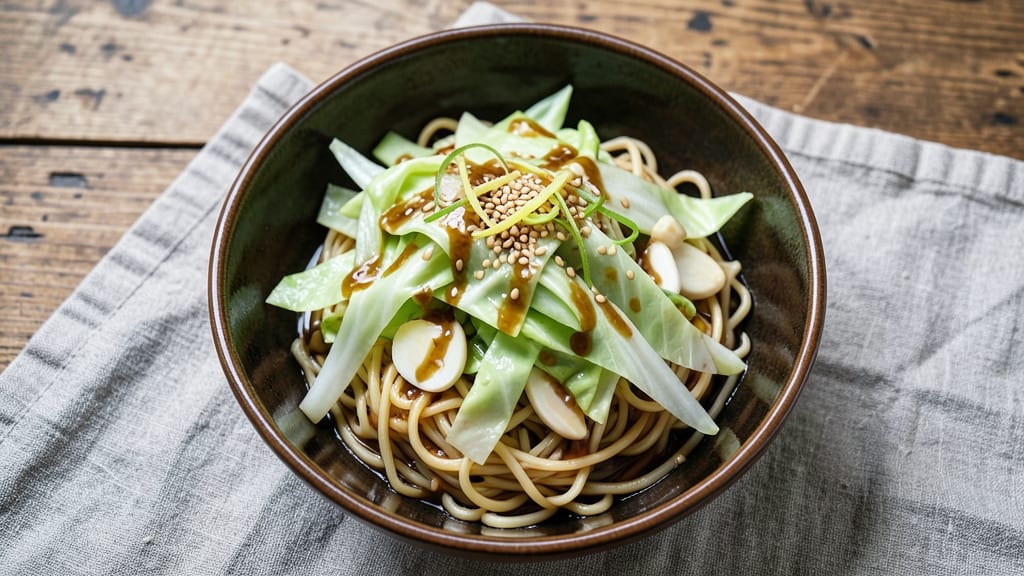
This Chinese cabbage salad recipe with ramen noodles transforms a simple side into a crisp-tender, sesame-ginger fusion dish that balances textures and flavors perfectly. The secret lies in quick-cooking ramen noodles—just 3 minutes in hot broth—while the cabbage stays crunchy when tossed with a bright, tangy dressing.
I developed this after craving something lighter than traditional ramen but still packed with umami and freshness.
The magic happens when you combine two techniques: blanching the cabbage for 30 seconds to soften without losing crunch, and finishing the noodles in the same sesame-ginger broth.
This shared dressing ties everything together—creamy, spicy, and aromatic—while keeping the dish light yet satisfying. No heavy sauces or soggy textures here.
What you’ll end up with is a harmonious bowl where each bite delivers crisp cabbage, tender noodles, and a burst of sesame-ginger flavor. The cabbage’s peppery bite cuts through the richness of the noodles, creating a balance that’s both refreshing and deeply flavorful.
Perfect for weeknight dinners or meal prep, this dish proves fusion food doesn’t have to be complicated.
For extra depth, stir-fry a handful of garlic and ginger in the broth before adding noodles, or top with toasted sesame seeds and sliced scallions. The 30-minute prep makes it ideal for busy evenings, and leftovers keep well for 2 days in the fridge. Let’s make this texturally perfect dish!
Ingredients for chinese cabbage salad recipe ramen noodles
Quick-cooking ramen noodles and crisp-tender cabbage make this sesame-ginger fusion dish shine.
| Ingredient | Amount | Notes |
|---|---|---|
| Chinese Cabbage (Napa Cabbage) 🥬 | 8 oz | Outer leaves trimmed, quartered lengthwise |
| Ramen Noodles 🍜 | 4 oz | Fresh or dried, discarding seasoning packet |
| Sesame Oil 🫒 | 1 tbsp | Toasted for nutty aroma |
| Fresh Ginger 🧄 | 1 tbsp | Finely grated, peeled |
| Garlic Cloves 🧄 | 3 cloves | Minced, fresh preferred |
| Low-Sodium Soy Sauce 🥢 | 2 tbsp | Kikkoman preferred |
| Rice Vinegar 🍶 | 1 ½ tbsp | Seasoned or unseasoned |
| Sesame Seeds 🌰 | 1 tsp | Toasted for garnish |
| Green Onions 🧅 | 2 whole | Thinly sliced, white and green parts |
| Vegetable Oil 🫒 | 1 tbsp | For stir-frying |
| Honey 🍯 | 1 tsp | Light, for balance |
| Red Pepper Flakes 🌶️ | ½ tsp | Optional, for heat |
| Salt 🧂 | ½ tsp | Kosher or sea salt |
| Black Pepper 🌶️ | ¼ tsp | Freshly ground |
The Chinese cabbage is the star—look for vibrant, crisp leaves with minimal bruising. Trader Joe's and Asian markets carry the best quality, but regular grocery stores usually have it in the produce section. If you can't find Napa cabbage, substitute regular cabbage but increase the cooking time to 45 seconds. For the ramen, fresh noodles cook faster and hold their texture better, but dried works in a pinch—just reduce cooking time by 1 minute. The secret to perfect texture is blanching the cabbage for exactly 30 seconds—no more, or it turns mushy.
No sesame oil? Toasted peanut oil at half the amount adds a similar nutty depth. Short on ginger? Substitute 1/4 tsp ground ginger, but fresh is ideal. The soy sauce can be swapped for tamari for gluten-free, and if you're avoiding sugar, skip the honey or use agave nectar instead. For extra umami, add 1 tsp fish sauce (if not vegetarian) or 1/2 tsp mushroom powder. The red pepper flakes are optional but worth it for that subtle kick—adjust to taste. If you're using dried ramen, rinse the seasoning packet thoroughly to remove excess salt.
Prep the cabbage first—it's the most time-sensitive part. Store any unused cabbage in a resealable bag with a paper towel for up to 5 days. The dressing keeps for 3 days in the fridge, but the noodles are best eaten fresh. For meal prep, store components separately—toss the cabbage and noodles together just before serving to maintain that perfect crunch. Leftovers? Reheat gently with a splash of water to revive texture, but it won't be as crisp as fresh.
Why You'll Love This Recipe
- I swear by this trick: thinly slice the cabbage with a mandoline or knife, then toss it raw—no wilting, no cooking. Those crisp leaves hold up perfectly against the chewy ramen, and honestly? It’s the secret to a salad that doesn’t turn soggy in 10 minutes.
- No-Chop Crunch: I swear by this trick: thinly slice the cabbage with a mandoline or knife, then toss it raw—no wilting, no cooking. Those crisp leaves hold up perfectly against the chewy ramen, and honestly? It’s the secret to a salad that doesn’t turn soggy in 10 minutes.
- Umami Bomb: That sesame oil and garlic combo? It’s where this dish gets its soul. A quick sizzle in the pan with fresh ginger turns the noodles into something rich and savory, while the cabbage adds a peppery bite. Between us, it’s the kind of flavor that makes you go back for seconds without even trying.
- Lunchbox Legend: Pack this cold or at room temp—it’s my go-to for work lunches or kids’ school meals. The noodles stay firm, the cabbage stays crisp, and the dressing clings like glue. My daughter picks out the ginger bits, but still asks for it every time. (Yes, even on a Tuesday night.)
Step-by-step instructions for sesame-ginger ramen noodle salad
Here's how to transform simple ingredients into a perfectly balanced, crisp-tender salad with bold Asian flavors.
Prep and Blanch the Chinese Cabbage
Start by thoroughly rinsing the 8 oz Chinese cabbage (napa cabbage) and patting it completely dry with paper towels. Trim away any wilted outer leaves, then cut the cabbage lengthwise into quarters. Remove and discard the thick core from each quarter.
Bring a large pot of water to a rolling boil and add 1 teaspoon salt. Working in batches if needed, blanch the cabbage quarters for 30 seconds—just until the leaves begin to soften at the edges but remain crisp in the center. Immediately transfer to an ice bath to stop the cooking process. Drain well and set aside. The cabbage should be tender enough to eat but still hold its shape—this is the secret to that perfect crisp-tender texture.
Cook the Ramen Noodles Al Dente
Fill a medium pot with water and bring to a boil. Add the 4 oz ramen noodles (discard the seasoning packet) and cook for 2 minutes less than the package instructions suggest. For most ramen, this means 2 minutes total. Drain immediately and rinse under cold water to stop the cooking process and remove excess starch.
Transfer the noodles to a large bowl and toss with 1 tablespoon sesame oil while still warm. This step prevents the noodles from sticking together and adds that nutty aroma right from the start. Let them cool slightly while you prepare the dressing and remaining ingredients. The noodles should be completely cool before combining with the cabbage—this ensures they don't turn mushy when mixed.
Create the Sesame-Ginger Dressing
In a small bowl, combine 2 tablespoons low-sodium soy sauce, 1.5 tablespoons rice vinegar, 1 teaspoon honey, 1 tablespoon finely grated fresh ginger, 3 minced garlic cloves, 0.5 teaspoon red pepper flakes, 0.5 teaspoon salt, and 0.25 teaspoon black pepper. Whisk vigorously until everything is fully incorporated and the mixture is smooth.
Heat 1 tablespoon vegetable oil in a small skillet over medium heat. Add the dressing mixture and simmer for 2-3 minutes until it thickens slightly and the raw garlic aroma disappears. Remove from heat and let cool completely. This concentrated dressing will carry all those bright, zesty flavors throughout your salad.
Assemble and Toss the Salad
In a large mixing bowl, combine the blanched Chinese cabbage, cooked ramen noodles, and the cooled sesame-ginger dressing. Use two large spoons or your hands to gently toss everything together until the cabbage and noodles are evenly coated with the dressing. Be careful not to overmix—the cabbage should remain slightly crisp rather than becoming limp.
Let the salad sit for 5 minutes at room temperature. This allows the flavors to meld together perfectly. Then, just before serving, sprinkle with 1 teaspoon toasted sesame seeds and 2 thinly sliced green onions (white and green parts separated). The sesame seeds add crunch while the green onions provide a fresh finish that cuts through the richness of the dressing.
Serve Immediately for Best Texture
Transfer the salad to serving plates and garnish with additional sliced green onions if desired. Serve immediately while the cabbage maintains its ideal crisp-tender texture. Each bite should deliver a perfect balance of textures—crisp cabbage, chewy noodles, and a silky dressing that ties everything together.
This salad keeps well in the refrigerator for up to 2 days, but the texture will gradually soften. For best results, enjoy it fresh from the bowl. The combination of warm, toasty sesame flavors with the bright acidity of the rice vinegar creates a dish that's equally satisfying as a light lunch or a refreshing side.
Pro Tips For Making Chinese Cabbage Salad Recipe Ramen Noodles
- SHOCK THE CABBAGE: Toss your Napa cabbage in ice water for 10 minutes after shredding—this crisps the leaves and stops them from wilting into sad, limp mush. I used to skip this, and my salad always looked like it was deflating by the third bite.
- COOK NOODLES AL DENTE THEN CHILL: Pull the ramen noodles before they’re fully soft, drain, and shock them in cold water. Let them sit 10 minutes while you prep the rest—this keeps them from turning into gluey paste when mixed with the dressing. Trust me, your bowl won’t fall apart when you add the cabbage.
- GRATE GINGER FINE—LIKE, REALLY FINE: Skip the slicer and use a microplane or the smallest holes on your box grater. Fresh ginger should dissolve into the dressing, not leave chewy bits that make you question your life choices. (Yes, even if you’re impatient like me.)
- SAVE SESAME OIL FOR LAST: Add the sesame oil after everything else is mixed—heat or acid can make it taste bitter. A few drops at the end brightens the whole dish without turning it into a greasy mess. (And no, the bottle won’t run out if you use just ½ teaspoon.)
Dietary considerations for chinese cabbage salad recipe ramen noodles
Gluten-Free Adaptations
Swap the regular ramen noodles for gluten-free tamari noodles—brands like Ramen Nagi or Shin Ramyun offer certified gluten-free options. These noodles hold their texture beautifully when cooked al dente, just like the original. For extra insurance, check labels for cross-contamination warnings if you're highly sensitive. 🥬
Low-Carb/Keto Options
Replace the ramen noodles with shirataki noodles (made from konjac) to slash carbs dramatically. Rinse them thoroughly to remove excess odor, then cook for 1-2 minutes in boiling water. Toss with the sesame-ginger dressing and cabbage—just watch your portion sizes, as shirataki can be deceivingly filling.
The cabbage remains perfectly low-carb at just 4g net carbs per serving.
Vegetarian Protein Boost
Add edamame or crumbled tofu for extra protein without altering the dish's lightness. For edamame, blanch ½ cup shelled for 2 minutes, then toss with the salad. For tofu, press and pan-fry ½ block firm tofu in sesame oil until golden—this adds a satisfying chewiness that complements the noodles.
Both options absorb the dressing beautifully. 🌱
Nut-Free Considerations
Sesame oil is the heart of this dish, but if you're avoiding nuts/seeds, substitute with 1 tbsp avocado oil or toasted coconut oil (for a tropical twist). Skip the sesame seeds garnish and opt for crushed peanuts (if nut-free is the only concern) or toasted pumpkin seeds for crunch.
The flavor profile stays bright and balanced without relying on sesame.
Allergen-Friendly Swaps
For soy allergies, use coconut aminos instead of soy sauce—it mimics the umami depth perfectly. If you're avoiding garlic, substitute with 1 tsp garlic-infused oil (add to the dressing) or omit entirely.
The ginger and rice vinegar still deliver that zesty punch. Always double-check ingredient labels, especially for pre-made dressings or noodle seasonings.
Nutrition facts
Frequently asked questions
Can I use regular cabbage instead of Chinese cabbage?
Yes, but with adjustments! Regular cabbage has thicker leaves that need 45 seconds of blanching instead of 30 seconds. Core it thoroughly since the leaves are denser. The flavor will be slightly milder, but the texture works well when paired with the sesame-ginger dressing. For extra crunch, add 1/2 cup shredded carrot to the mix.
How do I prevent the noodles from getting mushy?
Cook the ramen noodles 1-2 minutes less than package instructions and rinse immediately in cold water. Toss them with 1 tablespoon sesame oil while warm to create a protective barrier. Always combine cooled noodles with the cabbage—never mix while hot. The key is temperature control throughout the process.
Can I make this ahead of time?
Store components separately for 2 days max: keep the blanched cabbage in an airtight container with paper towels, and refrigerate cooked noodles in a sealed bag. When ready to serve, toss everything together with fresh dressing. For best texture, enjoy within 6 hours of assembly—the cabbage loses crispness over time.
What if I don't have sesame oil?
Use 1 tablespoon toasted peanut oil or avocado oil for a neutral alternative. For nut-free options, try toasted coconut oil (adds tropical notes) or light olive oil. The flavor won't be identical, but the dish will still taste delicious. Just increase the amount slightly to compensate for lower aroma impact.
Can I make this spicier?
Add 1/2 teaspoon extra red pepper flakes to the dressing or stir in 1 teaspoon sriracha after tossing. For heat lovers, mix in 1/2 teaspoon gochujang (Korean chili paste) with the dressing.