Side Dishes
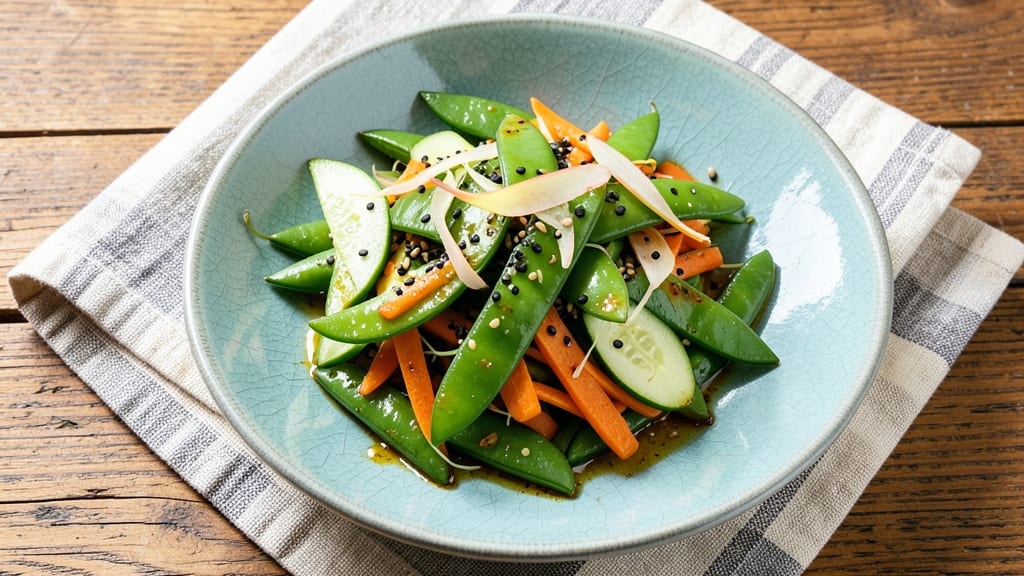
This Asian snow pea salad recipe delivers crisp-tender snow peas with a bright lime-ginger dressing that balances sweet, tangy, and umami flavors perfectly. The secret lies in blanching the peas just until vibrant green—never mushy—while keeping the carrots and cucumber crunchy for texture contrast.
I developed this recipe after discovering how fresh snow peas transform into a restaurant-worthy side with minimal effort.
The dressing is where the magic happens: a zesty blend of rice vinegar, sesame oil, and fresh ginger that brightens every bite. A touch of honey or agave balances the acidity, while crushed peanuts add nutty depth and crunch.
Traditional Asian flavors shine here without being overpowering—just enough soy sauce for umami, lime for freshness, and a pinch of chili flakes for subtle heat.
What you'll end up with is a salad that's naturally vegetarian but hearty enough to stand as a main dish when paired with protein like edamame or tofu.
The flavors develop as it sits, making it ideal for meal prep or serving at room temperature. Each bite offers that perfect harmony of textures and tastes.
Serve it alongside grilled meats, as a light lunch, or packed in bento boxes for work. The best part? It comes together in under 20 minutes with ingredients you likely already have on hand.
Ingredients for asian snow pea salad
Fresh snow peas and crunchy veggies meet zesty lime-ginger dressing for a vibrant, restaurant-worthy salad.
| Ingredient | Amount | Notes |
|---|---|---|
| Snow Peas 🌱 | 2 cups | Fresh, crisp-tender variety |
| Carrots 🥕 | 1 whole | Julienned or thinly sliced |
| English Cucumber 🥒 | 1 whole | Seedless, thinly sliced |
| Rice Vinegar 🍶 | ⅓ cup | Unseasoned, mild flavor |
| Fresh Ginger 🌿 | 1 ½ tbsp | Finely grated, fresh |
| Sesame Oil 🫒 | 1 ½ tbsp | Toasted, for aroma |
| Agave Nectar 🍯 | 1 tbsp | Or honey for sweetness |
| Soy Sauce 🍶 | 1 ½ tbsp | Light or tamari |
| Lime Juice 🍋 | 2 tbsp | Freshly squeezed |
| Crushed Peanuts 🥜 | ¼ cup | Toasted for extra flavor |
| Red Chili Flakes 🌶️ | ½ tsp | Optional, for subtle heat |
| Salt 🧂 | ½ tsp | Kosher or sea salt |
| Ice Water 💧 | 1 cup | For blanching peas |
Snow peas are the star here—look for bright green, crisp pods at the grocery store, usually in the produce section near Asian vegetables. Trader Joe's and Whole Foods often carry the freshest snow peas, but any well-stocked supermarket should have them. If you can't find snow peas, sugar snap peas or regular peas work in a pinch, though the texture will differ slightly. For the carrots, organic is ideal if you're eating them raw to avoid pesticides, but regular works fine too. The cucumber should be firm and seedless—English cucumbers stay the crispest, but Persian cucumbers are a good alternative if that's what's available.
No rice vinegar? Substitute apple cider vinegar or white wine vinegar—just know the flavor will be slightly different. Fresh ginger is non-negotiable for that bright zing, but if you're out, ginger powder at half the amount works in a bind. The sesame oil should be toasted—Kadoya or La Choy are reliable brands. For sweetness, agave is my go-to, but maple syrup or brown sugar dissolved in warm water works too. The crushed peanuts add great texture—store-bought roasted peanuts work fine, but toasting your own in a dry pan adds extra flavor. Skip the chili flakes if you prefer no heat, but they're what gives this dish that subtle kick.
Blanch the snow peas in boiling water for exactly 30 seconds before plunging into ice water to stop the cooking—this keeps them crisp-tender. The dressing keeps for 5 days in the fridge, but the salad itself is best eaten fresh. Store the dressing separately and toss everything together just before serving. This salad reheats beautifully—microwave for 30 seconds if you're reviving leftovers, though it's even better at room temperature. Pack it in bento boxes for lunch or serve as a side for grilled meats or tofu.
Why You'll Love This Recipe
- No-Cook Magic: I swear by this one—just slice, toss, and let the rice vinegar and ginger work their charm. No heat, no fuss, and zero cleanup. (Yes, even on a Tuesday night when you’ve got better things to do.)
- Crunchy-Ginger Zing: That fresh ginger? It’s the MVP here—sharp, bright, and cutting through the sweetness of the snow peas and carrots. Honestly, the first bite is like a little flavor explosion in your mouth, and it sticks with you.
- Lunchbox Hero: Between us, this is my go-to for packed lunches or potlucks. It holds up for days in the fridge, and the cucumber keeps it refreshing. My daughter picks out the snow peas first, but still asks for seconds—proof it’s a crowd-pleaser.
- Budget Crunch-Saver: Snow peas and carrots are dirt cheap, and a little ginger goes a long way. I’ve made this for under $5 for four servings, and it’s still one of the most satisfying salads I know. (Not the prettiest, but the taste makes up for it.)
Step-by-step instructions for Asian snow pea salad
Here's the precise method for achieving perfect crisp-tenderness in every bite.
Blanch the Snow Peas for Crisp-Tenderness
Fill a medium saucepan with the 1 cup ice water and bring to a rolling boil over high heat. Once boiling, add the 2 cups snow peas and cook for exactly 1 minute and 30 seconds. You'll notice the peas will sink to the bottom initially, then begin to float as they soften slightly.
Immediately drain the peas in a colander and plunge them into a bowl of ice water to stop the cooking process. This quick blanching preserves their vibrant green color while achieving that signature crisp-tender texture. Drain well and set aside—the peas should be bright green with just a hint of softness when you press between your fingers.
Prepare the Vegetable Components
Using a mandoline or sharp knife, julienne the 1 whole carrot into thin strips (about 1/8-inch wide) and thinly slice the 1 whole English cucumber (about 1/16-inch thick). Place both in a large mixing bowl. The julienned carrots should be bright orange and uniform in size, while the cucumber slices should be pale green and delicate.
Add the blanched snow peas to the bowl with the carrots and cucumber. Toss gently to combine, being careful not to bruise the vegetables. The mix should look vibrant with the bright green peas, orange carrots, and pale cucumber slices. This is where the visual appeal begins to develop—each component should be clearly visible in the final salad.
Create the Lime-Ginger Dressing
In a small bowl, whisk together the 0.33 cup rice vinegar, 1.5 tbsp finely grated fresh ginger, 1.5 tbsp sesame oil, 1 tbsp agave nectar, 1.5 tbsp soy sauce, and 2 tbsp freshly squeezed lime juice. The mixture should be smooth with no visible ginger fibers—strain through a fine-mesh sieve if necessary.
Season with the 0.5 tsp salt and 0.5 tsp red chili flakes (if using). Taste and adjust the balance—you want a harmonious blend of tangy, sweet, umami, and subtle heat. The dressing should coat the back of a spoon with a silky consistency. This is the flavor foundation that will elevate all the vegetable components.
Combine and Rest for Flavor Development
Pour the dressing over the vegetable mixture in the large bowl and toss gently to coat evenly. The vegetables should glisten slightly from the dressing, with each piece well-coated. Add the 0.25 cup crushed peanuts and toss again to distribute them throughout the salad.
Let the salad rest at room temperature for 10-15 minutes before serving. This resting period allows the flavors to meld together and the dressing to penetrate the vegetables completely. The peanuts should be evenly distributed, adding both texture and nutty depth to each bite. Serve immediately while the vegetables are still crisp-tender.
Pro Tips For Making Asian Snow Pea Salad
- Use a Mandoline for Even Slices: Thin, uniform slices of carrots and cucumber make this salad look restaurant-worthy and eat better. I used to hand-chop and end up with uneven pieces—now I slice everything in 2mm strips with a mandoline (and keep a towel handy to catch the shavings).
- Shock the Snow Peas: If your snow peas are still tough after blanching, ice bath them immediately. Drop them into boiling water for 30 seconds, then plunge into ice water—this stops cooking and keeps them crisp. I learned this the hard way when my first batch turned mushy.
- Grate Ginger Fine, Then Toast: Skip the pre-grated ginger—it’s often dried and bitter. Instead, grate fresh ginger on the smallest setting of a box grater, then toast it in a dry pan for 30 seconds until fragrant. The aroma jumps off the plate, and it balances the vinegar perfectly.
- Dress Just Before Serving: Rice vinegar and ginger lose their brightness if mixed too early. Toss the salad with dressing right before eating—let the acidity wake up the flavors when everything’s still crisp. I used to make it hours ahead, and the salad always tasted flat.
Pro cooking tips for this recipe
Blanching Perfection
The key to crisp-tender snow peas is exact timing—blanch them for 1 minute and 30 seconds in boiling water, then immediately plunge into ice water. I use a fine-mesh strainer to drain them quickly, shaking off excess moisture.
Overcooking turns them mushy, while undercooking leaves them too firm. A thermometer helps maintain 212°F boiling water for consistent results. 🌡️
Vegetable Prep Essentials
Use a mandoline slicer for even carrot and cucumber strips—1/8-inch for carrots, 1/16-inch for cucumber. I find Japanese-style julienne creates the most elegant presentation. Keep the vegetables separate until tossing to prevent bruising. A sharp chef’s knife is safer than a mandoline if you're uncomfortable with it. 🔪
Dressing Balance
The magic ratio is 1:1:1 for rice vinegar, sesame oil, and lime juice—adjust to taste. I always strain the ginger through a fine sieve to avoid gritty texture. For extra depth, add 1 tsp toasted sesame seeds to the dressing.
Taste as you go: the dressing should be bright, tangy, and slightly sweet with just a hint of heat. 💫
Peanut Toasting Trick
For maximum flavor, toast your peanuts in a dry skillet over medium heat for 3-4 minutes, shaking constantly. This removes moisture and intensifies their nuttiness. Store-bought crushed peanuts work, but homemade toasted ones make all the difference. Keep them at room temperature until adding to prevent oil separation. 🥜
Resting for Flavor
Let the salad sit for 10-15 minutes before serving—this allows the dressing to fully coat the vegetables. I often make it 2 hours ahead and refrigerate, tossing with fresh dressing before serving.
The flavors develop beautifully overnight, making it perfect for meal prep. Serve at room temperature for the best texture. ⏳
Equipment Upgrades
Invest in a high-quality mandoline like the OXO Good Grips for perfect julienne strips. A fine-mesh sieve (I use Egg Crate brand) is essential for smooth dressing.
For blanching, a deep skillet with a lid helps maintain consistent boiling temperature. These tools make all the difference in professional results. 💡
Nutrition facts
Frequently asked questions
Can I use frozen snow peas instead of fresh?
Fresh snow peas are ideal for that signature crisp-tenderness, but you can use frozen peas in a pinch! Thaw them completely first, then pat dry with paper towels. Since frozen peas are already blanched, skip the boiling step and simply rinse them under cold water to refresh. The texture won't be quite as crisp, but it'll still taste delicious.
How do I make this salad spicier?
For extra heat, add 1 tsp sriracha or 1/2 tsp cayenne pepper to the dressing. You can also top with chopped Thai bird's eye chilies or a sprinkle of chili crisp before serving. Start with less and adjust to taste—Asian flavors balance well with just a hint of spice!
Can I add protein to make it a main dish?
This salad pairs beautifully with grilled shrimp, crispy tofu, or seared chicken breast. Add the protein after tossing the salad and just before serving to keep it warm. For a vegetarian option, try edamame or marinated tempeh—both complement the flavors perfectly.
Why does my dressing get watery after mixing?
This happens when the vegetables release too much moisture. To fix it, let the salad sit for 5-10 minutes before serving—this gives the dressing time to absorb. For extra insurance, pat all vegetables completely dry before tossing. If needed, stir in 1 tsp cornstarch mixed with 1 tsp water to thicken the dressing slightly.
How long will this salad keep in the fridge?
The vegetables stay fresh for 2-3 days when stored in an airtight container, but the dressing will start to separate. Keep the dressing separate and toss with fresh dressing before serving. For best texture, eat within 24 hours—the snow peas lose crispness over time. The dressing alone keeps for 5 days.